Latitude · Klára · November · 48.2° N Vienna · How it was made
A coat that closes over one day
How I directed 48.2° N Vienna — six rounds of critique before a single picture, 436 stills, and what the day taught me.
Sachio Kawasaki, Founding Editor
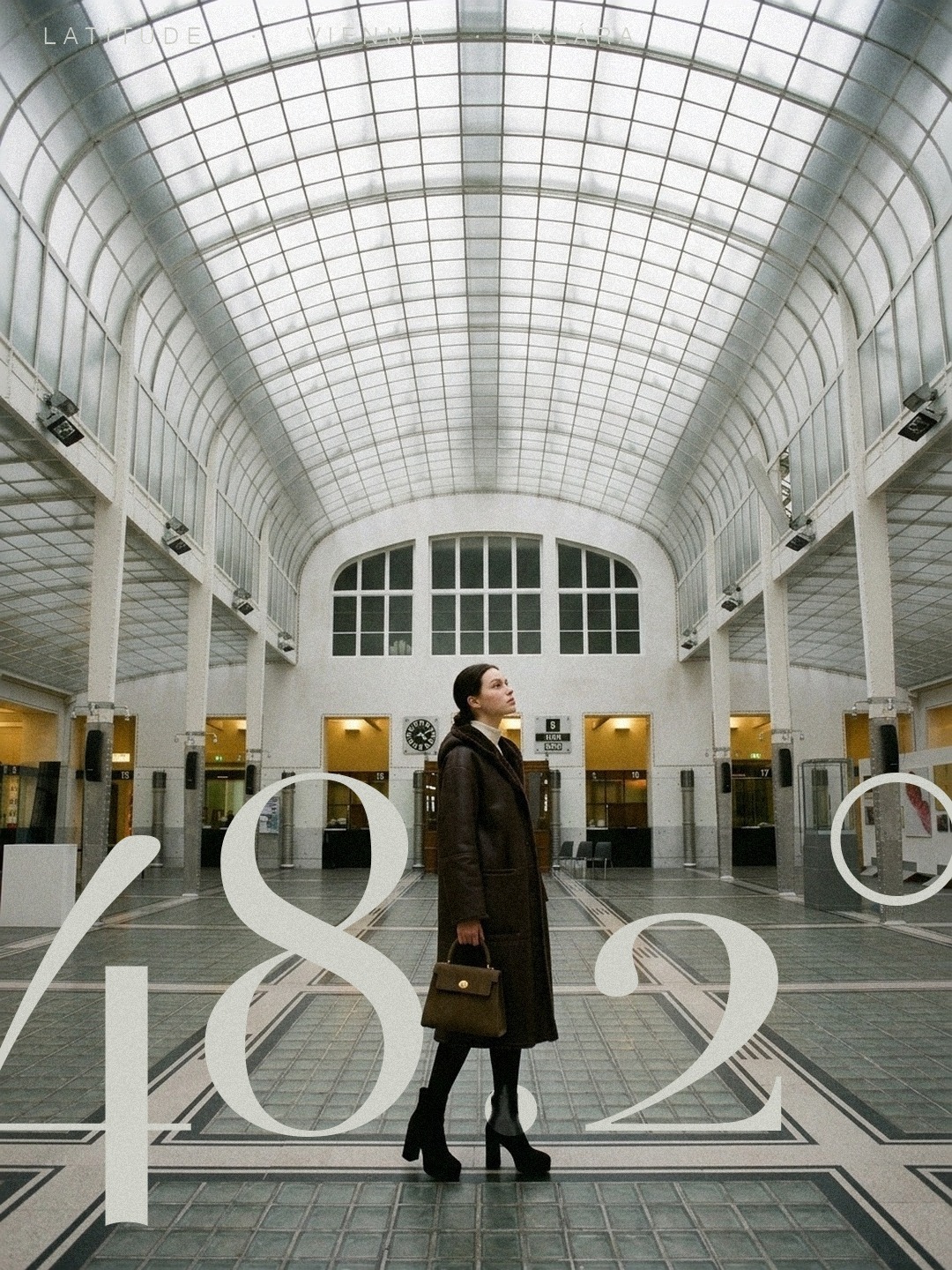
LATITUDE is a series of fictional days filmed as if documented. Each issue is one day in one city, told in chapters by the clock. The crew is AI. I decide what is filmed and what stays.
In Vienna, Klára arrives on the night train at 07:20 and ends the day in a hotel room after 23:00. One outfit, all day: a dark brown leather coat lined with shearling, with a big hood; an off-white turtleneck; a croc-embossed leather skirt; black suede boots; one small suede bag.
WHY THIS DAY
Klára studies architecture in Prague; she is the same woman as in the Copenhagen issue. Vienna continues from there, so she arrives by night train from the city before. The first thing I fixed for this city was its core: ornament. The day follows the decoration of buildings — from Otto Wagner's golden sunflowers on a station built as an entrance to the city railway, to the Postal Savings Bank where the ornament became bolts, to a bar of 27 square metres with mirrored walls. I had already decided the day would end without a twist, on a quiet scene. A frame of her crossing her legs in the bar looked like an advertising pose, so I took it out and ended in the hotel room, with her boots coming off. That frame in the storyboard had a sensuality that did not feel made, and seeing it, I decided every issue would carry one moment of that quiet sensuality somewhere.
BEFORE ANY PICTURE
I did not start with images. I started with a rough storyboard of twenty frames, drawn quickly in watercolour, and put it in front of three AI models from three different companies. I asked whether the story held, and whether it had something I call quiet sensuality — the kind of moment a woman would call beautiful, not sexy.
I revised and asked again. Six rounds, and twenty frames became eleven. The first version spent all its warmth — soup in a shop, a sunset, the gold of the market — before she ever reached the bar at the peak of the day. Too many frames stood her in front of landmarks, and her body showed no cold.
How to fix it was my call. Two decisions made the issue:
- All day, she only sees warm places through glass. A café window, a lit shop, a market behind a tram. The warmth is always on the other side. At 21:40 she pushes through a heavy curtain into a bar, and the sound of the street drops away.
- The coat closes as the day gets colder. Hooked on one finger in the morning, open at noon, buttoned in the afternoon, collar gripped in the wind, hood up after dark — and then, inside the bar, opened in one go.
WHAT IT TOOK
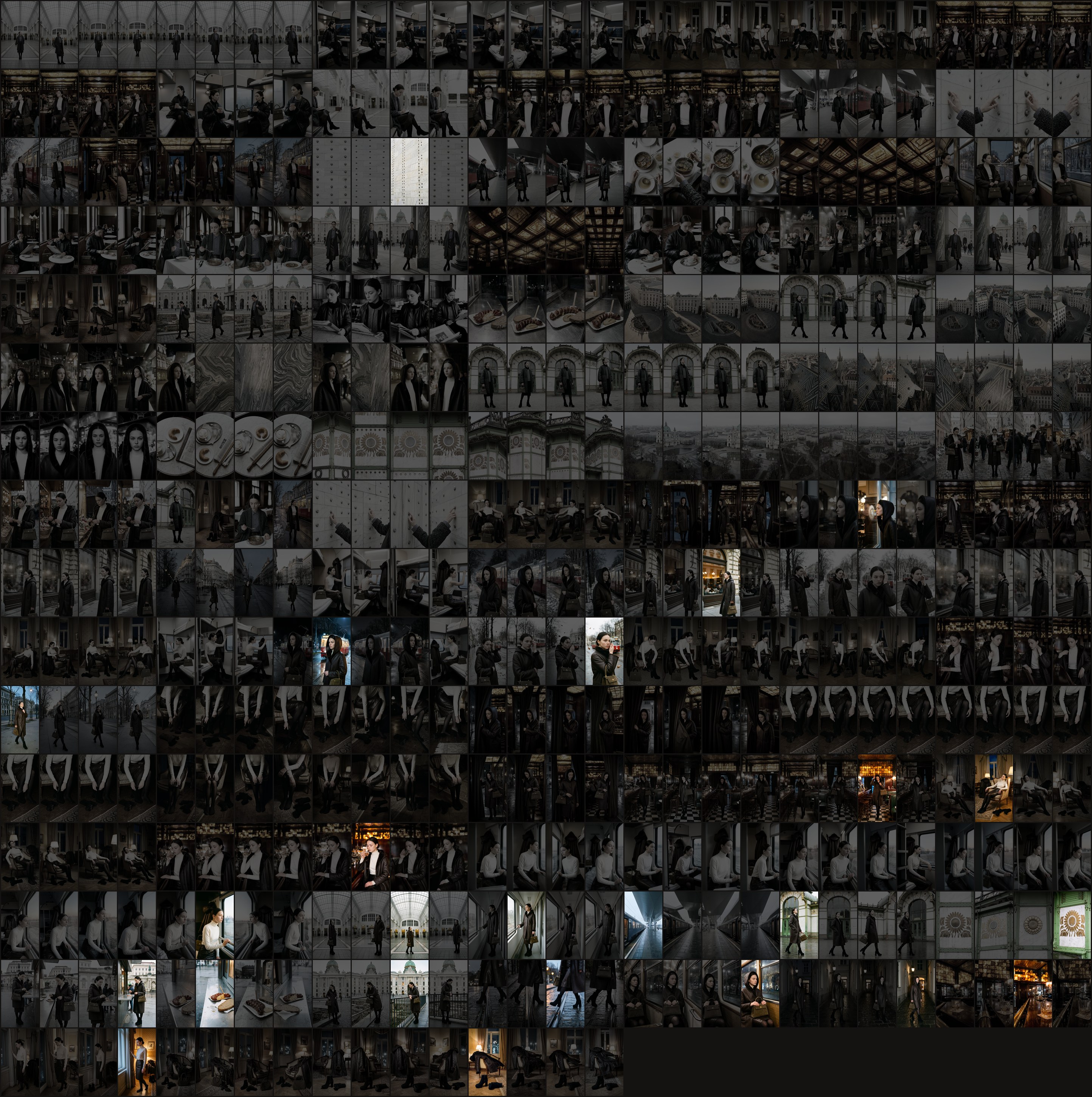
436 still images. 64 video clips. 21 versions of the edit.
With AI, making images is the cheap part. Choosing is not.
WHAT WENT WRONG
Snow in two shots. My location photographs for two streets had been taken on snowy days, and the model copied the snow. The rest of the day was dry. Reference photos carry their weather with them. Now every prompt states the weather of the day in the same words, and tells the model to take only the shape of the street.
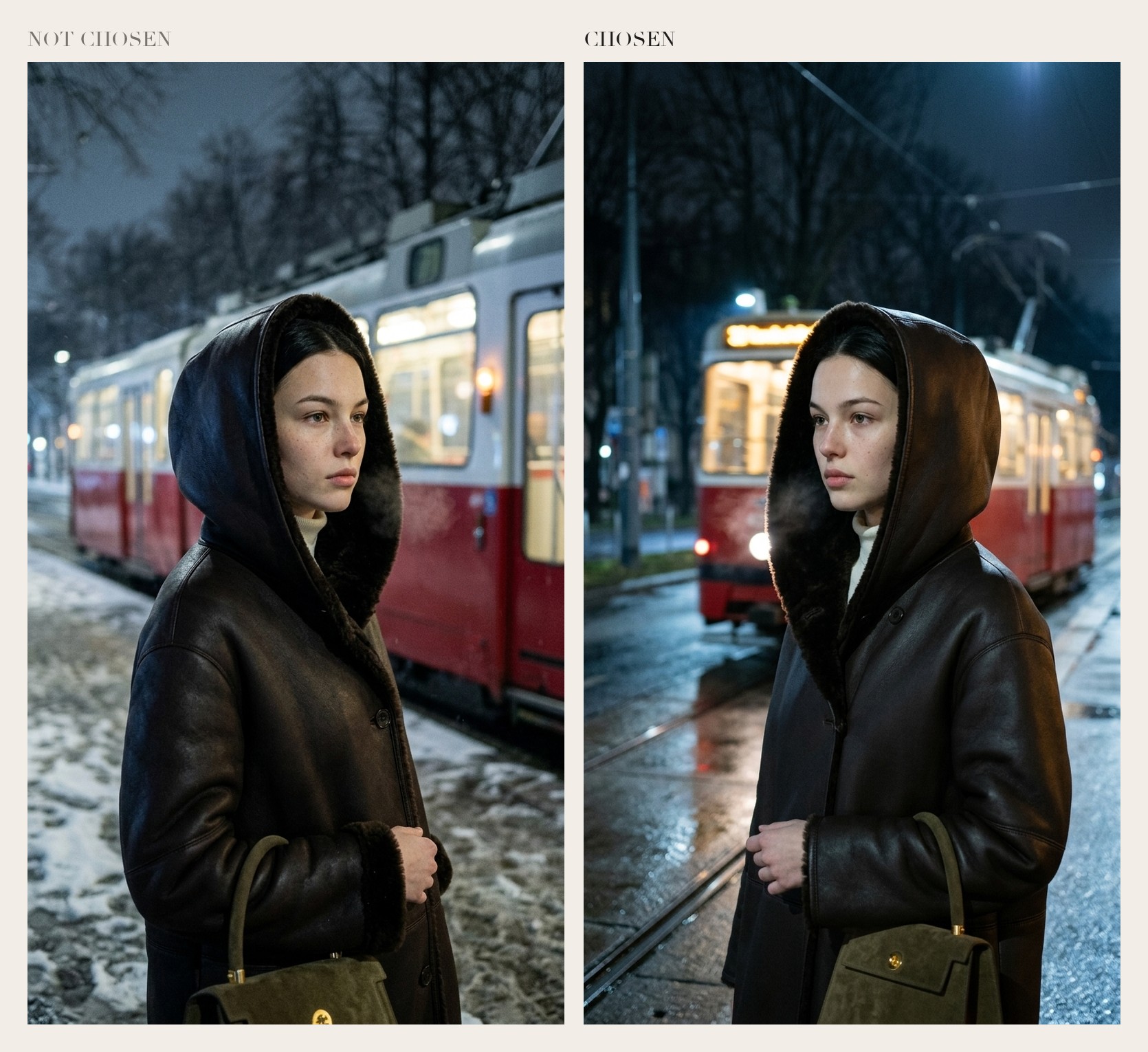
A hood that was the wrong way out. The generated try-on showed fur on the outside of the hood. The real coat is leather outside, fur only inside. I had trusted the try-on. Now I treat the product photograph as the only truth, checked in every frame.
Two shots from directly above — breakfast, and a pot of soup. Each one looked fine. Together they looked like a template. Now an issue gets at most one overhead shot, and food is shot from the height of the table, where a person actually sees it.
WHAT THIS DAY TAUGHT ME
Vienna taught me three things.
- A garment came across better followed through a day than set out in four poses. A coat that closes as it gets colder tells you what the coat is for. A lookbook rarely gets that far.
- The product photo was the truth; the generated try-on was a sketch. The hood turned inside out made that plain. Since then I check hoods, linings, cuffs and the number of handles on a bag against the product photo in every frame, because AI changes them without a word.
- The time belonged in the brief and in the choosing. In this issue the story went to critique before any picture was made. That was the cheapest place to be wrong.
WHAT I DIRECTED
I listened to the critics; the decisions were mine. The warmth stays behind glass until the curtain. The coat closes hour by hour. Of 436 images, only a few stay. And the film ends with her boots off, sinking back into a chair — not on a pose.
That is the job: not making the pictures, but knowing which ones the day needs.
— SACHIO KAWASAKI / FOUNDING EDITOR