35.5° N
Tottori
Tottori, Japan
A former castle town between the Sea of Japan and the Chugoku mountains, known for its coastal sand dunes. Mingei pottery and tofu chikuwa, with Matsuba crab in winter.
Follow Rin's route — watch the day in Tottori, then walk it
See the day first, then follow the same order on the map, and open it as walking directions in Google Maps.
2 · The same day, on the map
Loading the map
3 · Walk it
Open this walk in Google Maps ↗The dotted line shows the order, not the actual streets. The inn is not on the map. Map data © OpenStreetMap contributors
Rin's day, in order
1 / 7
109:15
The camels at the dune entrance
Past the camels by the entrance; at weekends they are there for photographs only.
209:40
The great slope of Umanose
Up the long landward slope, the boots sinking with every step.
310:21
The top of Umanose
On the ridge, the sea on one side; she empties the sand out of one boot.
412:30
The Sakyu lift
Back up to the dune centre on the sightseeing chairlift.
513:45
A cup in town, by the Mingei Museum
In town, a small cup glazed half green, half black.
Nearby, Rin would go to: Tottori Takumi Kogeiten, Takumi Kappoten, Gallery Sora
616:58
The last light on Umanose
Back on the ridge for the last light; the wind draws ripples across the sand.
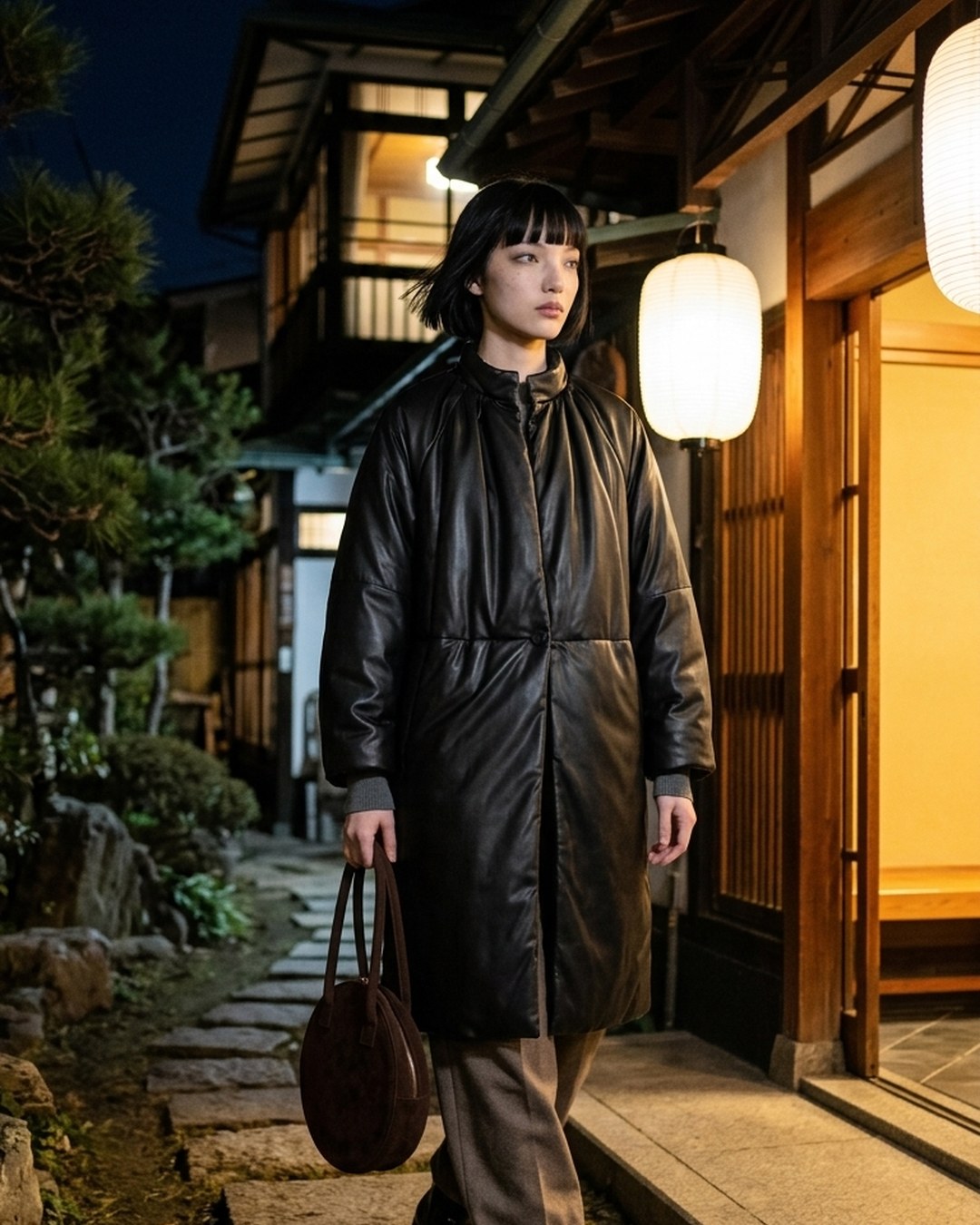
19:15
The inn
Boots by the step, a little sand still in one of them.
Where Rin would go, on the map — or build your own route
Tap a mark to see the place; squares are museums and sights (landmarks). Use “Build your own route” to make a walk of your own.
Loading the map
Map data © OpenStreetMap contributors
Where Rin would go
Made in Tottori: Tottori Mingei Folk Craft & Pottery2
All tottori mingei folk craft & pottery →1 / 3
Made in Tottori
In 1931, the doctor Shoya Yoshida began a new mingei movement in Tottori. Local materials and traditional techniques were used to make pottery, furniture, textiles and other things for everyday life.
Sakae-machi
Tottori Takumi Kogeiten
A mingei shop founded in 1932, selling pottery, glass, woodwork and textiles from Tottori and across Japan.
RinFor something to use at home, I would start with the Tottori pieces.
Kawahara-cho Nakai
Inshu Nakaigama
A kiln in Kawahara-cho Nakai, making pottery with local mountain clay and straw-ash glazes. There is a gallery beside the workshop.
RinI would choose a piece in the gallery beside the workshop, holding it first.
Made in Tottori: Tofu Chikuwa1
All tofu chikuwa →1 / 2
Made in Tottori
A local food of eastern Tottori, made from firm tofu and fish paste. The pale steamed rolls are sold alongside browned, grilled versions, and have long been eaten as a snack.
Motouo-machi
Karoya
A fish-cake maker in Motouo-machi, keeping machinery to a minimum to make tofu chikuwa and flying-fish chikuwa by hand.
RinI would choose one tofu chikuwa and one flying-fish chikuwa.
Craft2
All craft →1 / 2
Sakae-machi
Gallery Sora
A gallery and craft shop on the Sun Road shopping street, showing and selling pottery, woodwork, glass and other handwork, mainly by younger Sanin makers.
RinBefore choosing pottery, I would look at the current exhibition too.
Gyotoku
Am’s
A shop in Gyotoku for clothing, food and the home, with furniture, everyday goods, Japanese tableware and tools, and pottery from Sanin kilns.
RinFor something to use at home, I would start with the Sanin pottery.
Sweets3
All sweets →1 / 3
Fukube-cho Yuyama
Totto PURIN
A pudding shop by the Tottori Sand Dunes, making Suna Purin, firm custard pudding and seasonal flavours.
RinBy the dunes, I would start with a Suna Purin.
Nikai-machi
Tottori Hougetsudou
A wagashi shop in Nikai-machi, making ginger senbei, Suna no Oka cookies and MOCHI cube sweets.
RinFor something to take home, I would choose a few ginger senbei and Suna no Oka cookies.
Yoshikata
yonayona Bake
A bake shop in Yoshikata, making Obake canelés, cookie tins, financiers and raisin-butter sandwiches.
RinI would start with one plain Obake canelé.
Food4
All food →1 / 4
Shokunin-machi
Musashiya Shokudo
A diner founded in 1912, where su-ramen began. House-made noodles from Tottori wheat are served in a Japanese broth of bonito, kelp and other ingredients.
RinI would start with su-ramen to taste the broth.
Sakae-machi
Takumi Kappoten
A restaurant opened in 1962, serving food with mingei craftwork in a space designed by Shoya Yoshida. Its speciality is susugi-nabe hot pot.
RinI would order susugi-nabe and take a look at the pottery used for the meal.
Fukube-cho Yuyama
cafe restaurant SUKATTO
A café restaurant near the sand-dune chairlift, serving Tottori beef curry and cream pasta with local mosa shrimp.
RinAfter walking the dunes, I would have the mosa-shrimp pasta for lunch.
Kawabata
Shunka Shuto, Kawabata
A Japanese restaurant sourcing seasonal fish from Ajiro and Natsudomari ports. Lunch sets, evening courses and individual dishes, with dashimaki omelettes cooked to order.
RinIn the evening, I would order a freshly made dashimaki omelette.
Cafés3
All cafés →1 / 3
Fukube-cho Yuyama
Takahama Cafe
A café facing the Tottori Sand Dunes, designed by Kengo Kuma. Furniture uses Tottori cedar, and the paper lamps are finished with sand from the dunes.
RinI would take a moment to look at the paper lamps finished with dune sand.
Suehiro-onsen-cho
Kissa Beniya
A café founded in 1948, known for its curry and summer Indian Milk shaved ice.
RinI would have curry for lunch, and Indian Milk shaved ice in summer.
Tenjin-cho
WEEKDAY COFFEE ROASTERS
A coffee roaster in Tenjin-cho, serving washed-bean coffee and espresso, with beans and drinks to take away.
RinIt opens at eight, so I would have coffee before a walk.
By area
Rin is a fictional traveller. Every place here was checked by the editors to exist and be open (checked 2026-11-12). Please confirm hours on the official site before you go. Paid listings are always marked.
To see — art and sights (landmarks)
Art · Sakae-machi
Tottori Folk Crafts Museum
A folk-craft museum founded in 1949 by the doctor Shoya Yoshida. Its collection includes older crafts from Japan, Korea, China and the West, and new mingei work developed by Yoshida.
Open 10 am to 5 pm. Closed Wednesdays, or the following day if Wednesday is a holiday, over New Year and for exhibition changes.
Art · Fukube-cho Yuyama
The Sand Museum
A museum of sculpture made from sand. Sculptors are invited from overseas to make works on a different theme each year.
The seventeenth exhibition, on Spain, runs until 3 January 2027. Open daily during the exhibition, 9 am to 6 pm, with last entry at 5:30 pm.
Sights · Higashi-machi
Tottori Castle Ruins
Castle ruins extending from the summit to the foot of Mount Kyusho, with stone walls and the keep platform remaining. Restoration of Nakanogomon, the main gate in the Edo period, was completed in 2025.
Nearby Jinpukaku is closed for conservation work, with its exterior covered since late September 2025. Horyuin Garden and Hosennan remain open.
These are landmarks, not Rin's picks. Each was checked to be open on its official site (checked 2026-11-12). Please confirm hours before you go.