33.2° N
Yame
Fukuoka, Japan
A former castle and merchant town in southern Fukuoka, stretching from the Chikugo plain into the mountains along the Yabe River. Yame tea houses, lantern and Kurume Kasuri workshops, pottery kilns and quiet cafés, as Rin's picks.
Yame, on film
4 sights and 10 places, each checked open in 2026, in 32 seconds.
Found somewhere you like? The map and the list below have the address, hours and official site.
Tap for sound
What to eat in Yame
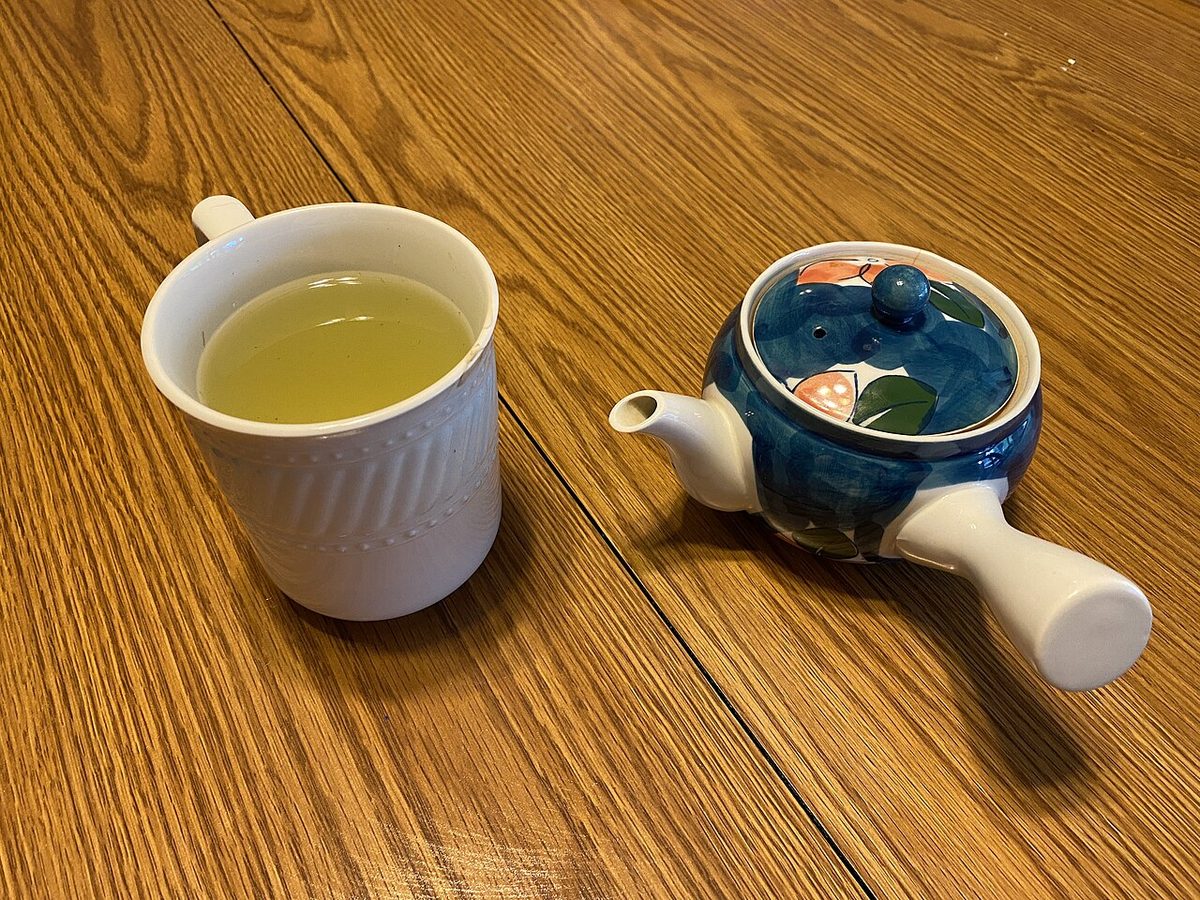
Photo: Washing Machine / CC0 (Wikimedia Commons) Yamecha & Shizuku-cha (Yame green tea & drop-brewed gyokuro)
八女茶(伝統本玉露・しずく茶)
Yamecha is green tea grown in the Yame basin, where straw-shaded, hand-picked traditional hon-gyokuro production began in Hoshino in 1904. Its signature local serving, shizuku-cha (or susuri-cha), steeps the leaves in a small amount of lukewarm water in a lidded cup to yield concentrated savory drops before the leaves are eaten.
Sip small, temperature-stepped infusions at a tea room, then drizzle the spent leaves with ponzu or vinegar soy sauce and eat them.
Where to eat it
- Yame Fukushima Okiya Ao to Neji ↓
- Cha no BunkakanWebsiteMap
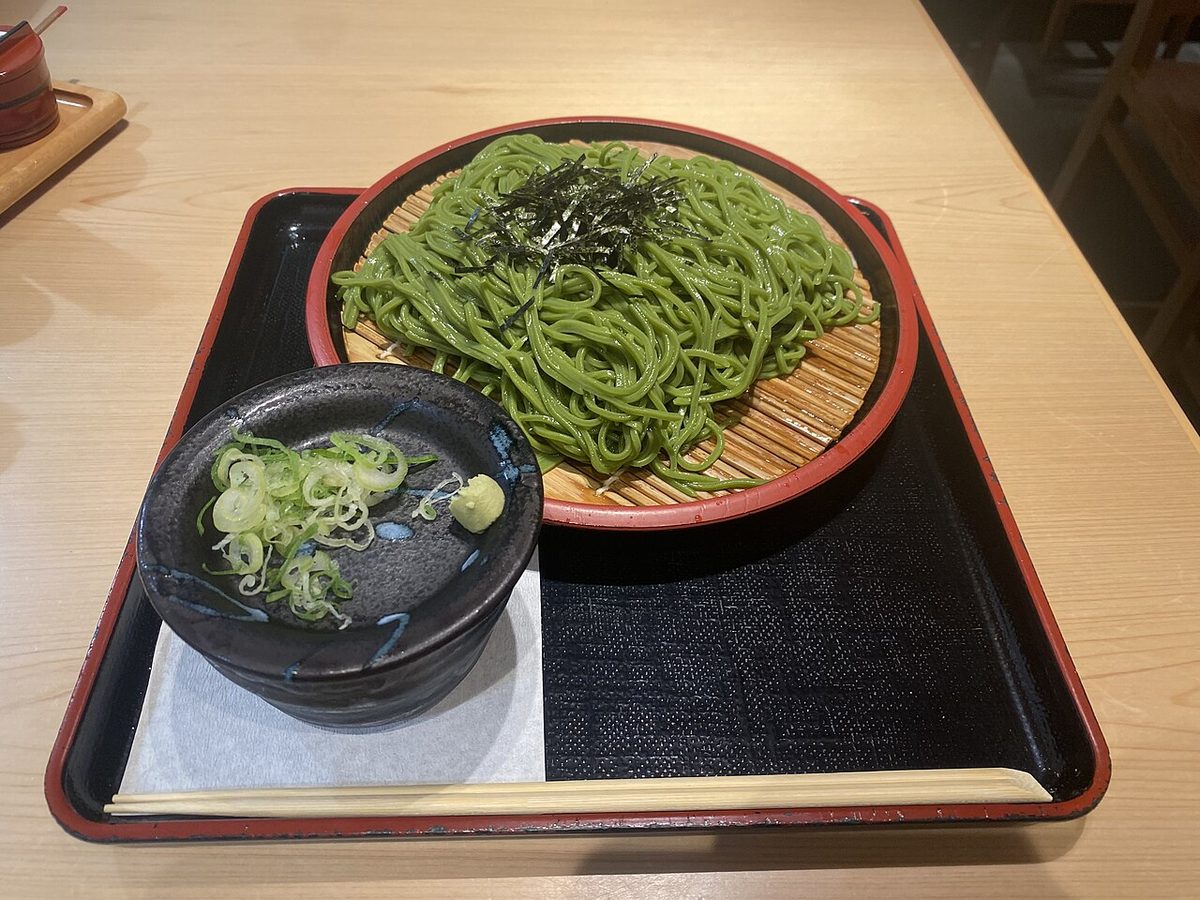
Photo: Immanuelle / CC BY 4.0 (Wikimedia Commons) Yame Cha-soba (Yame green-tea soba noodles)
八女茶そば
Cha-soba in Yame is made by kneading powdered Yame green tea or matcha into buckwheat-and-wheat noodle dough. It grew out of the city's tea industry and is served at tea-house restaurants, washoku dining rooms, and homes, where dried noodles are also pan-crisped in a local style.
Ordered cold with dipping sauce or hot in broth as part of a teishoku set meal at lunch.
No photo yet
Imo Manju (steamed whole-potato or taro dumplings)
いもまんじゅう
Imo manju is a savory-leaning rural dumpling of Okuyame and Yame made by wrapping a whole boiled potato or taro in thin wheat or mugwort dough and steaming it. Historically prepared as a filling snack between farm work in Yame's mountain villages, it is sold at local manju shops and roadside markets.
Eaten warm as a snack, or lightly toasted over a grill and dipped in soy sauce or yuzu kosho.
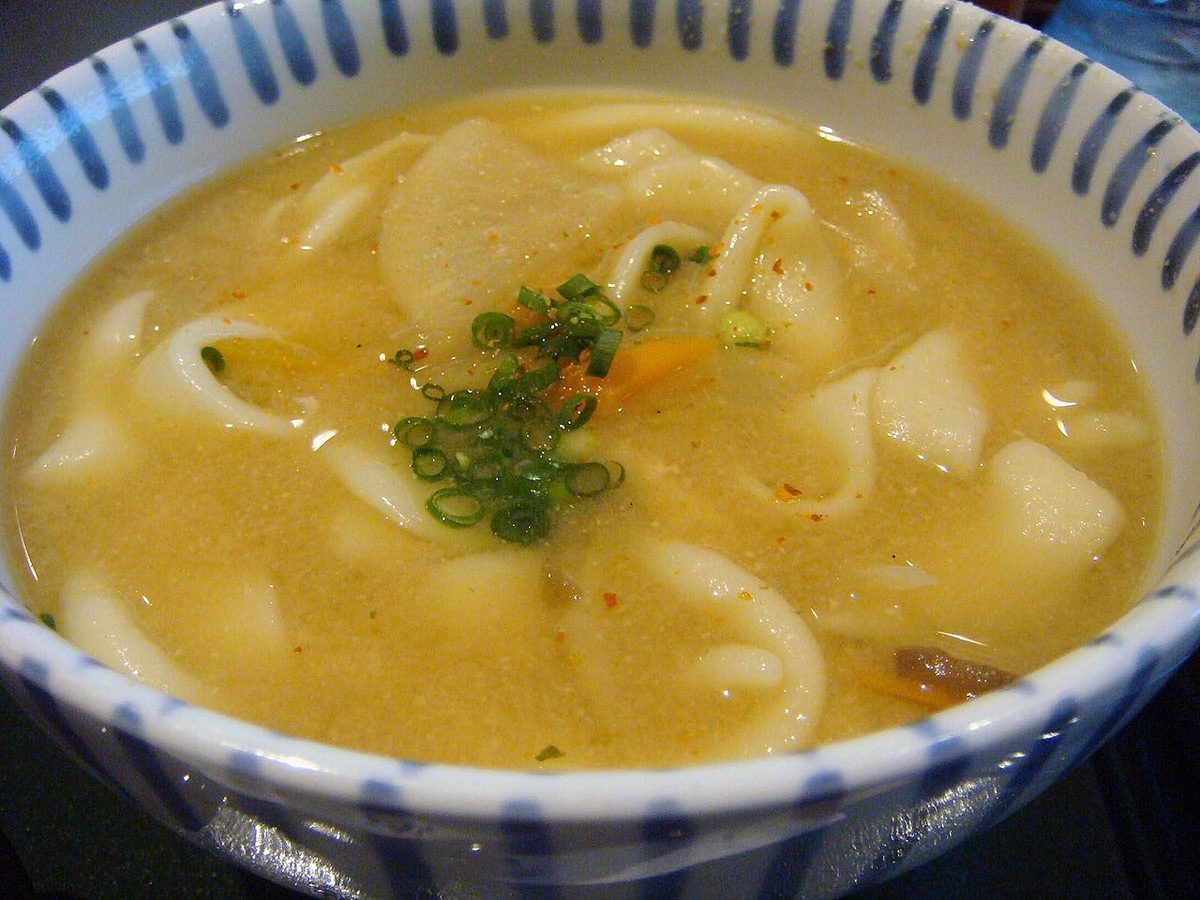
Photo: OitaKiseichu / CC BY-SA 3.0 (Wikimedia Commons) Dagojiru (wheat dumpling and vegetable soup)
だご汁
Dagojiru is a country-style miso soup made with flat, hand-torn wheat flour dumplings simmered with local root vegetables such as taro, burdock, and daikon. In Yame's mountain valleys such as Hoshino and Tachibana, households prepare it with handmade local miso and seasonal produce as a staple home-cooked meal.
Served hot in a bowl year-round, often paired with rice balls or kamado-cooked rice as a lunch set.
Where Rin would go, on the map — or build your own route
Tap a mark to see the place; squares are museums and sights (landmarks). Use “Build your own route” to make a walk of your own.
Loading the map
Map data © OpenStreetMap contributors
Where Rin would go
Made in Yame: Yame Tea1
All yame tea →1 / 2
Made in Yame
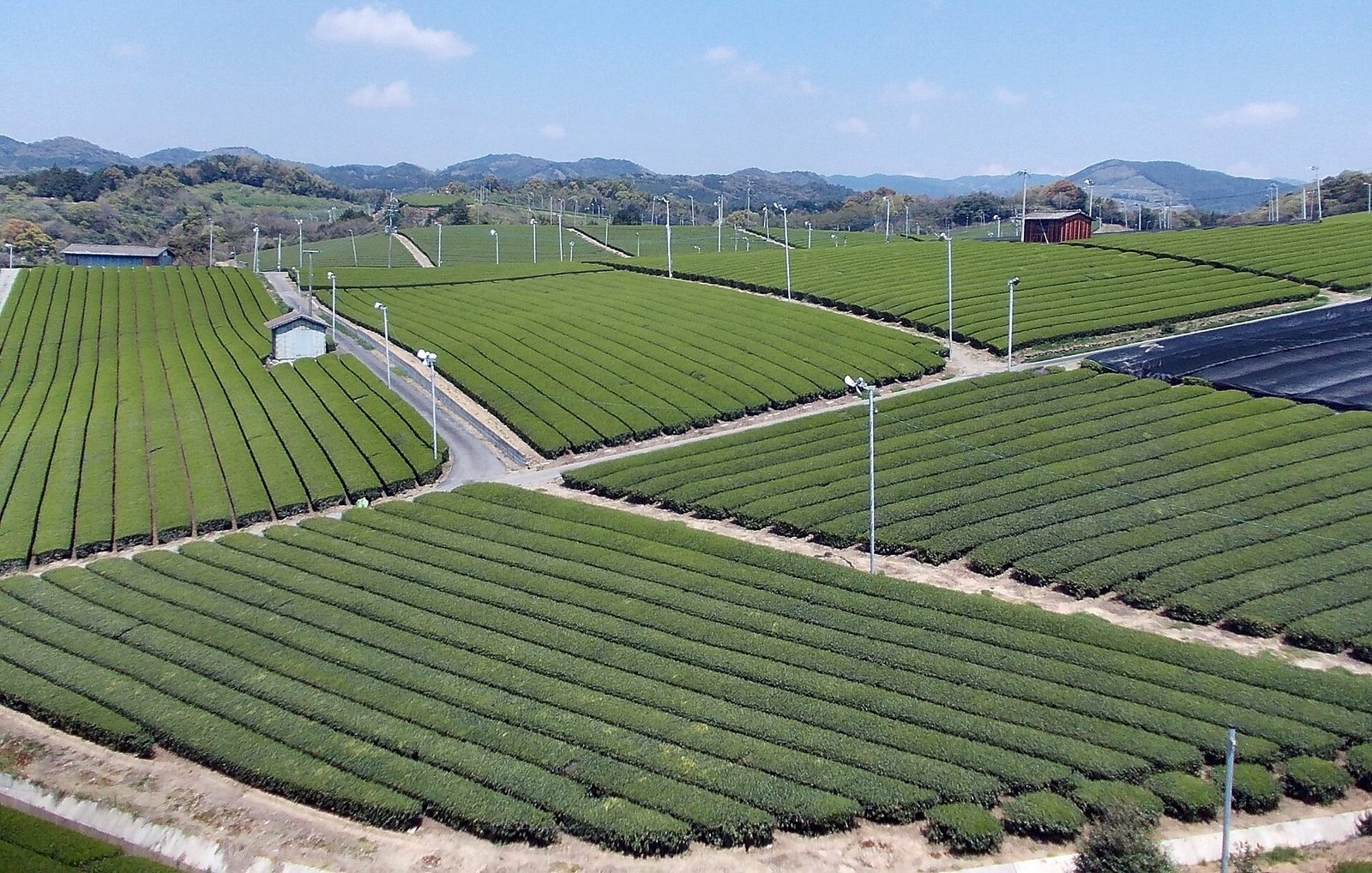
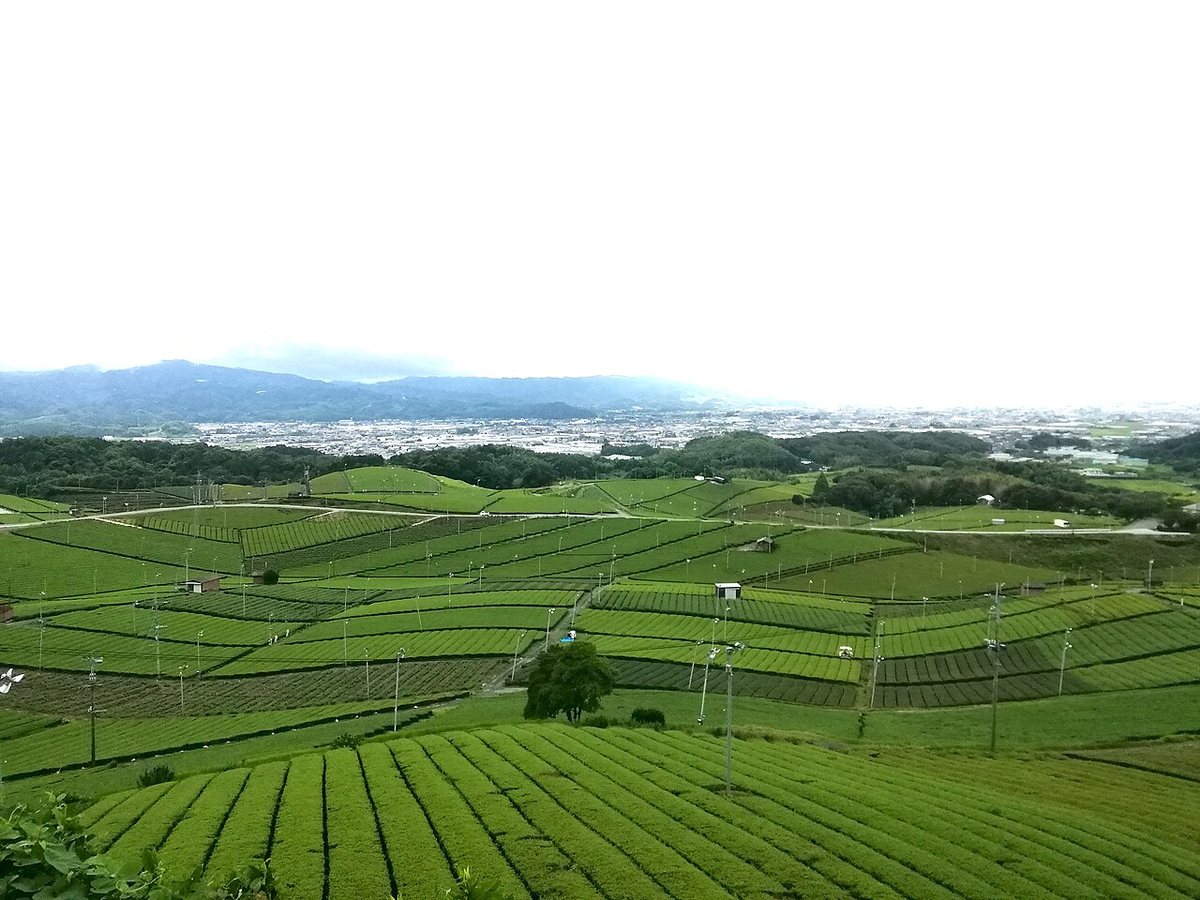
Grown in the mountain valleys along the Yabe River, Yame tea—especially shaded gyokuro—is known for its deep sweetness and umami. In the old merchant quarter of Fukushima, tea houses still roast and blend leaves by hand.
Terraced green tea fields in Yame·Photo: ワールドピース / CC BY-SA 4.0 (Wikimedia Commons)
Yame Fukushima
Yabeya Konomi Honke
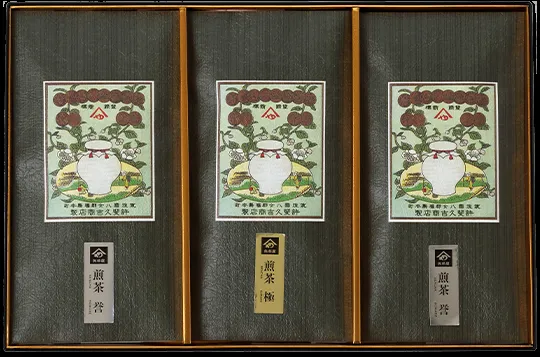
Photo: the shop’s official page 矢部屋許斐本家
A tea merchant house founded in the Hoei era (1704–1710s). In a city-designated cultural-property townhouse, it sells charcoal-roasted hoiro Yame tea and tea sweets. Open 9 am to 6 pm, closed Sundays.
9:00–18:00 · Closed: Sundays (summer & year-end holidays, irregular closures)
八女市本町126
RinI bought a bag of hoiro Yame tea. Opening it brought out a warm charcoal scent.
Made in Yame: Yame Paper Lanterns1
All yame paper lanterns →1 / 2
Made in Yame
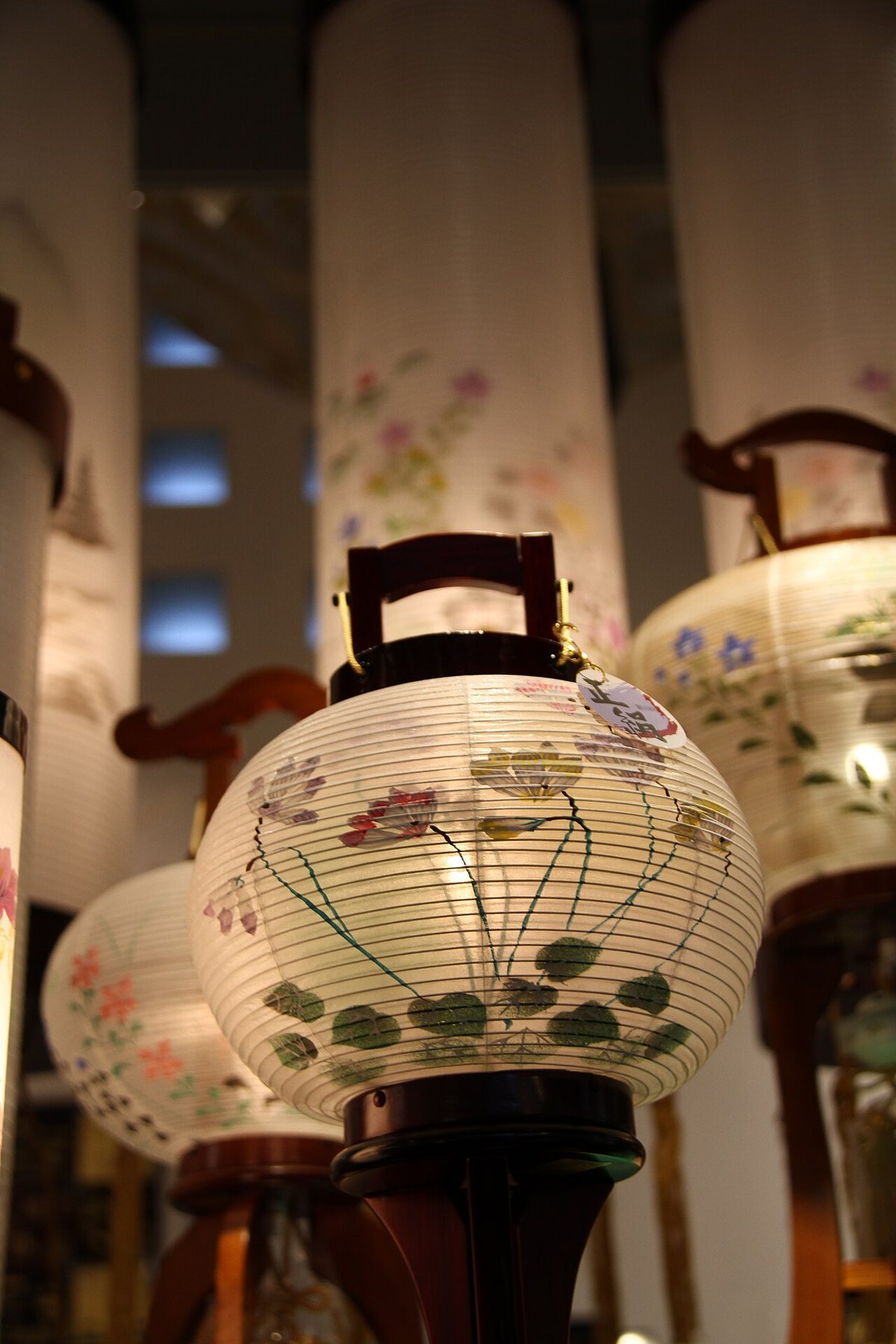
Yame paper lanterns are a nationally designated traditional craft. Workshops here wind local bamboo into a fine spiral frame and cover it with handmade kozo washi, making both festival lanterns and modern lighting.
A softly lit hand-painted Yame paper lantern·Photo: 高山朱美 / CC BY-SA 4.0 (Wikimedia Commons)
Yame Fukushima
Ito Gonjiro Shoten
伊藤権次郎商店
A lantern workshop founded in 1815, making bamboo-and-washi lanterns by hand from shrine and festival pieces to home lighting. Open 9 am to 5:30 pm.
八女市本町220
RinI looked closely at the bamboo-and-washi lanterns. Soft, warm glow.
Made in Yame: Kurume Kasuri Indigo Textiles2
All kurume kasuri indigo textiles →1 / 3
Made in Yame
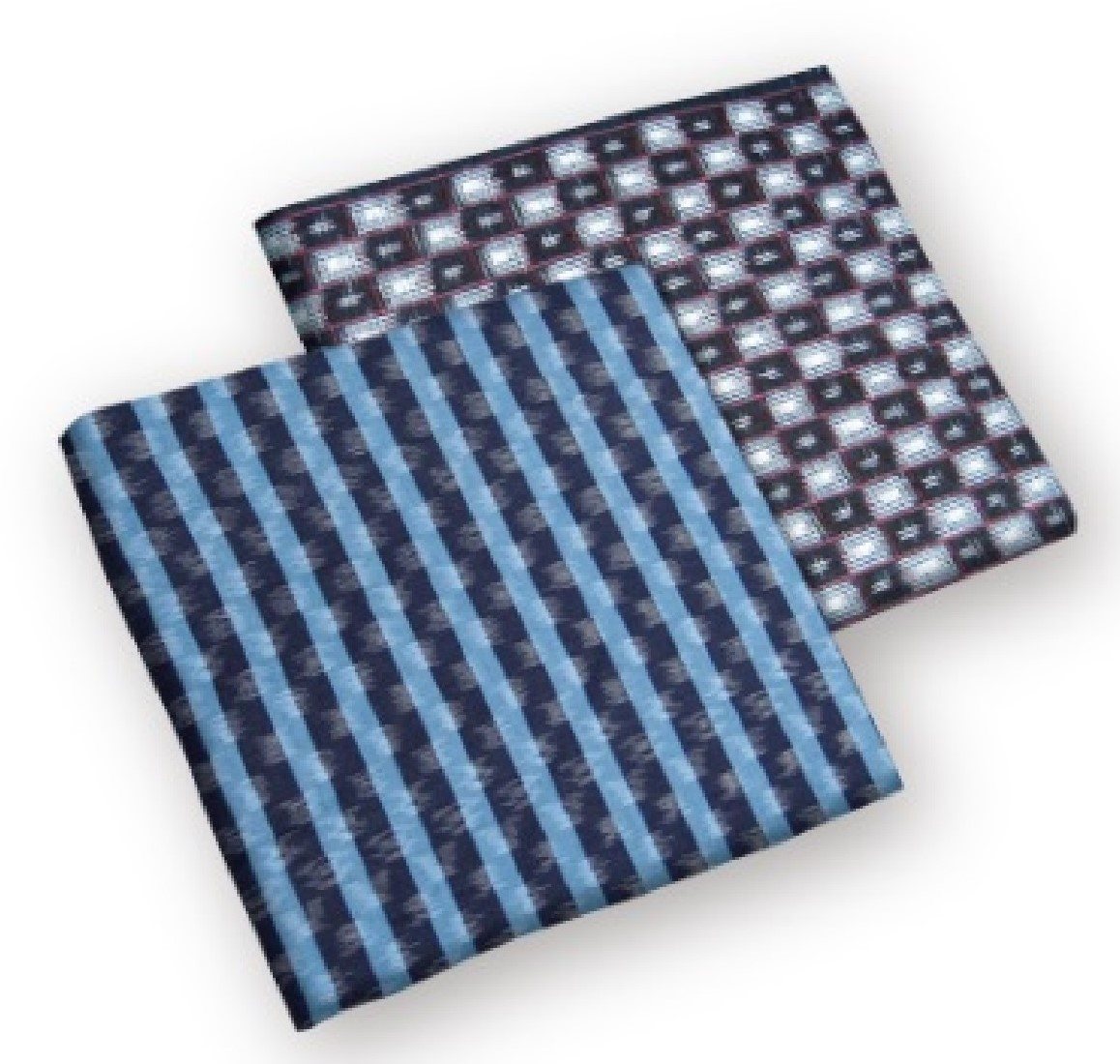
Woven on shuttle looms across Yame and neighboring Chikugo towns, ikat-dyed cotton kasuri has been used for everyday workwear. Local mills and shops still sell cloth by the metre alongside modern monpe trousers.
Two folded pieces of indigo Kurume Kasuri cotton cloth·Photo: Unknown authorUnknown author / Public domain (Wikimedia Commons)
Central Yame
Shimogawa Orimono
下川織物
A Kurume Kasuri weaving mill selling ikat-dyed cotton bolts by the metre alongside shirts, stoles and trousers.
八女市津江1111-2
RinI compared the Kurume Kasuri bolts and bought a metre. Crisp, cool cotton.
Yame Fukushima
Unagi no Nedoko, Kyu-Terasaki Tei
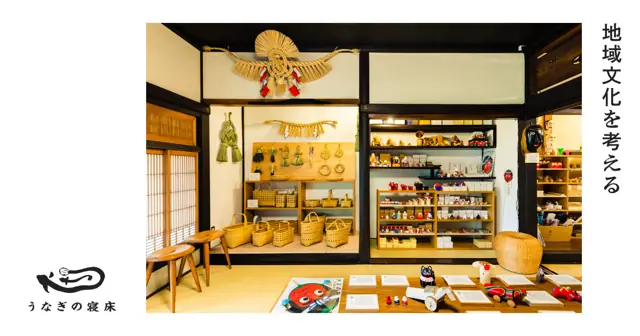
Photo: the shop’s official page うなぎの寝床 旧寺崎邸
The Yame flagship of regional craft house Unagi no Nedoko, in the former Terasaki residence, selling Kurume Kasuri monpe and Kyushu crafts. Open 11 am to 5 pm, closed Tuesdays and Wednesdays (open on public holidays).
11:00–17:00 · Closed: Tuesdays and Wednesdays (open on public holidays)checked Nov 2026
八女市本町327
RinI tried holding the Kurume Kasuri monpe. The cloth was so light I bought a pair.
Craft3
All craft →1 / 3
Tachibana
Onokoyaki no Sato
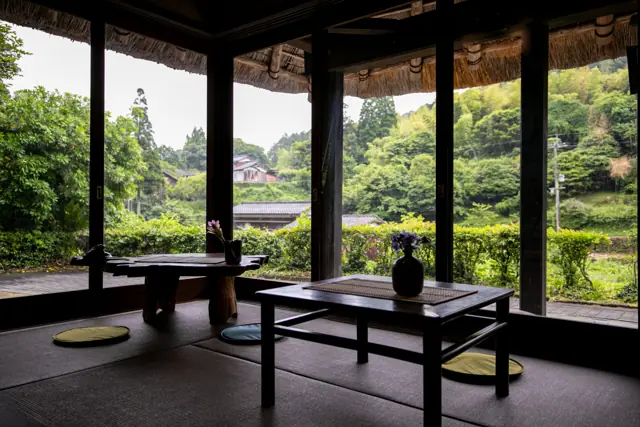
Photo: the shop’s official page 男ノ子焼の里
A kiln in Tachibana reviving Onokoyaki, said to date from 1598 when potters were invited from Korea, showing and selling thin-walled yakishime stoneware. Open 10 am to 4 pm, closed Tuesdays.
10:00–16:00 · Closed: Tuesdayschecked Nov 2026
八女市立花町北山1965
RinI picked up a thin-walled yakishime vessel. Lighter than it looked, so I bought one.
Hoshino
Koto Hoshinoyaki Tenjikan
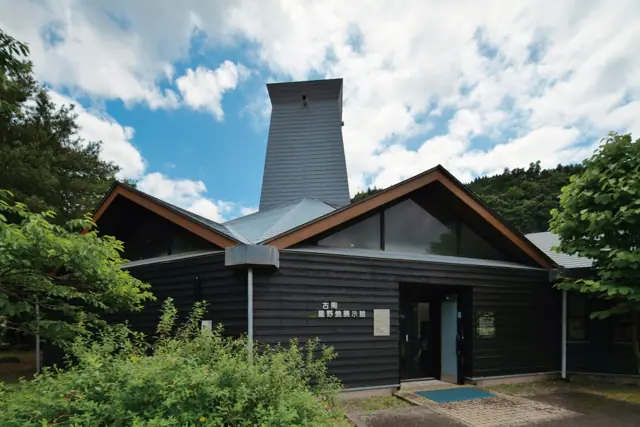
Photo: the shop’s official page 古陶星野焼展示館
An octagonal gallery with a star-shaped roof in Hoshino, showing Edo-period Hoshino-yaki and iron-glazed Yuhi-yaki alongside contemporary vessels from local kilns. Open 9 am to 5 pm, closed Tuesdays (Mondays and Tuesdays Dec–Feb).
9:00–17:00 · Closed: Mar–Nov: Tuesdays; Dec–Feb: Mondays & Tuesdays (open on public holidays); Dec 29–Jan 3
福岡県八女市星野村千々谷11865-1
RinI walked the octagonal gallery to see the Yuhi-yaki. Quiet, deep iron-glaze tones.
Yame Fukushima
Yame Fukushima Okiya Ao to Neji
八女福島置屋 蒼とねじ
A Yame tea select shop and tea room in a century-old former okiya townhouse, opened in May 2026 by uniting Sarou Ao and Cha to Utsuwa Neji. Open 11 am to 5 pm, closed Tuesdays.
八女市本町58
RinI had Yame tea in the century-old townhouse. Rich umami with a clean finish.
Food1
All food →Kurogi
cafe Hachinoshizuku
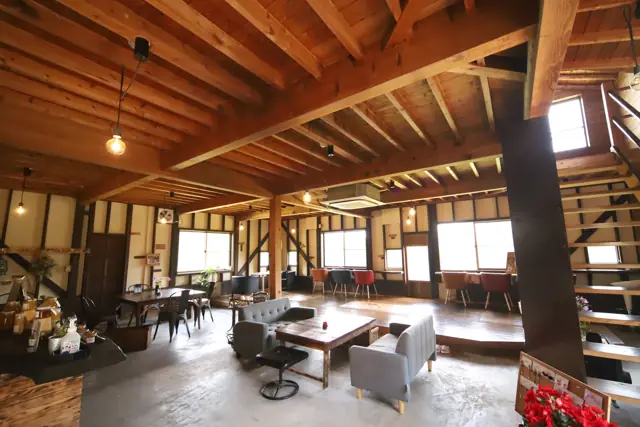
Photo: the shop’s official page 生はちみつ専門店 cafe蜂の雫
A hillside café in Kurogi run by a beekeeper, serving lunches of pesticide-free home-grown vegetables alongside raw-honey sweets and hand-drip coffee. Open 11 am to 4 pm, closed Mondays and Tuesdays.
11:00–16:00 · Closed: Mondays & Tuesdayschecked Nov 2026
八女市黒木町木屋5504-2
RinI had the raw-honey sweets. A clean, gentle sweetness without any heaviness.
Cafés2
All cafés →1 / 2
Yame Fukushima
Bacopa Coffee Roastery
A small-batch coffee roastery that relocated from Kanoya in Kagoshima to Honmachi in September 2026, operating in a shared second-floor space at Flower bldg 203. Open 10 am to 5 pm.
八女市本町1-248-1 203
RinI had a house-roasted coffee upstairs. Mild sweetness that lingered gently.
Yame Fukushima
Coffee Montblanc
Coffee モンブラン
A small coffee shop opened in April 2026, carrying on the name of a 1972 kissaten, serving coffee, café latte and stick sweets. Open Thursdays, Saturdays and Sundays, 10 am to 5 pm.
八女市本町85
RinI ordered a café latte at the small coffee shop. Smooth, gentle milk.
By area
Rin is a fictional traveller. Every place here was checked by the editors to exist and be open (checked 2026-11-12). Please confirm hours on the official site before you go. Paid listings are always marked. If you are the shop and would like a photo removed, write to editor@vual.jp and we will take it down at once.
To see — art and sights (landmarks)
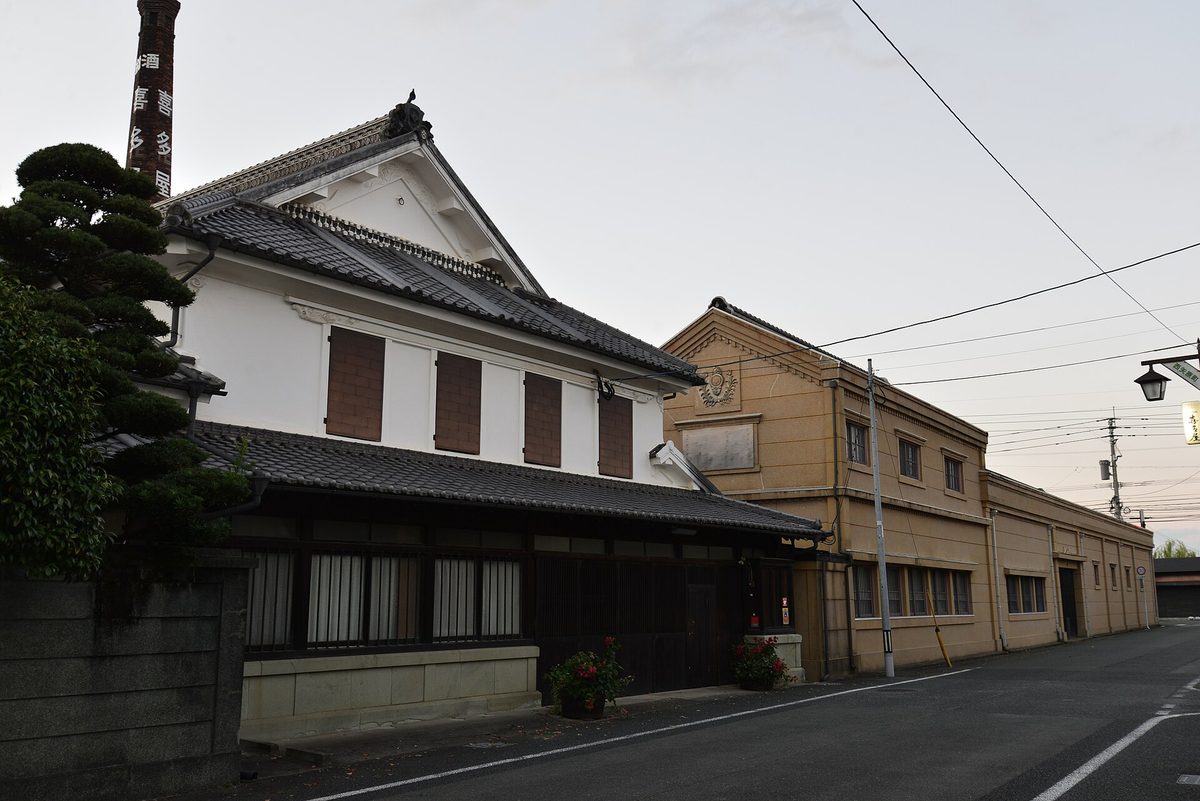
Photo: 皓月旗 / CC BY 4.0 (Wikimedia Commons) Sights · Yame Fukushima
Yame Fukushima Preservation District
The historic merchant quarter of Yame Fukushima, lined with white-walled earthen storehouses, townhouses and craft workshops, designated a national preservation district for groups of traditional buildings.
Art · Yame Fukushima
Yame Traditional Crafts Museum
A museum of Yame's traditional crafts—Buddhist altars, Yame lanterns, Kurume Kasuri and handmade washi—standing on the former Chikugo-Fukushima Station site, with craft demonstrations.
Art · Hoshino
Tea Culture Museum
A tea museum in Hoshino Village dedicated to Yame tea and traditional gyokuro, with a tasting hall for shizuku-cha and matcha and a tea-soba dining room. Open 10 am to 5 pm, closed Tuesdays (open on holidays, May and summer).
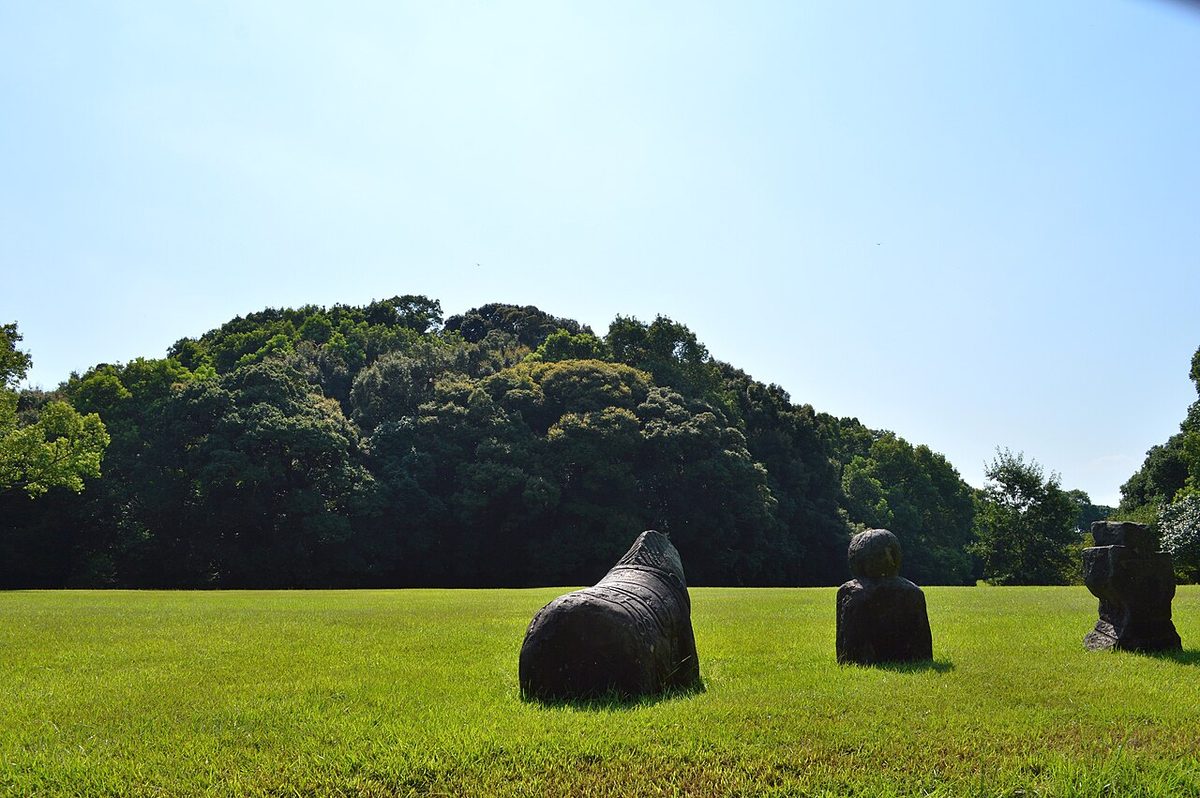
Photo: Saigen Jiro / CC0 (Wikimedia Commons) Sights · Yoshida
Iwatoyama Kofun
A sixth-century keyhole-shaped burial mound attributed to Chikushi-no-Kimi Iwai, about 135 metres long and among the largest in northern Kyushu, beside the Iwai no Sato museum.
These are landmarks, not Rin's picks. Each was checked to be open on its official site (checked 2026-11-12). Please confirm hours before you go.
Day trips from Yame
Classics
- Yoshinogari Historical Parkabout 20 km
A national park preserving and displaying Yayoi period ruins, where you can experience reconstructed pit dwellings and elevated warehouses. Spring and autumn have mild weather for walking.
- Dazaifu Tenmangu Shrineabout 35 km
A historic shrine dedicated to Sugawara no Michizane, famous as the god of learning. Late February to early March is the best time for plum blossoms; visiting early in the morning is recommended.
- Yutoku Inari Shrineabout 44 km
One of Japan's three great Inari shrines, it is visited by about 3 million people annually, with constant prayers for business prosperity and family fortune. Best in April for cherry blossoms and azaleas.
Hidden spots
- Kunenanabout 24 km
A Meiji-era industrialist's villa and moss-and-maple garden designated a National Place of Scenic Beauty, opened to the public only for brief windows in spring and autumn. Open only 3 days in early May and 16 days in mid-to-late November (8:00–16:00); arrive early morning on weekdays to avoid peak crowds.
- Yachiyoza Theaterabout 25 km
A 1910 wooden kabuki playhouse designated an Important Cultural Property, preserving a hand-turned revolving stage, under-stage cellar, and painted ceiling advertisements. Visit during morning or early afternoon tour hours (9:00–17:30) on non-performance days, or in February and August for Yamaga lantern events.
- Ukiha Inari Shrineabout 25 km
A hillside shrine in Jogahana Park where over 90 vermilion torii gates climb roughly 300 stone steps overlooking the Chikugo Plain. Late March to early April for cherry blossoms and November for autumn leaves are best; early morning or late afternoon offers soft light over the Chikugo Plain.
- Ouo Shrine Floating Torii Gatesabout 41 km
Three vermilion torii gates standing in the Ariake Sea shallows, submerged up to their crossbeams at high tide and walkable along a submerged road at low tide due to a 6-meter tidal range. Check the tide table in advance: high tide makes the torii appear to float, while low tide lets you walk under them, especially at sunrise or under a full moon.
Distances are straight-line from the town centre. Each page has how to get there and a suggested day.