36.2° N
Yamanaka Onsen
Ishikawa, Japan
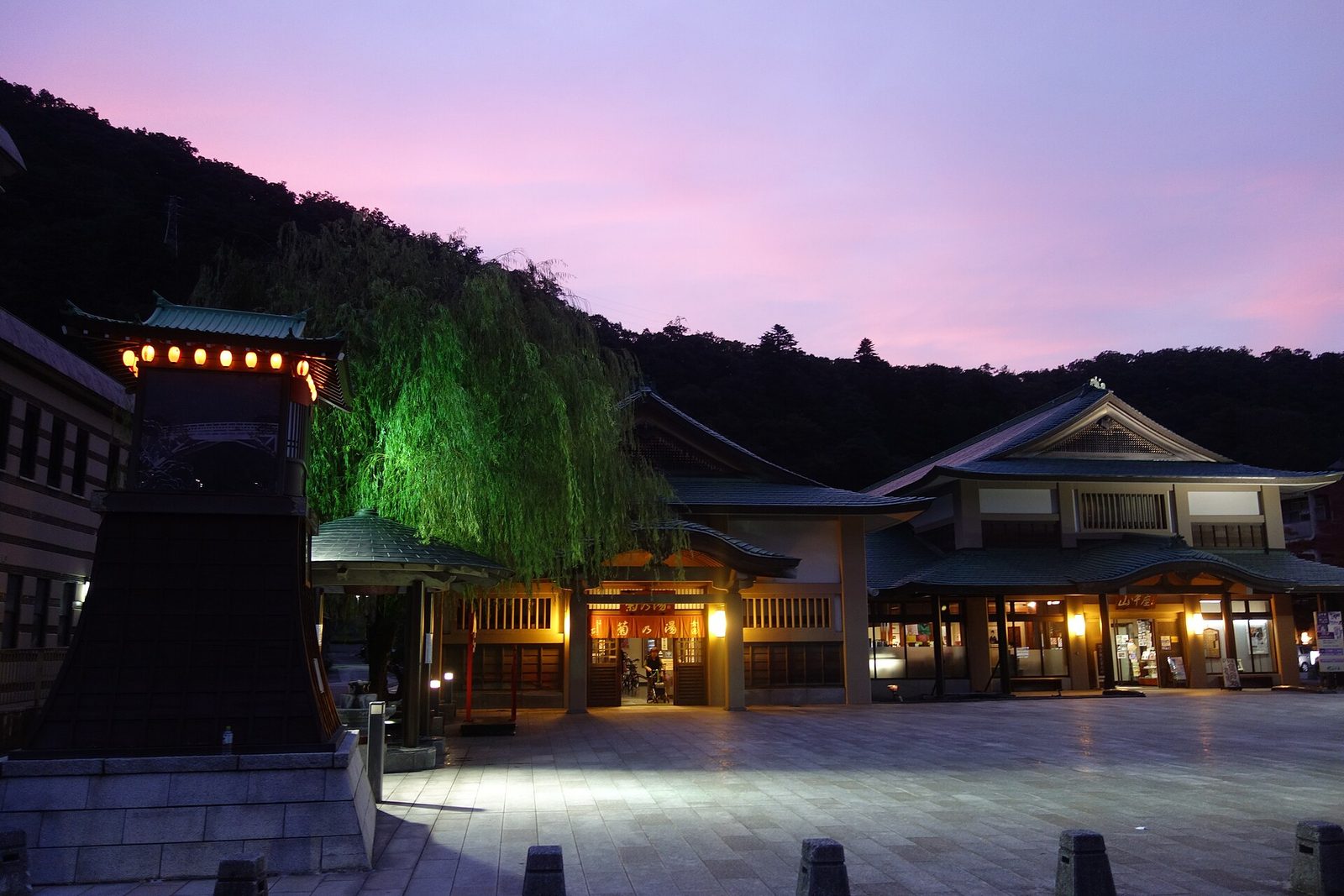
A hot-spring town in the gorge of the Daishoji River in southern Ishikawa. Yamanaka lacquerware wood-turners and Kutani kilns, alongside wagashi shops, coffee and diners along Yuge Kaido and Kakusenkei Gorge, as Rin's picks.
Yamanaka Onsen, on film
5 sights and 16 places, each checked open in 2026, in 49 seconds.
Found somewhere you like? The map and the list below have the address, hours and official site.
Tap for sound
What to eat in Yamanaka Onsen
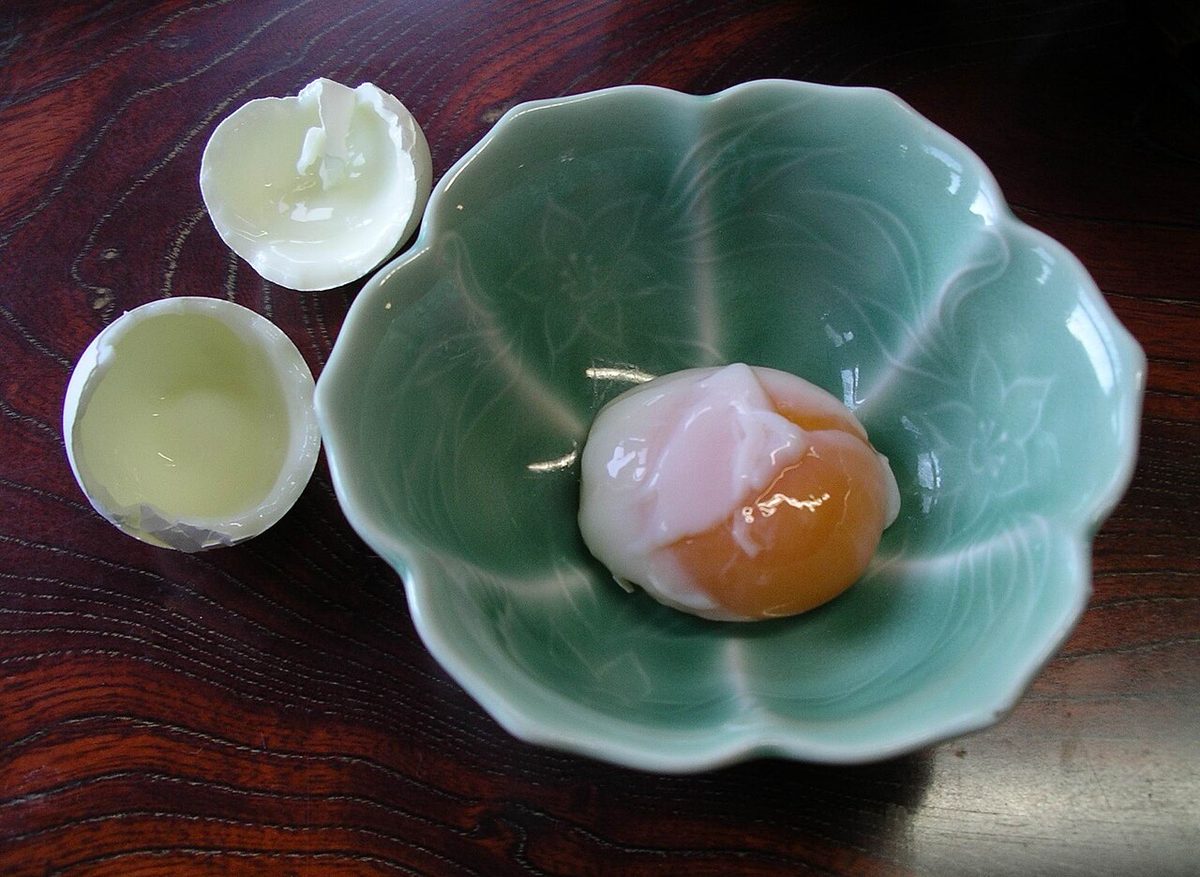
Photo: Blue Lotus from Jigokudani Onsen, Nagano / CC BY 2.0 (Wikimedia Commons) Yusen Tamago (Yamanaka hot-spring eggs)
温泉たまご
Slow-cooked eggs prepared in Yamanaka's thermal spring water so that both the white and the yolk turn creamy and custard-like. Locals call them yusen tamago, using the town's traditional dialect word for hot spring.
Buy raw eggs at Kikunoyu's bathhouse counter to boil for 40 to 90 minutes in the outdoor spring trough, or buy ready-made eggs with dashi at Koidesen.
No photo yet
Nyaa-Nyaa Manju (brown-sugar and miso bun)
娘娘万頭
Bite-sized oval steamed buns with a thin brown-sugar and local-miso skin wrapped around smooth Hokkaido azuki bean paste. Yamanaka Ishikawaya created the sweet in the early Showa era after a local innkeeper suggested naming a town confection after nyaa-nyaa, the Kaga dialect word for a young woman.
Eaten year-round as a single-bite sweet with tea or packed in small gift boxes along Yuge Kaido.
Where to eat it
No photo yet
Kano-gani & Kobako-gani (Kaga snow crab)
加能ガニ・香箱ガニ
Ishikawa's blue-tagged male snow crab (Kano-gani) and smaller roe-bearing female snow crab (Kobako-gani), landed at nearby Hashidate Fishing Port on the Sea of Japan. From November, Yamanaka Onsen inns serve them in winter kaiseki courses while town eateries steam crab kamameshi with hot-spring water.
Eaten boiled, charcoal-grilled, as sashimi and shabu-shabu, or steamed over rice from November to March (Kobako-gani runs only through late December).(Nov–Mar)
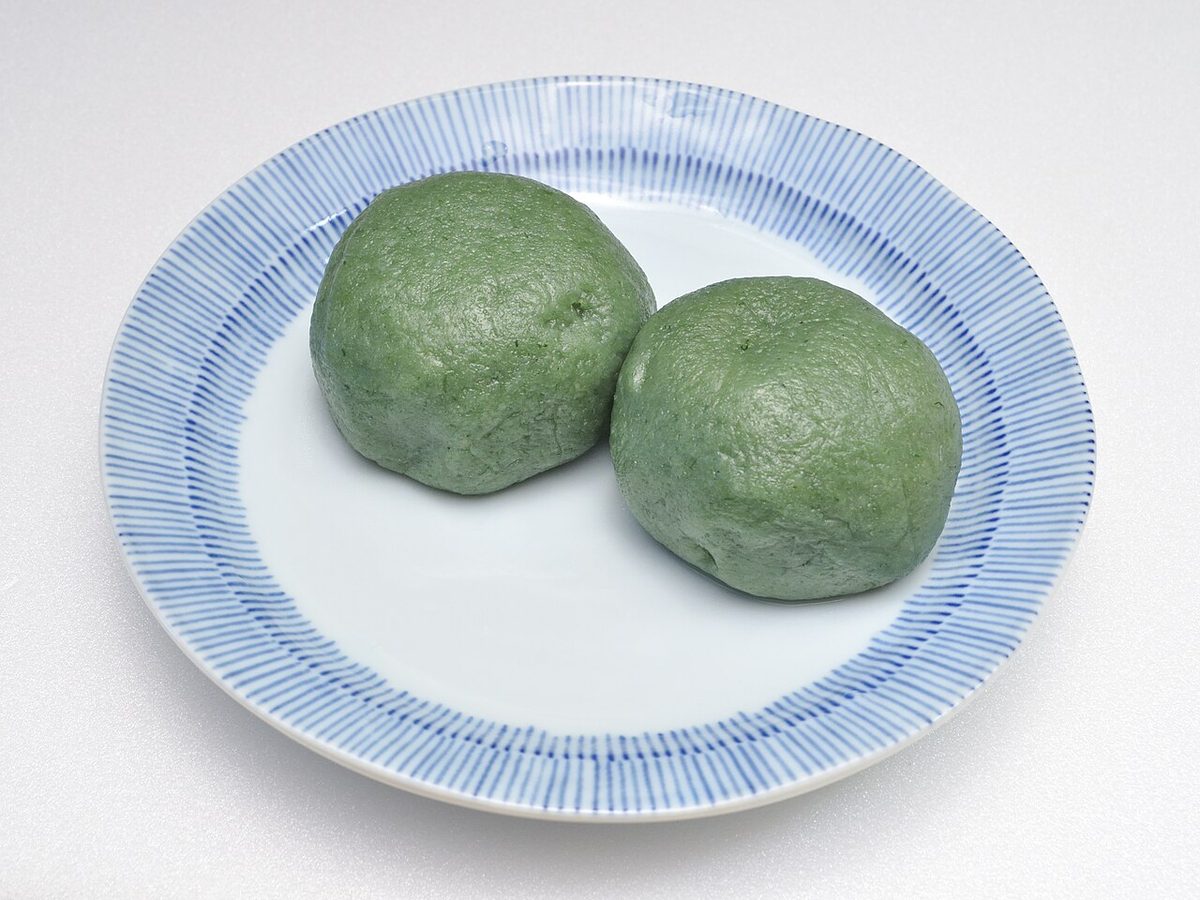
Photo: Ocdp / CC0 (Wikimedia Commons) Kusa Dango (mugwort rice dumplings)
草だんご
Preservative-free rice dumplings kneaded with hand-picked mountain mugwort (yomogi) and dusted with roasted soybean flour (kinako). In Yamanaka's Kayano district, families traditionally made them for spring festivals to pray for health, and local mothers revived the custom in 1990 across from the 2,300-year-old Kayano Great Cedar.
Eaten the same day while soft and fragrant with mugwort, sold in packs of five from mid-April through December 10.(Apr–Dec)
Where Rin would go, on the map — or build your own route
Tap a mark to see the place; squares are museums and sights (landmarks). Use “Build your own route” to make a walk of your own.
Loading the map
Map data © OpenStreetMap contributors
Where Rin would go
Made in Yamanaka Onsen: Yamanaka Lacquerware3
All yamanaka lacquerware →1 / 4
Made in Yamanaka Onsen
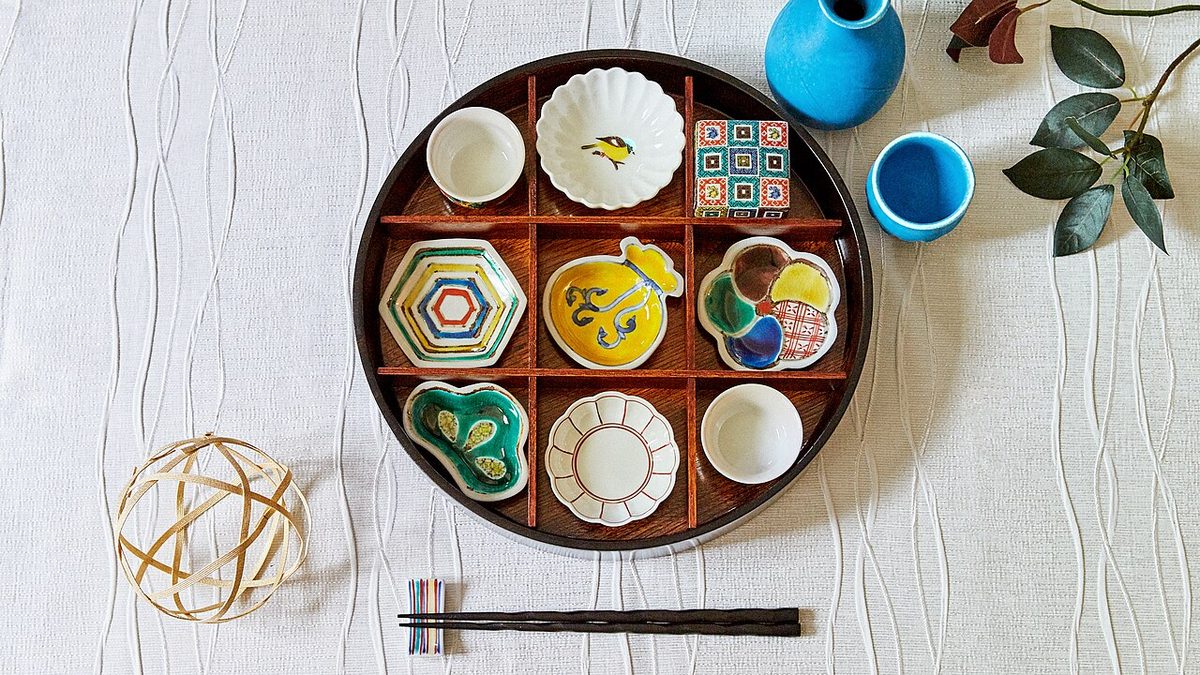
Yamanaka lacquerware is known for wood-turning on a lathe, cutting the timber vertically along the grain (tategi-dori). With a history of more than 400 years, its workshops turn paper-thin bowls and tea canisters in the damp climate of the gorge.
Yamanaka Lacquerware·Photo: MUSUBI KILN / CC BY-SA 2.0 (Wikimedia Commons)
Kakusenkei Gorge & Korogi Bridge
GATO MIKIO/1

Photo: the shop’s official page The flagship shop of wood-turning house Gato Mikio Shoten, founded in 1908, near Korogi Bridge. Carries KARMI tea canisters, thin-turned TOHKA sake vessels and other Yamanaka lacquerware. Closed Thursdays.
9:00–17:00 · Closed: Thursdayschecked Nov 2026
加賀市山中温泉こおろぎ町ニ-3-7
RinI tested a KARMI tea canister. The lid slid shut smoothly, pushing out the air.
Sugatani & Aratani
Urushi no Utsuwa Asada
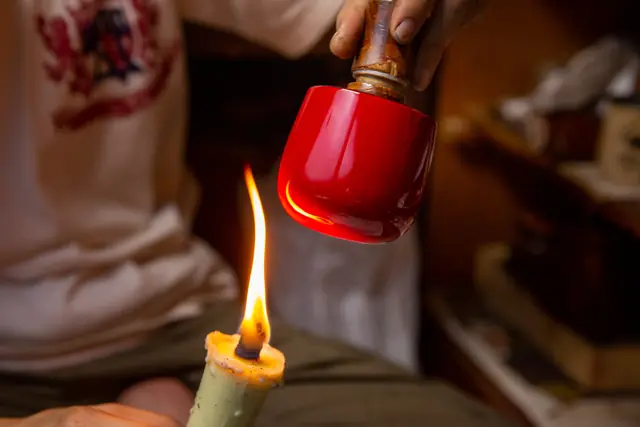
Photo: the shop’s official page うるしの器 あさだ
The workshop shop of Asada Shikki Kogei in Sugatani, where wood-turning and urushi lacquering are done under one roof. Carries keyaki and cherry vessels, and smoky Murakumo-nuri.
Weekdays 9:00–17:00 · Closed: New Year
加賀市山中温泉菅谷町ハ215
RinI picked up a Murakumo-nuri bowl. The smoky candle-soot pattern was subtle.
Uwahara & Haseda
Kobo Jokan
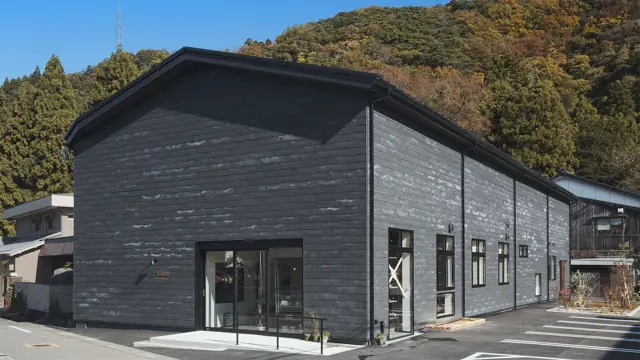
Photo: the shop’s official page 工房 静寛
A tableware and plant shop run by Morita Shikki, founded in 1909. Visitors can watch wood-turners and lacquerers through glass, alongside Nurimono Jokan vessels, thin-turned lamps and houseplants.
10:00–17:00 · Closed: Wednesdayschecked Nov 2026
加賀市山中温泉上原町ワ531
RinI watched the turners through the glass, then chose a bowl. Light in the hand.
Made in Yamanaka Onsen: Kutani Ware1
All kutani ware →1 / 2
Made in Yamanaka Onsen
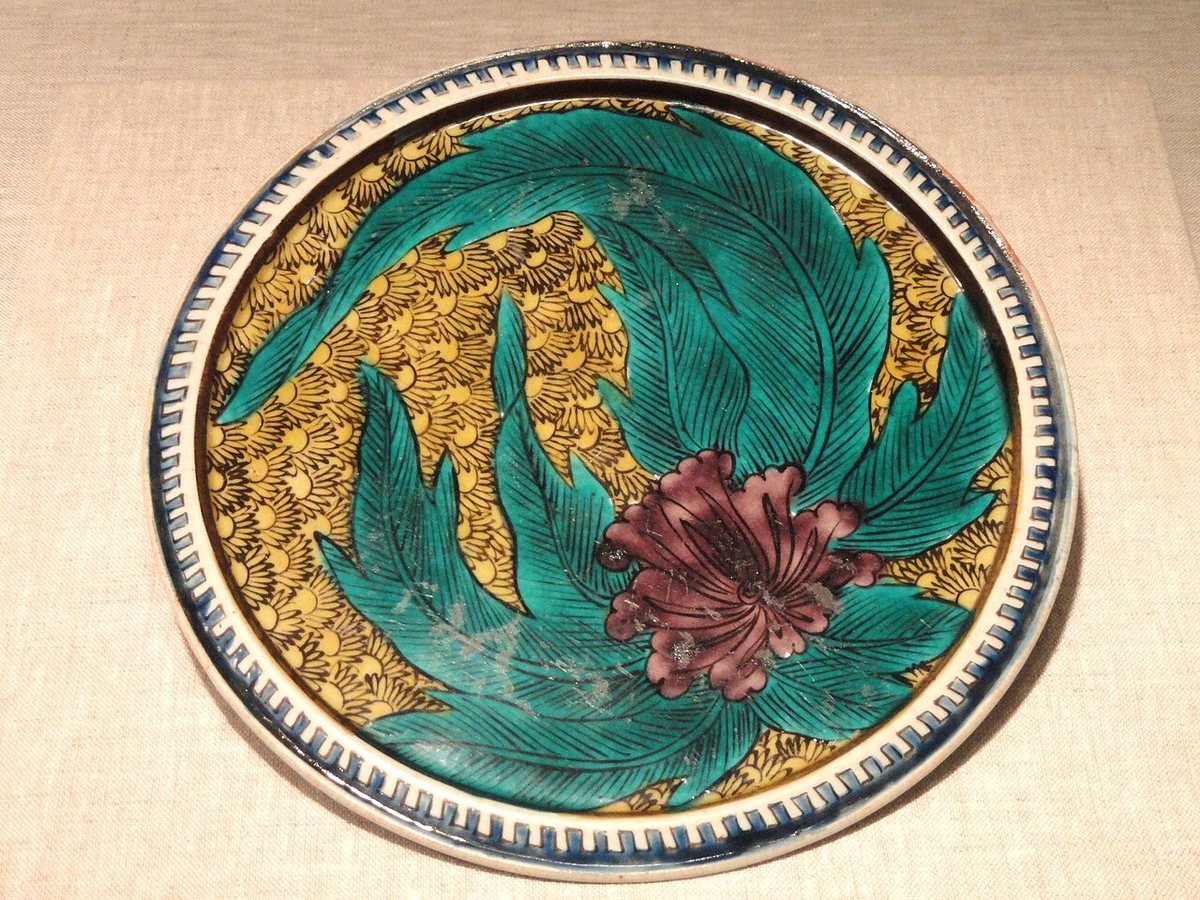
Kutani ware began in the mid-17th century when a kiln was built in Kutani village, upstream from Yamanaka Onsen. It is known for overglaze enamels in five colours—green, yellow, purple, navy blue and red.
An antique Kutani ware porcelain plate with five-color enamel·Photo: Daderot / CC0 (Wikimedia Commons)
Kakusenkei Gorge & Korogi Bridge
Kutani Kiln Kinuya
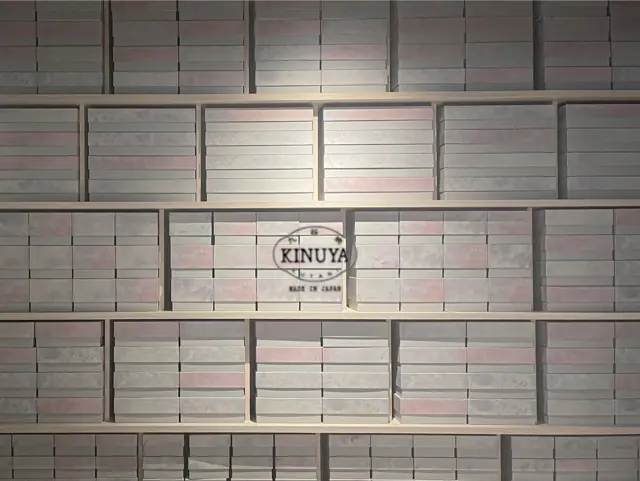
Photo: the shop’s official page 九谷焼窯元 きぬや
A Kutani ware kiln shop in a red-ochre lattice townhouse near the Kakusenkei Gorge entrance. The ground floor sells Kutani vessels and small pieces; upstairs is a wheel-throwing and overglaze studio.
9:00–17:00 (closed 12:00–13:00) · Closed: Thursdayschecked Nov 2026
加賀市山中温泉東町1丁目マ22
RinI picked out one small Kutani plate downstairs. The colours were crisp.
Craft3
All craft →1 / 3
Yuge Kaido & Honmachi
Hata Shikki Company Store
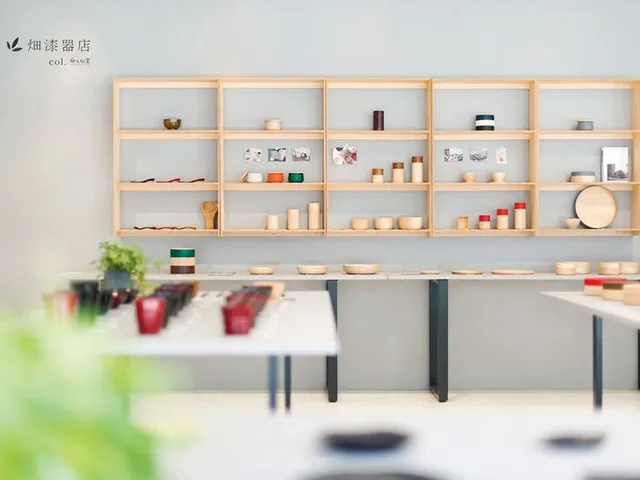
Photo: the shop’s official page 畑漆器店 直営店
Irregular closing days
The street-level shop on Yuge Kaido of Hata Shikki, founded in 1930. Stocks contemporary turned-wood lines such as col., SOJI and ouyouki. Open 10 am to 5 pm; closed Wednesdays.
10:00–17:00 · Closed: Wednesdays (irregular holidays)checked Nov 2026
加賀市山中温泉湯の出町レ23 商山堂ビル1F
RinI picked up the turned-wood vessels. The grain felt soft, so I bought one.
Yuge Kaido & Honmachi
Amu Shop & Cafe
A shop and café in Minami-machi on Yuge Kaido selling contemporary crafts, accessories and foods from Ishikawa. Open 9:30 am to 6:30 pm; closed Wednesdays and the second and fourth Thursdays.
加賀市山中温泉南町ロ11
RinI browsed the Ishikawa craft goods and stopped in the café. Fine handwork.
Kakusenkei Gorge & Korogi Bridge
CRAFTOUR

Photo: the shop’s official page A shop near the entrance to Kakusenkei Gorge selling Yamanaka lacquerware and running private reservation-only tours to local artisans' workshops.
加賀市山中温泉東町1丁目マ21
RinI looked around at the Yamanaka lacquerware. The quiet sheen felt right.
Sweets2
All sweets →1 / 2
Yunomoto-machi
Sankaido
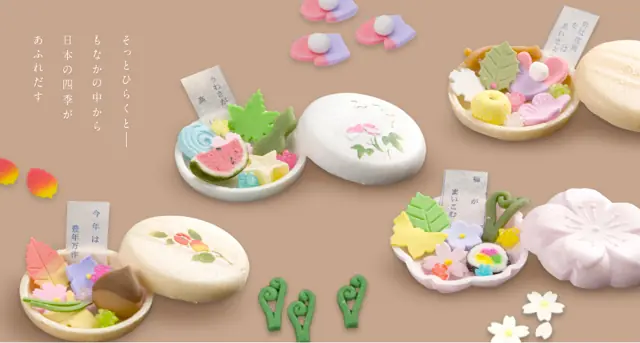
Photo: the shop’s official page 御菓子調進所 山海堂
A wagashi confectioner on Yunomoto-machi, founded in 1905. Makes seasonal dry-sugar sweets Sotto Hirakuto and fresh wagashi. Closed Tuesdays.
Mon, Wed, Fri–Sat 09:00–16:00, Sun & Thu 09:00–13:00 · Closed: Tuesdays
加賀市山中温泉湯の本町ク-8
RinI bought a box of Sotto Hirakuto. The dry-sugar sweets melted right away.
Yuge Kaido & Honmachi
Yamanaka Ishikawaya
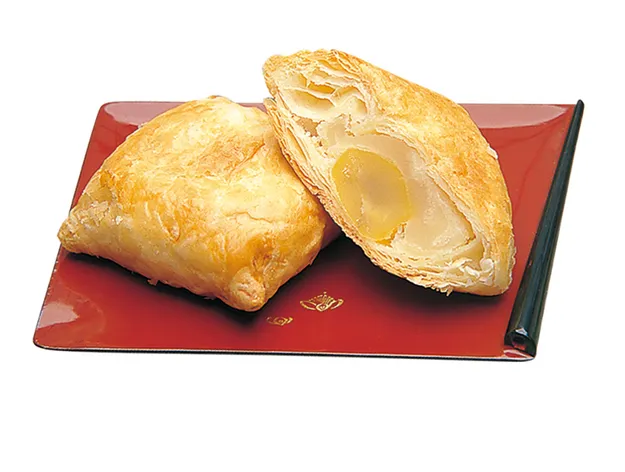
Photo: the shop’s official page 山中石川屋 本店
A wagashi shop on Yuge Kaido, founded in 1905. Known for Nyaa-Nyaa Manju, brown-sugar and local-miso buns filled with smooth azuki paste, and Nyaa-Nyaa Soft.
8:00–17:00 · Closed: Wednesdays, Jan 1–2
加賀市山中温泉本町2丁目ナ24
RinI had Nyaa-Nyaa Manju and the soft serve. The brown-sugar miso skin was fragrant.
Food4
All food →1 / 4
Yunomoto-machi
Enuma Station
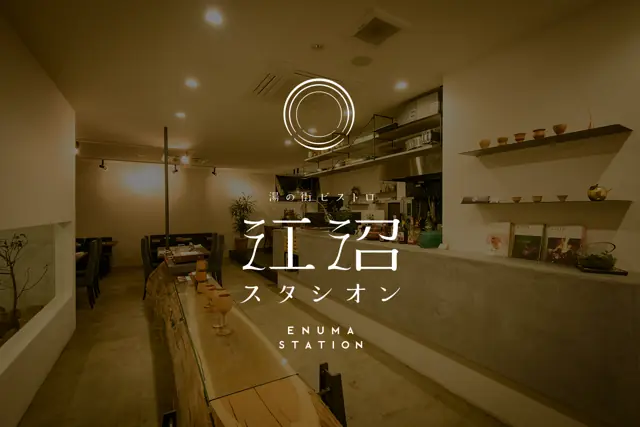
Photo: the shop’s official page 湯の街ビストロ 江沼スタシオン
A French bistro on Yunomoto-machi serving seasonal courses of local Kaga seafood and mountain vegetables with wine. Marks its tenth year in 2026.
Mon–Sat 11:30–14:00 (LO 13:00), 18:00–21:00 (LO 20:00) · Closed: Sundays (temporary closures may occur)
加賀市山中温泉湯の本町ク38
RinI had the fish and vegetable course with wine. The local produce had real depth.
Yuge Kaido & Honmachi
Yamada Shokudo
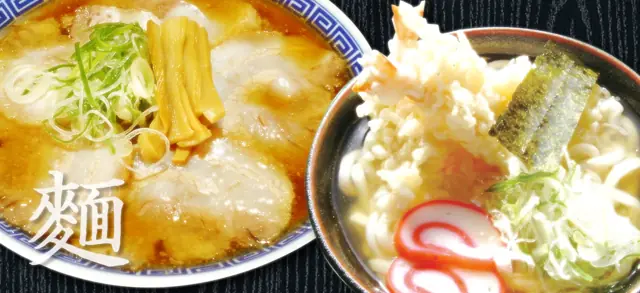
Photo: the shop’s official page 山田食堂
A neighbourhood diner in Honmachi serving house-made udon and soba, rice bowls and set meals. Open 11 am to 2:45 pm and 5:30 to 8:45 pm; closed Thursdays and the first Wednesday.
11:00–14:45, 17:30–20:45 (last order) · Closed: Thursdays and 1st Wednesday of each month
加賀市山中温泉本町1-ヤ34
RinI stopped in at noon for the house-made udon. Smooth and easy to slurp.
Sugatani & Aratani
Warakuan
手打ちそば 和楽庵
A hand-cut soba house in the mountain hamlet of Aratani-machi. Open from spring to early winter, serving pale Gozen soba milled from the heart of the buckwheat and tenzaru.
加賀市山中温泉荒谷町ヌ42
RinI ordered the pale Gozen soba in the mountain hamlet. Clean, delicate flavour.
Uwahara & Haseda
LUCCI CAFE
A lunch café in Kamiyadai serving spice curries made with fermented ingredients such as koji and Noto miso, in plates of one to three curries. Open 11 am to 6 pm; closed Mondays and Tuesdays.
加賀市山中温泉加美谷台1丁目116
RinI got the three-curry plate. The miso gave the spices a rounded depth.
Cafés3
All cafés →1 / 3
Yuge Kaido & Honmachi
Basho Coffee
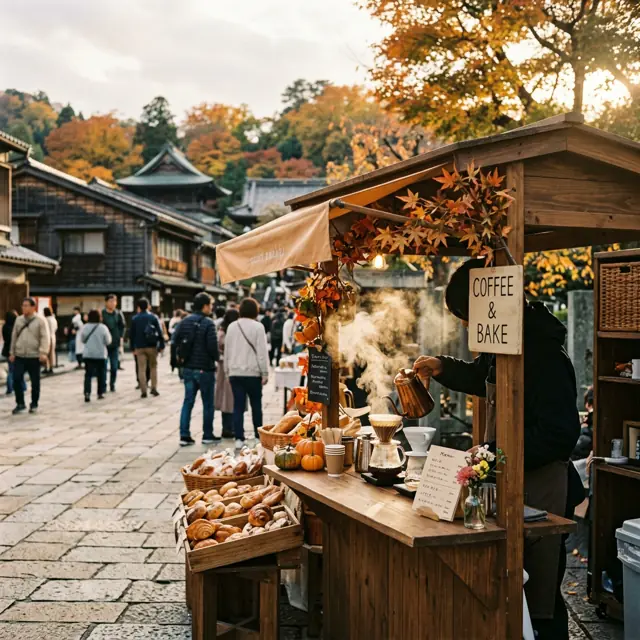
Photo: the shop’s official page 芭蕉珈琲
Irregular closing days
A retro coffee shop founded in 1966, a three-minute walk from Kikunoyu. House-roasted beans are brewed in glass siphons in a room with a banana-tree stained-glass window. Open 9 am to 7 pm, irregular holidays.
9:00–19:00 · Closed: Irregularchecked Nov 2026
加賀市山中温泉本町1-ヤ-6
RinI drank a siphon coffee under the stained glass. Clean, sharp bitterness.
Kakusenkei Gorge & Korogi Bridge
Higashiyama Bonheur
東山ボヌール
A café in a converted former inn by Kurotani Bridge at the entrance to Kakusenkei Gorge. Serves hand-drip coffee, Mori no Cake and beef stew rice. Café hours 10 am to 4 pm.
Fri–Wed 10:00–16:00 (cafe LO 15:00; lunch 11:00–15:00, LO 14:00) · Closed: Thursdays
加賀市山中温泉東町1丁目ホ19-1
RinI had the hand-drip coffee and Mori no Cake. Rich aroma, easy to finish.
Yunomoto-machi
Yamanaka PORTAL
山中PORTAL
A café in a renovated townhouse off Yunomoto-machi. Serves specialty coffee and house-made drinks with slightly bitter pudding, fruit sandwiches and muffins.
加賀市山中温泉湯の本町ク27
RinI ordered coffee and the slightly bitter pudding. They paired well.
Rin is a fictional traveller. Every place here was checked by the editors to exist and be open (checked 2026-11-12). Please confirm hours on the official site before you go. Paid listings are always marked. If you are the shop and would like a photo removed, write to editor@vual.jp and we will take it down at once.
To see — art and sights (landmarks)
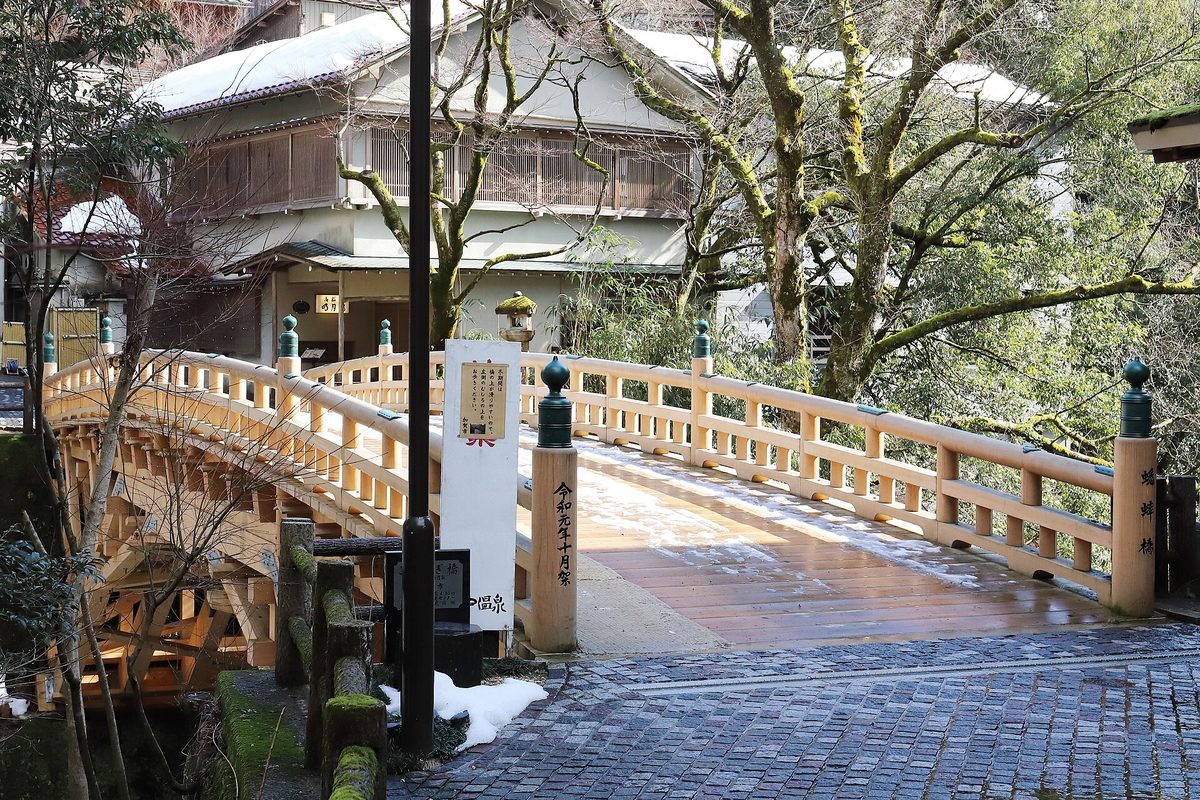
Photo: 藤谷良秀(Fujitani Yoshihide) / CC BY-SA 4.0 (Wikimedia Commons) Sights · Kakusenkei Gorge & Korogi Bridge
Korogi Bridge
An all-cypress bridge over Kakusenkei Gorge. The current fourth bridge was rebuilt in 2019, and a 1.3 km gorge walking path runs from here to Kurotani Bridge.
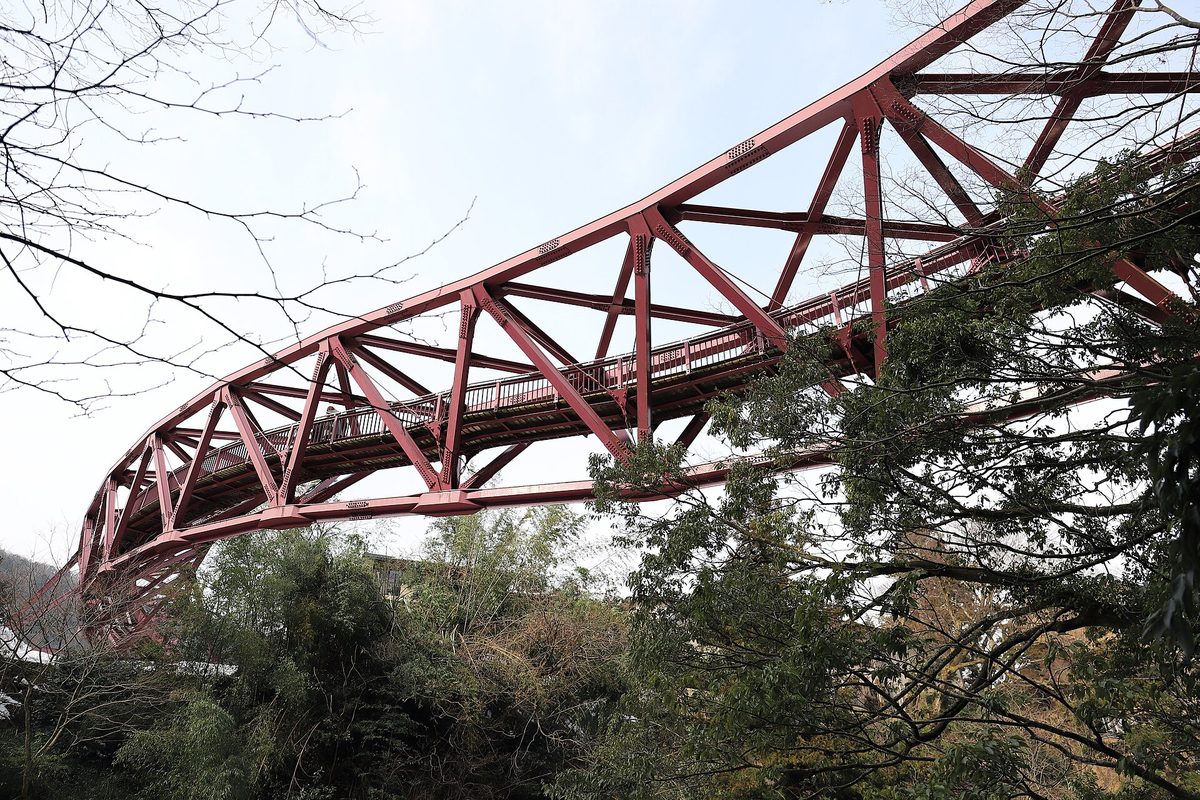
Photo: 藤谷良秀(Yoshihide Fujitani) / CC BY-SA 4.0 (Wikimedia Commons) Sights · Kakusenkei Gorge & Korogi Bridge
Ayatori Bridge
A 94.7-metre pedestrian bridge midway between Korogi Bridge and Kurotani Bridge, designed in an S-curve of crimson-purple steel by Sogetsu headmaster Hiroshi Teshigahara. Free to cross.
Sights · Yuge Kaido & Honmachi
Kikunoyu Public Bath
Yamanaka Onsen's public bathhouse, with separate buildings for men and women. Named after a haiku by Matsuo Basho; open 7 am to 10 pm, closed second and fourth Tuesdays.
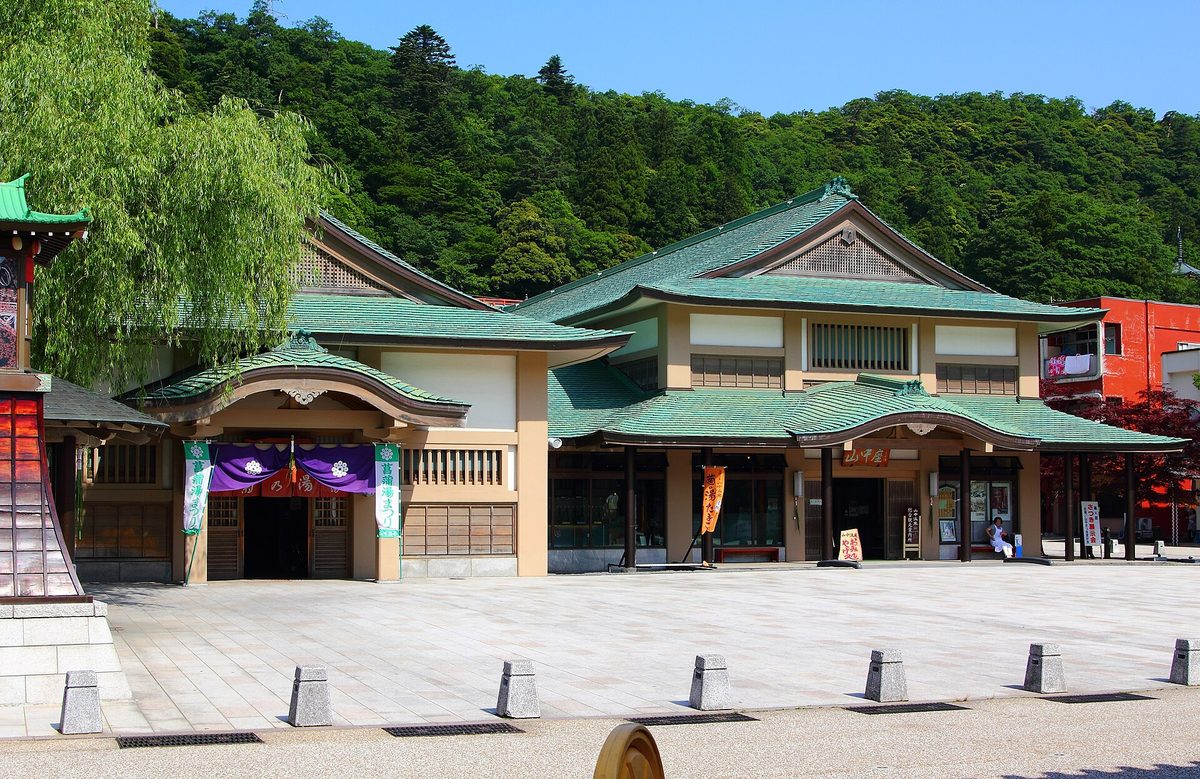
Photo: Kakidai / CC BY-SA 4.0 (Wikimedia Commons) Sights · Yuge Kaido & Honmachi
Yamanaka-za
A hall for Yamanaka-bushi folk song and tourist information next to the women's bath of Kikunoyu, with lacquered pillars and maki-e coffered ceilings. Geiko performances are held on weekends and holidays.
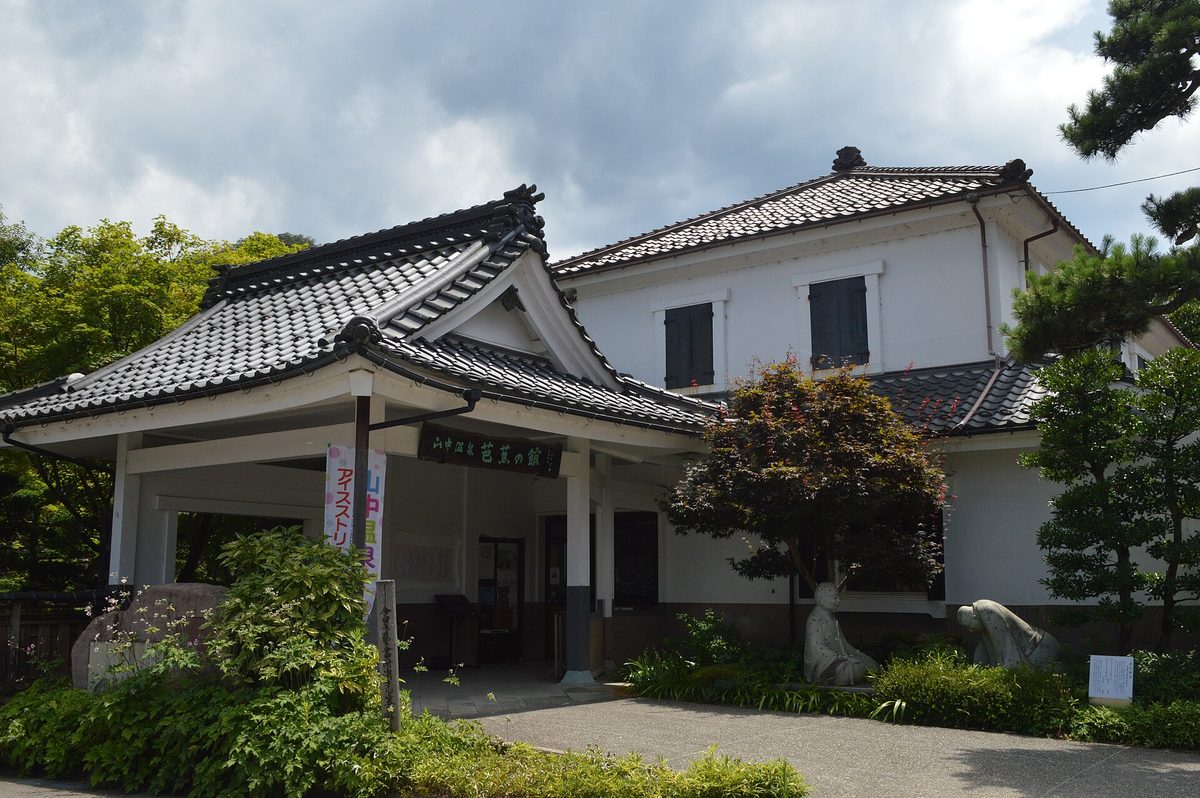
Photo: Asturio Cantabrio / CC BY-SA 4.0 (Wikimedia Commons) Art · Yuge Kaido & Honmachi
Basho no Yakata
An exhibition house in a 1905 ryokan villa with a garden, displaying items linked to Matsuo Basho and Yamanaka lacquerware. Open 9 am to 5 pm; closed Wednesdays.
These are landmarks, not Rin's picks. Each was checked to be open on its official site (checked 2026-11-12). Please confirm hours before you go.
Day trips from Yamanaka Onsen
Classics
- Eiheiji Templeabout 21 km
The head temple of the Soto sect of Zen Buddhism, it is still a training monastery where many monks practice strictly. Best in May for fresh greenery and November for autumn foliage.
- Tojinbo Cliffsabout 21 km
A scenic place with steep cliffs and globally rare columnar jointing of pyroxene andesite. Best in the evening for sunset views.
- Kenrokuen Gardenabout 44 km
A Japanese garden built by the lords of the Kaga Domain, ranked as one of the Three Great Gardens of Japan, and offering beautiful seasonal scenery. Famous for snow-viewing ropes in winter and cherry blossoms in spring.
- Higashi Chaya Districtabout 45 km
A historic district with preserved tea house architecture from the Edo period, offering a glimpse into traditional culture. Early morning walks are recommended.
Hidden spots
- Heisenji Hakusan Shrineabout 27 km
A historic Hakusan shrine founded in 717 whose vast cedar-shaded grounds are carpeted end-to-end in lush green moss. Lush moss is most vivid from May to October and autumn leaves peak in November; visit early morning for quiet stone-paved paths.
- Echizen Ono Castleabout 31 km
A hilltop castle in Ono that appears to float above a sea of morning clouds from autumn to spring. Sea-of-clouds views peak from October to November around dawn to 9:00 AM; castle keep opens 9:00–16:00 (17:00 Apr–Sep).
- Shirayama Hime Shrineabout 31 km
The head shrine of over 3,000 Hakusan shrines across Japan, approached along a mossy stone path through ancient cedars. Visit early morning in June for lush moss or mid-November for autumn leaves along the 250m cedar approach.
Distances are straight-line from the town centre. Each page has how to get there and a suggested day.