36.7° N
Nagano
Nagano, Japan
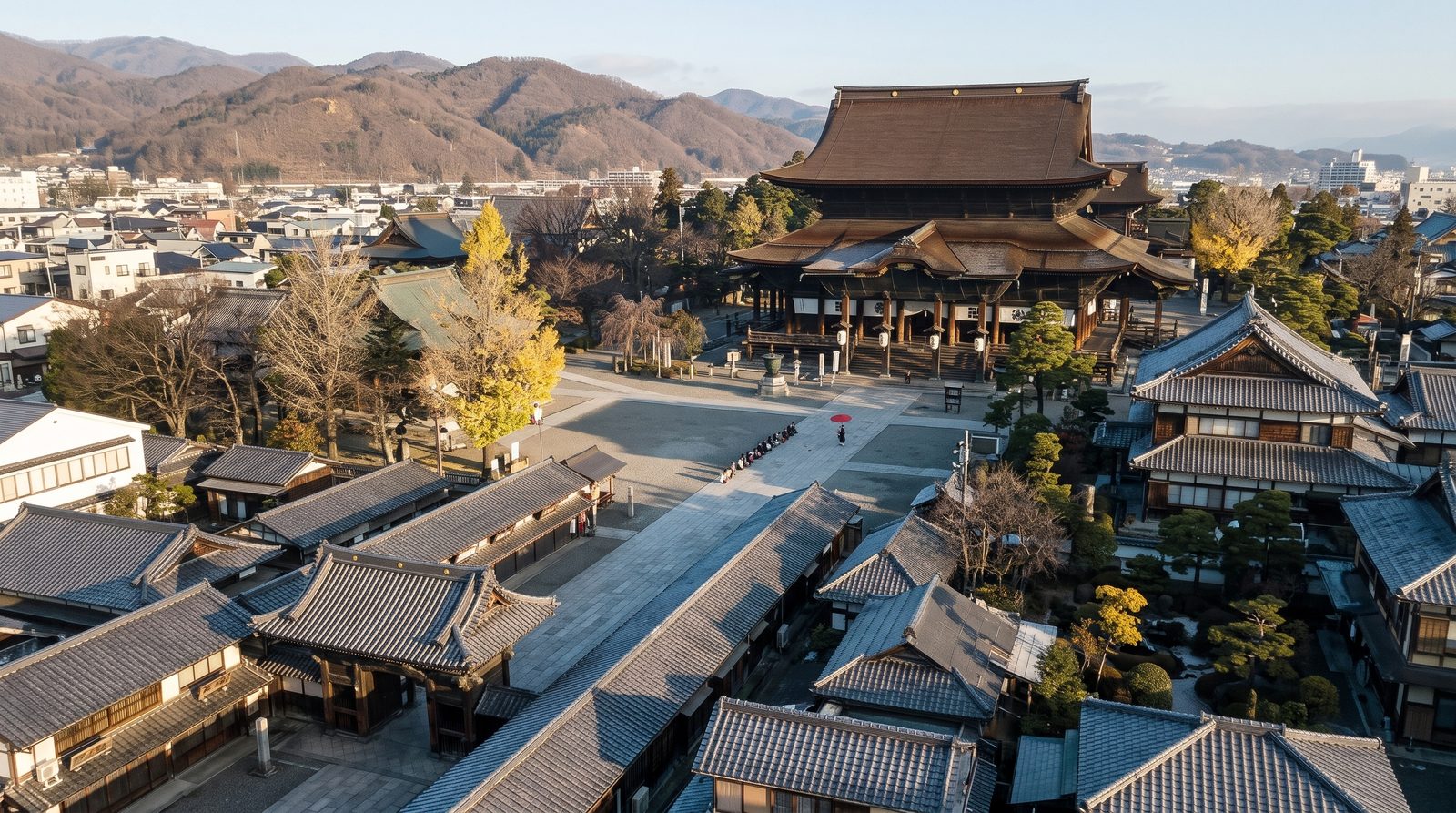
A temple town on the gentle slope leading up to Zenkoji, in the north of Nagano Prefecture. Along the stone-paved approach and the side lanes of Daimon, travellers find oyaki dumplings, hand-cut soba and shichimi spice, together with craft shops, coffee and sweets as the air turns cold toward winter: Rin’s picks.
Nagano, on film
5 sights and 15 places, each checked open in 2026, in 47 seconds.
On the left, the city guide; on the right, Rin's day here as a film. The map and the list below have the address, hours and official site of each place.
Tap for sound
What to eat in Nagano
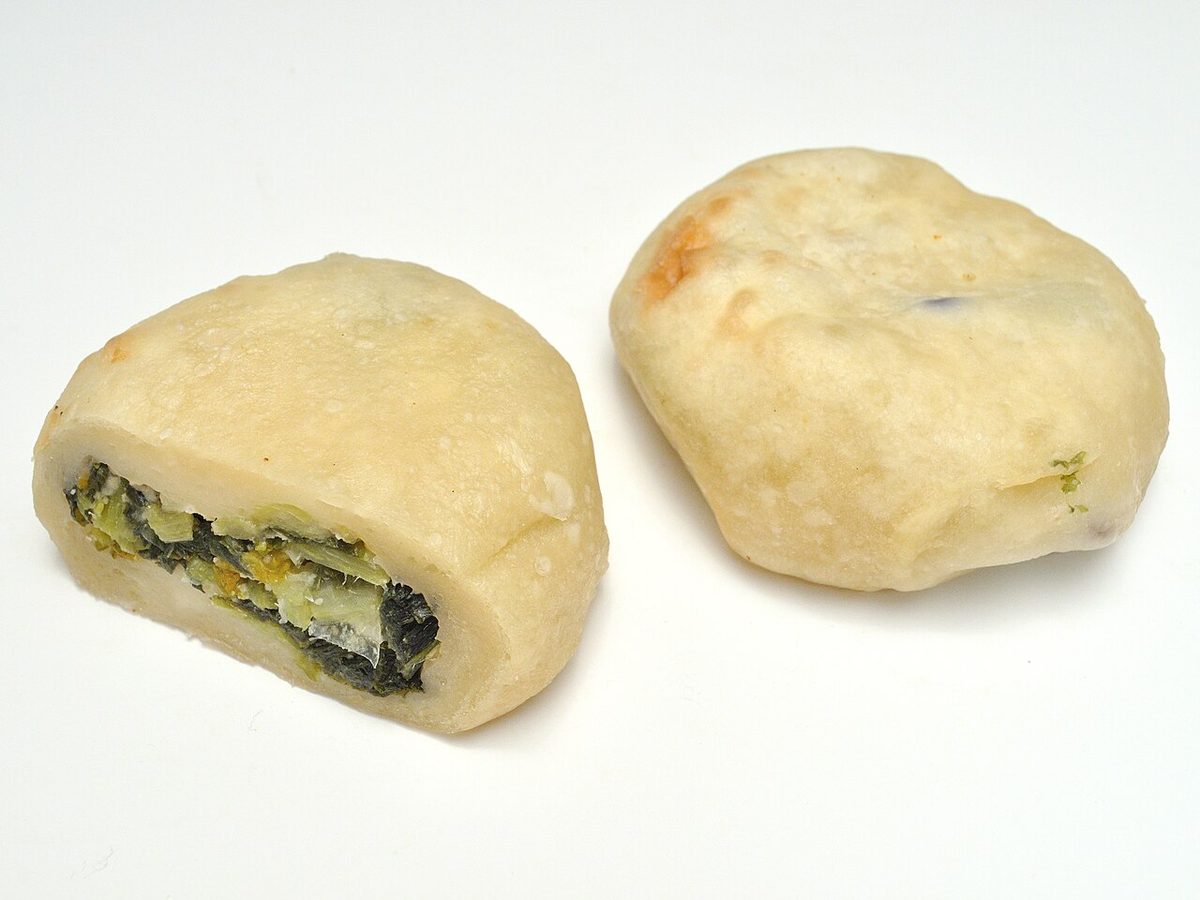
Photo: Ocdp / CC0 (Wikimedia Commons) Oyaki (stuffed dumplings)
おやき
Round dumplings made from wheat or buckwheat dough stuffed with seasoned vegetables, pickles, or sweet bean paste, then steamed, baked, or griddled. In mountainous northern Nagano, where rice was historically scarce, wheat and buckwheat dumplings developed as a staple food and remain a fixture along Zenkoji's temple approach.
Eaten warm as a snack while walking the temple approach, filled with nozawana greens, miso eggplant, kabocha, or sweet red bean.
Where to eat it
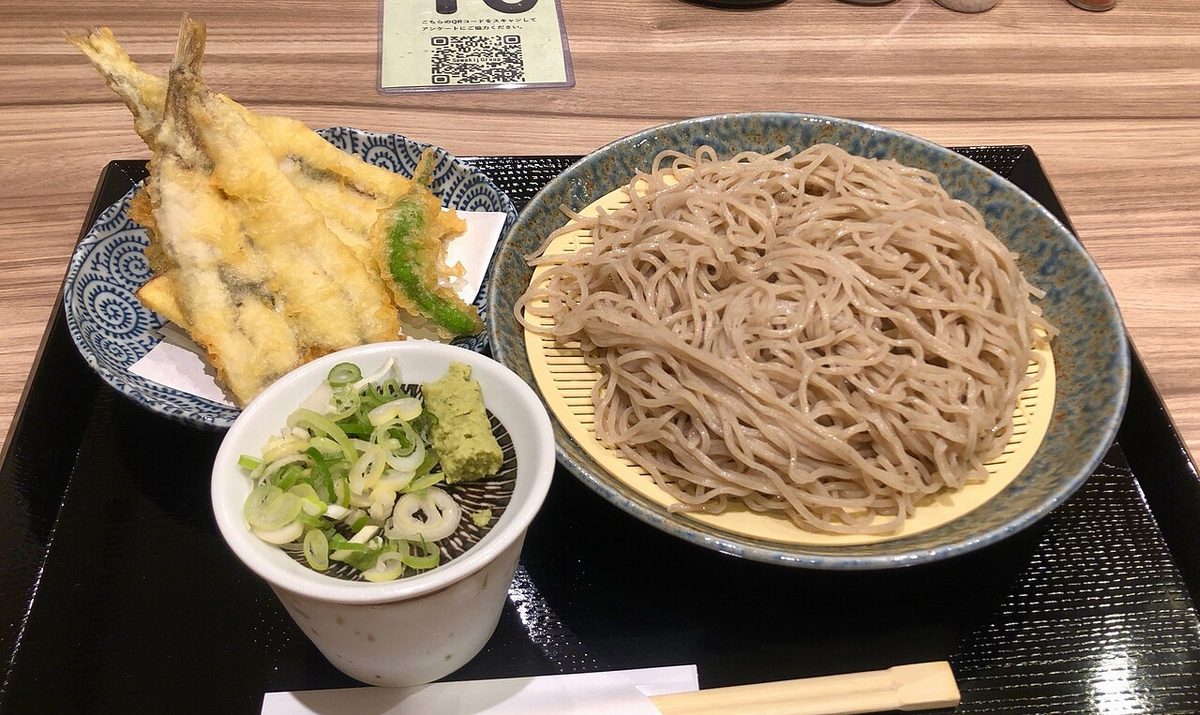
Photo: KKPCW / CC BY-SA 4.0 (Wikimedia Commons) Shinshu soba (buckwheat noodles)
信州そば
Buckwheat noodles made from grain grown in Nagano's cool highlands, where volcanic soil, wide day-to-night temperature swings, and mountain water shape the flour's aroma. Around Zenkoji, monzen soba houses have served pilgrims along the temple approach for centuries.
Ordered chilled on a bamboo tray (zaru soba) with dipping sauce—or warm in broth—with newly harvested shinsoba arriving from late October to November.
Where to eat it
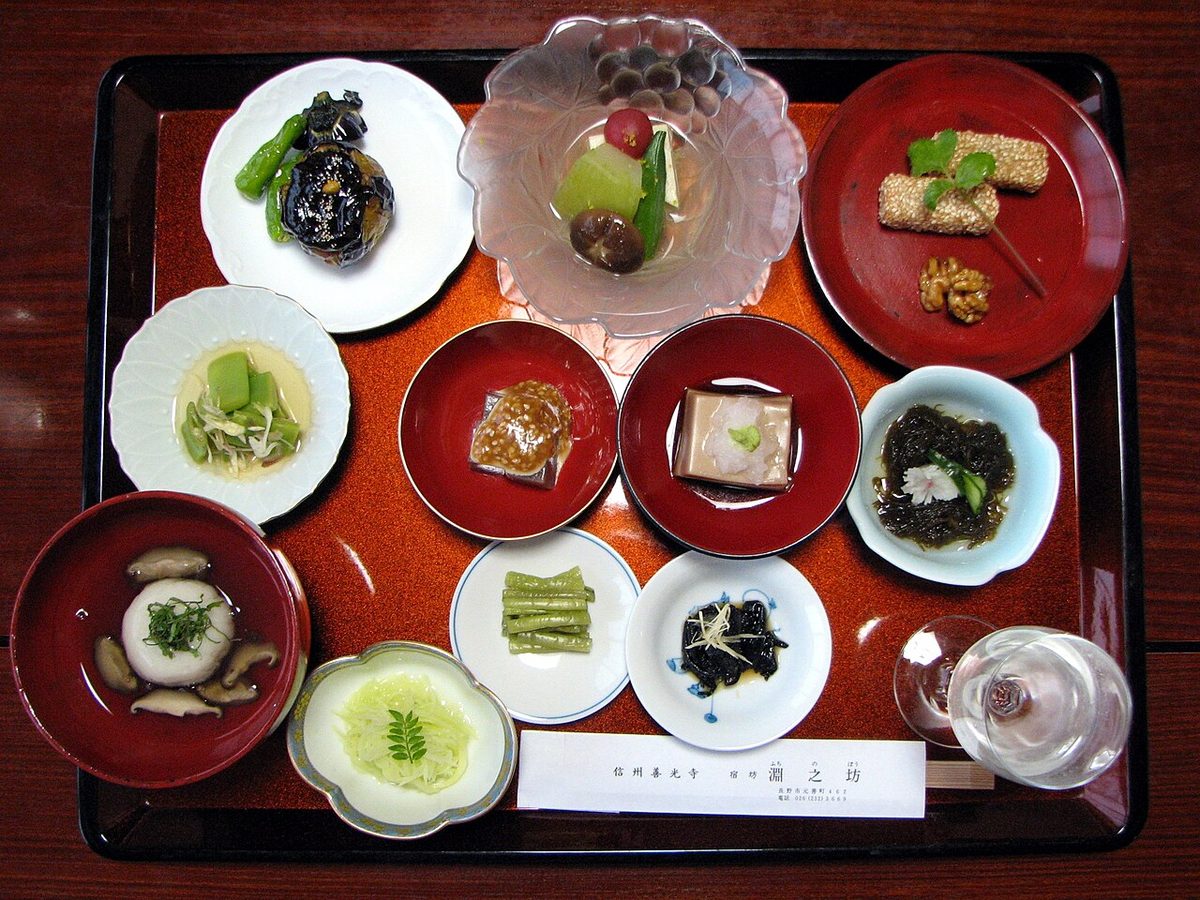
Photo: Unknown / CC BY-SA 3.0 (Wikimedia Commons) Shojin ryori (Buddhist vegetarian temple cuisine)
精進料理
Plant-based Buddhist temple cuisine made without meat or fish, built around sesame tofu, mountain vegetables, walnuts, mushrooms, and seasonal Shinshu produce. Zenkoji is lined with 39 shukubo (temple lodgings) that continue this pilgrimage dining tradition for overnight guests and day visitors.
Served as multi-course meals by advance reservation at Zenkoji shukubo lodgings, typically at lunch (from around 11:30) or with an overnight stay.
No photo yet
Gyunyu-pan (Nagano milk bread)
牛乳パン
Thick, soft white bread filled with sweet milk cream, sold in retro illustrated bags at local bakeries. Developed in Nagano Prefecture in the 1950s and shared through the prefectural bakers' association, it remains a long-standing neighbourhood bakery staple in Nagano City.
Bought in the morning or early afternoon at neighbourhood bakeries before loaves sell out, eaten as a snack or light meal.
Where to eat it
- エビスパンMap
Where Rin would go, on the map — or build your own route
Tap a mark to see the place; squares are museums and sights (landmarks). Use “Build your own route” to make a walk of your own.
Loading the map
Map data © OpenStreetMap contributors
Where Rin would go
Made in Nagano: Shinshu Oyaki2
All shinshu oyaki →1 / 3
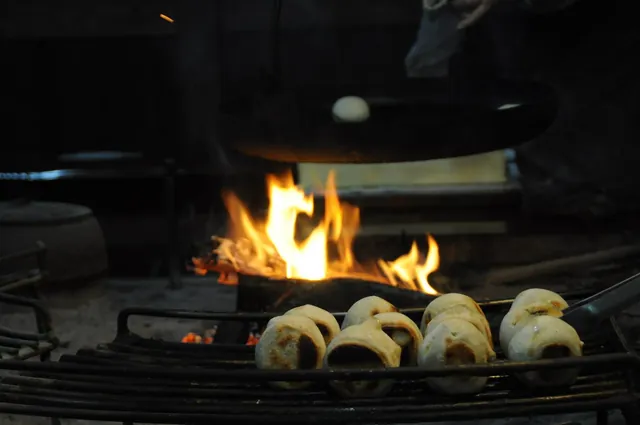
Made in Nagano
Oyaki are wheat-dough dumplings filled with nozawana greens, dried daikon, sweet azuki beans or seasonal vegetables, then steamed or baked. Along Nakamise and in Daimon, shops still shape them by hand and toast them over a charcoal irori hearth or griddle.
Shinshu Oyaki at Ogawanosho, Daimon·Photo: Ogawanosho, Daimon (official site)
Nakamise / Omotesando
Maruhachi Takiya
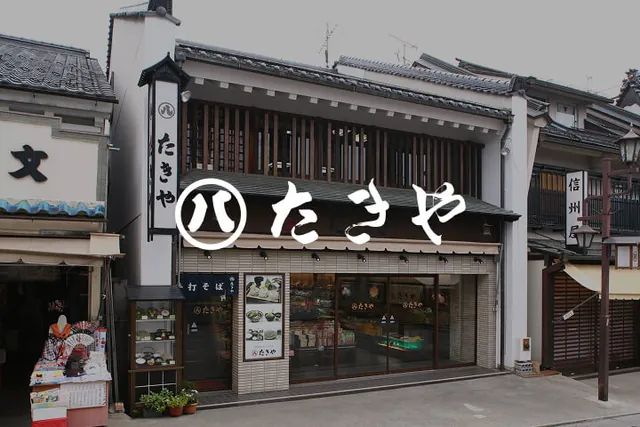
Photo: the shop’s official page 丸八たきや
A shop on Zenkoji’s Nakamise approach, founded in 1918. Downstairs it bakes handmade oyaki filled with local vegetables at the storefront; upstairs it serves hand-cut ni-hachi soba. Open daily, shop 9:00–17:00 and soba 10:30–15:00.
Shop 9:00-17:00; Soba dining 10:30-15:00 (closes when sold out) · Closed: Open daily (no regular closing days)
長野市元善町482
RinPick up one hot nozawana oyaki at the counter to walk with.
Daimon
Ogawanosho, Daimon
Photo: the shop’s official page 小川の庄 大門店
The Daimon outpost of Ogawa Village’s Jomon Oyaki, inside a storehouse of Patio Daimon. Thin domestic-wheat dumplings stuffed with nozawana or azuki, either steamed or toasted over a charcoal irori hearth. Open 9:00–17:00 (hearth 10:00–15:00), closed Wednesdays.
9:00-17:00 (Irori hearth 10:00-15:00; weekday oyaki-making experience from 13:00, one group only) · Closed: Wednesdays (open on national holidays, closed the following day)
長野市大門町53(ぱてぃお大門内)
RinBefore the steamed ones, one nozawana toasted over the hearth.
Made in Nagano: Shinshu Soba2
All shinshu soba →1 / 3
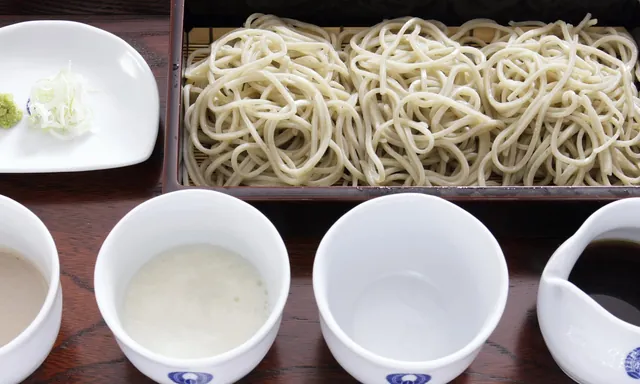
Made in Nagano
Buckwheat grown in the cool, mist-prone highlands of northern Shinshu is stone-milled and cut by hand in the temple town below Zenkoji. Around Daimon, old houses serve styles ranging from all-buckwheat juwari soba to eleven-part toichi soba.
Shinshu Soba at Fujikian·Photo: Fujikian (official site)
Daimon
Fujikian
Photo: the shop’s official page 門前そば処 藤木庵
A soba house on Zenkoji Omotesando, founded in 1827. It stone-mills Kurohime kirishita buckwheat on site for toichi soba—ten parts buckwheat to one part wheat. Open 11:00–15:00, closed Tuesdays, Thursdays and irregular days; no table reservations.
11:00-15:00 (last order 14:30) · Closed: Tuesdays, Thursdays, and irregular holidays (except national holidays and peak seasons)
長野市大門町67番地
RinThe Gokuraku soba, which comes with broth, grated yam and walnut dip.
Daimon
Juwari Soba Daizen
十割そば 大善
A 100-percent buckwheat juwari soba house in Daimon, made with Shinshu buckwheat and spring water from Mount Togakushi, paired with wheat-free tamari sauce aged in jars. Open 10:30–15:00 until sold out; closed Wednesdays; walk-in only.
10:30-15:00 (closes once soba sells out) · Closed: Wednesdays (except Golden Week and Year-End/New Year)
長野市大門町46-1
RinTwo-tone soba, pairing pale sarashina with dark juwari.
Craft3
All craft →1 / 3
Daimon
geshi shop & gallery
夏至(geshi)shop & gallery
A shop and gallery opened in 2002 upstairs in a Patio Daimon storehouse, carrying contemporary ceramics, woodwork, lacquer, glass and clothing alongside regular exhibitions. Open 11:00–18:00, closed Tuesdays and Wednesdays (Tuesdays only during shows).
11:00-18:00 · Closed: Tuesdays and Wednesdays (Tuesdays only during exhibitions; irregular closures announced in News)
長野市大門町54 2F(ぱてぃお大門内)
RinClimb to the upstairs storehouse and look closely at the pots and baskets.
Daimon
Takei Kogei
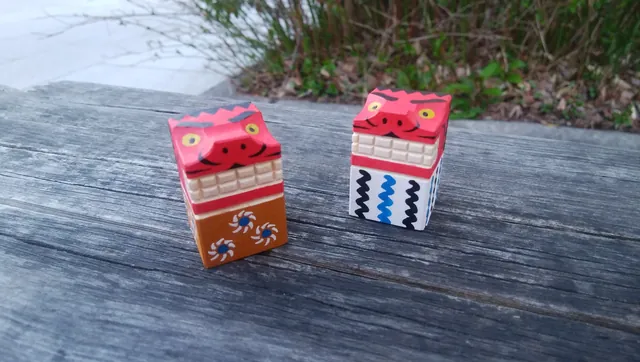
Photo: the shop’s official page 武井工芸店
A folk-craft shop on Zenkoji Omotesando, founded in 1893. It stocks Shinshu Nomin-Bijutsu woodcarvings and regional handwork, with a relocated Taisho-era storehouse gallery in the back. Open 9:00–18:00.
長野市大門町512
RinAfter browsing the shop, step back into the old storehouse gallery.
Higashinomon / Nishinomon
Roger
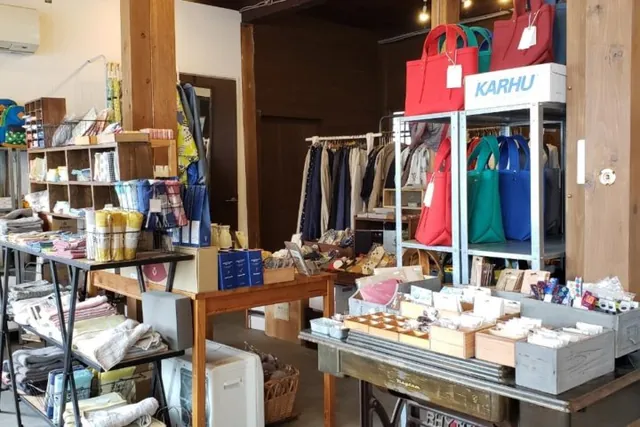
Photo: the shop’s official page Roger(ロジェ)
A lifestyle shop on a quiet lane in Kami-Nishinomon, west of Zenkoji, stocking small household pieces and seasonal goods from Europe and beyond. Open 10:00–16:00, irregular closing days.
10:00-16:00
長野市大字長野上西之門町604-1
RinStep off the main approach to look for one small piece for the table.
Sweets3
All sweets →1 / 3
Higashinomon / Nishinomon
Fujita Kuemon Shoten
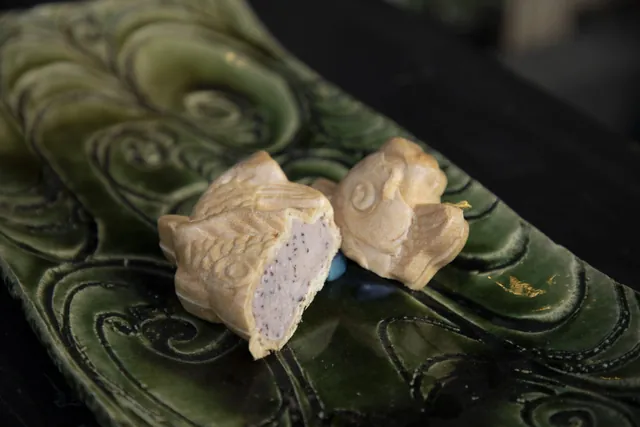
Photo: the shop’s official page 藤田九衛門商店
An early-morning shop in Higashinomon baking koi-yaki, carp-shaped cakes of thin Nagano-wheat batter filled with house-simmered hana-mame bean paste, with around ten kinds of matcha inside. From 6:30 (7:00 Dec–Mar) until sold out; irregular holidays, mostly Wednesdays.
6:30 until sold out (7:00 until sold out from December through March) · Closed: Irregular holidays (generally Wednesdays)
長野市東之門町400-2
RinA hana-mame koi-yaki with a bowl of Toyamago matcha.
Daimon
Patisserie HEIGORO, Main Shop

Photo: the shop’s official page パティスリー HEIGORO 本店
A patisserie in Daimon run by the historic Fujiya Gohonjin (founded 1648), selling Basque cheesecake, butter cake and baked sweets. Retail only for now, with its café suspended. Open 10:00–17:00, closed Wednesdays and Thursdays.
10:00-17:00 (patisserie retail only; cafe seating currently suspended) · Closed: Wednesdays and Thursdays
長野市大門町515
RinEither the Basque cheesecake or the plain Hotel Fujiya butter cake.
Daimon
Wagashi Mamekoyomi
和菓子 豆暦
A small wagashi shop on Nishi-machi, one lane west of Omotesando, making seasonal namagashi, branded dorayaki and dry sweets by hand, with warabimochi on weekends. Open 9:00–17:00, closed Tuesdays and Wednesdays.
長野市西町1042-2
RinTwo seasonal namagashi, and one stamped dorayaki.
Food2
All food →1 / 2
Daimon
Yawataya Isogoro, Main Shop
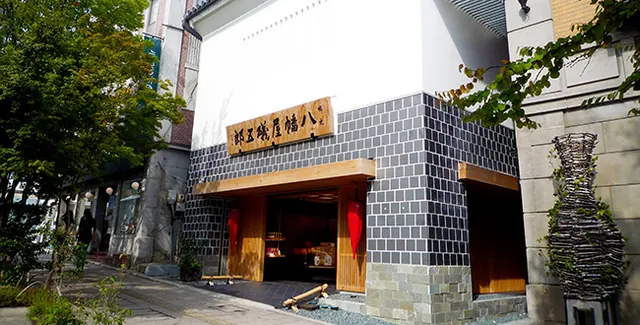
Photo: the shop’s official page 根元 八幡屋礒五郎 本店
The main shop of the shichimi spice maker founded at Zenkoji in 1736 and at Daimon-cho since 1952. Alongside the classic tins, it custom-blends seven-spice mixes from around forty ingredients on the spot. Open daily 9:00–18:30.
9:00-18:30 · Closed: Open daily (no regular closing days)
長野市大門町83
RinBesides the classic tin, have a bag blended heavy on sansho and yuzu.
Nagano Station / Shinden-cho
veil
veil おやつとごはん
A second-floor kitchen and bakehouse in Shinden-cho making weekly bentos with Shinshu rice and seasonal vegetables alongside puddings and baked sweets. Open for morning plates on weekends and holidays; bento pickup until 18:00.
長野市南長野新田町1144-4 ラトール新田2F
RinChoose a weekly bento, and one baked sweet from the case.
Cafés3
All cafés →1 / 3
Higashinomon / Nishinomon
Shinkoji Cafe
新小路カフェ
A backstreet café in Higashi-machi’s Shinkoji courtyard serving homestyle lunches with garden vegetables and house-made miso, waffles and winter apple pie, alongside local pottery. Open 10:00–17:00 (lunch 11:30–14:00), closed Mondays and Tuesdays.
10:00-17:00 (Lunch 11:30-14:00; last order 16:30) · Closed: Mondays and Tuesdays
長野市東町142-2 SHINKOJI北棟1F
RinIn winter, sit near the pellet stove with warm apple pie.
Daimon
Morino Coffee Kumori Tokidoki Hare
森乃珈琲店 曇り時々晴れ 本店
A house-roasted coffee shop in Patio Daimon, pouring hand-drip coffee from beans roasted on site alongside handmade waffles and curry. Reopened in November 2026 on weekends and holidays only, 11:00–16:00.
長野市大門町53-1(ぱてぃお大門内)
RinPair a fresh waffle with a cup of house-roasted coffee inside the storehouse.
Gondo
R-DEPOT

Photo: the shop’s official page A reuse hub in a former NTT telegraph building west of Gondo. On the ground floor, a shop of salvaged tableware, furniture and old timber sits beside the R-COFFEE stand. Café 7:30–16:00, shop 10:00–16:00; closed Mondays.
Cafe 7:30-16:00; Shop 10:00-16:00 · Closed: Mondays
長野市西後町610-12
RinWalk the shelves of salvaged tools with a morning coffee in hand.
By area
Rin is a fictional traveller. Every place here was checked by the editors to exist and be open (checked 2026-11-15). Please confirm hours on the official site before you go. Paid listings are always marked. If you are the shop and would like a photo removed, write to editor@vual.jp and we will take it down at once.
To see — art and sights (landmarks)
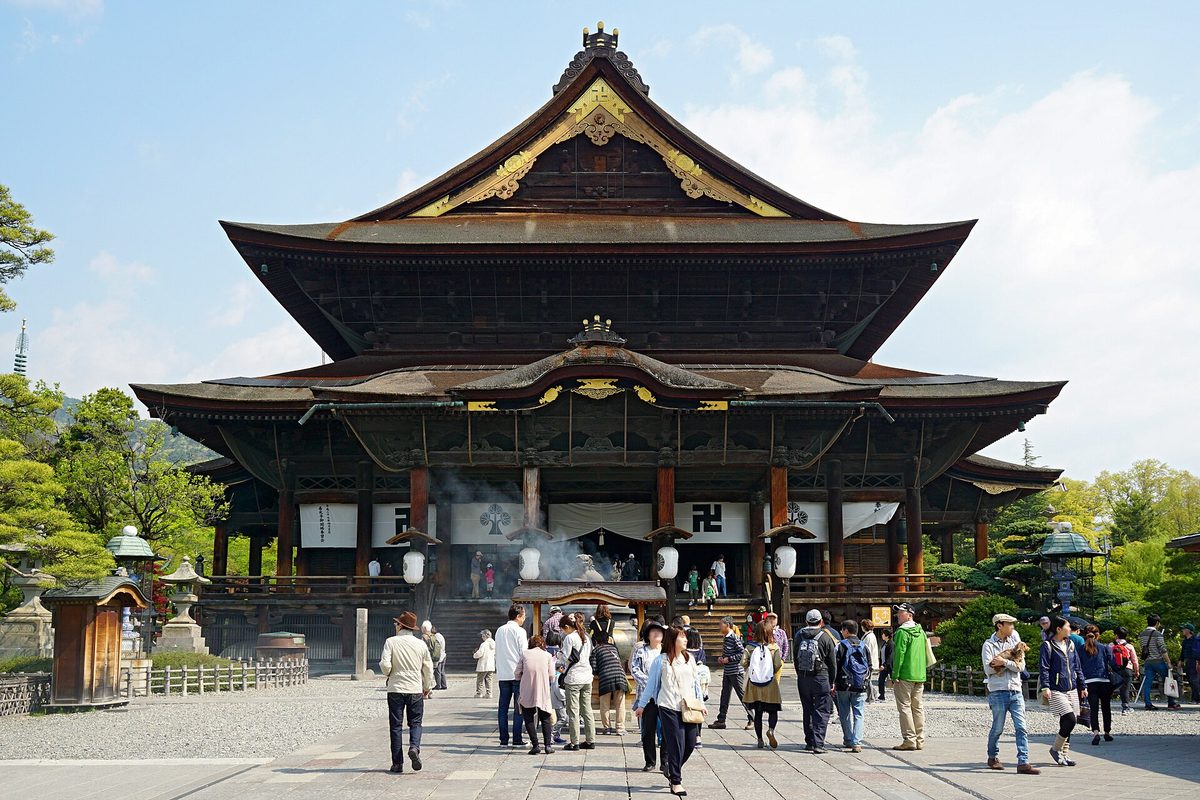
Photo: 663highland / CC BY 2.5 (Wikimedia Commons) Sights · Motozencho
Zenkoji Temple
A non-denominational temple founded nearly 1,400 years ago. Its current Main Hall, rebuilt in 1707, is a National Treasure and houses the pitch-black Okaidan-meguri passage beneath the altar.
Closing time for the inner sanctuary changes by season: 16:15 in March and November, 16:00 from December to February (16:30 April to October).
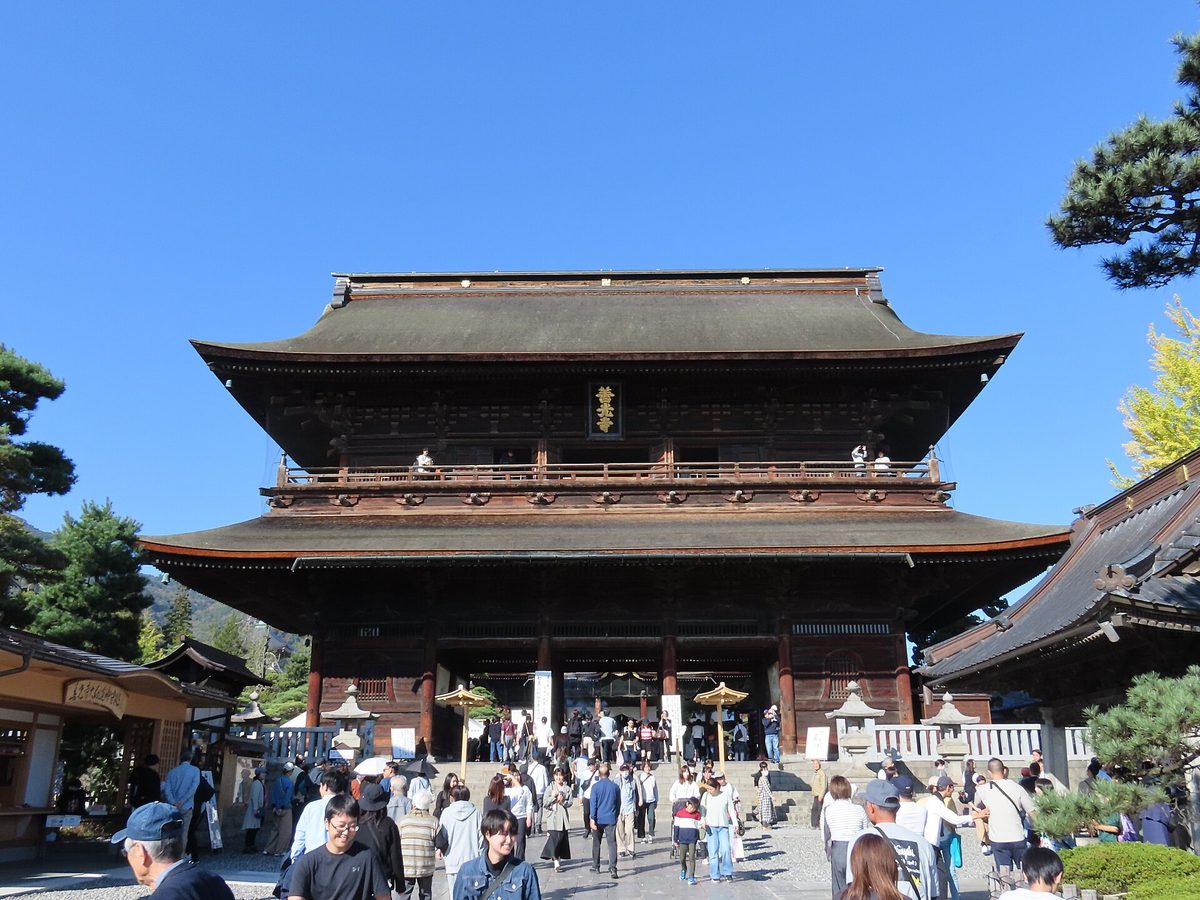
Photo: 快速踊り子 / CC BY-SA 4.0 (Wikimedia Commons) Sights · Motozencho
Zenkoji Sanmon Gate
A two-story gate built in 1750 and designated an Important Cultural Property. Restored to its original split-shingle roof between 2002 and 2007, its upper gallery looks out over the main hall and approach.
Upper-floor entry is 9:00–16:00 (until 13:00 on December 31). Children of elementary school age and under must be accompanied by an adult.
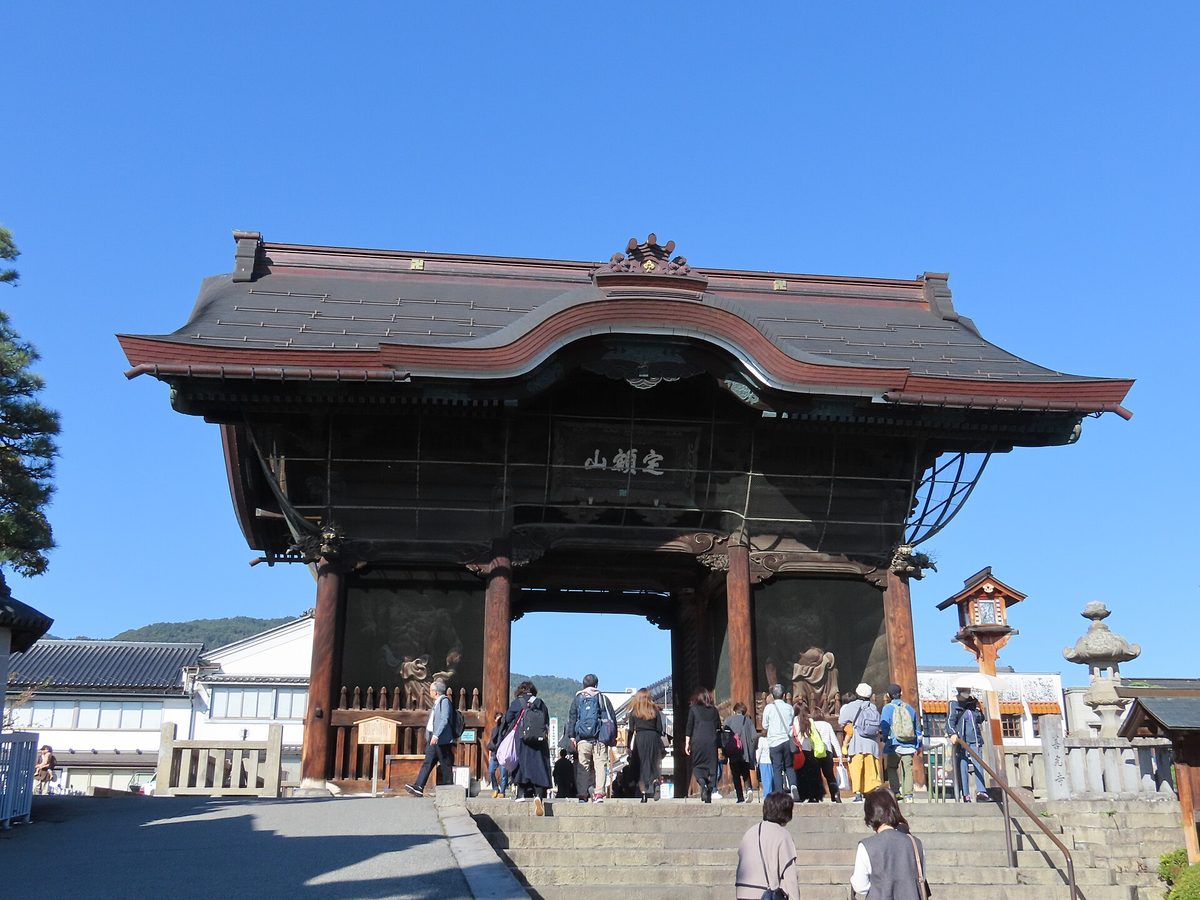
Photo: 快速踊り子 / CC BY-SA 4.0 (Wikimedia Commons) Sights · Motozencho
Zenkoji Niomon Gate
A keyaki-wood gate at the entrance to Nakamise Street, rebuilt in 1918 and a Registered Tangible Cultural Property. It houses guardian statues carved by Takamura Koun and Yonehara Unkai, placed on opposite sides from convention.
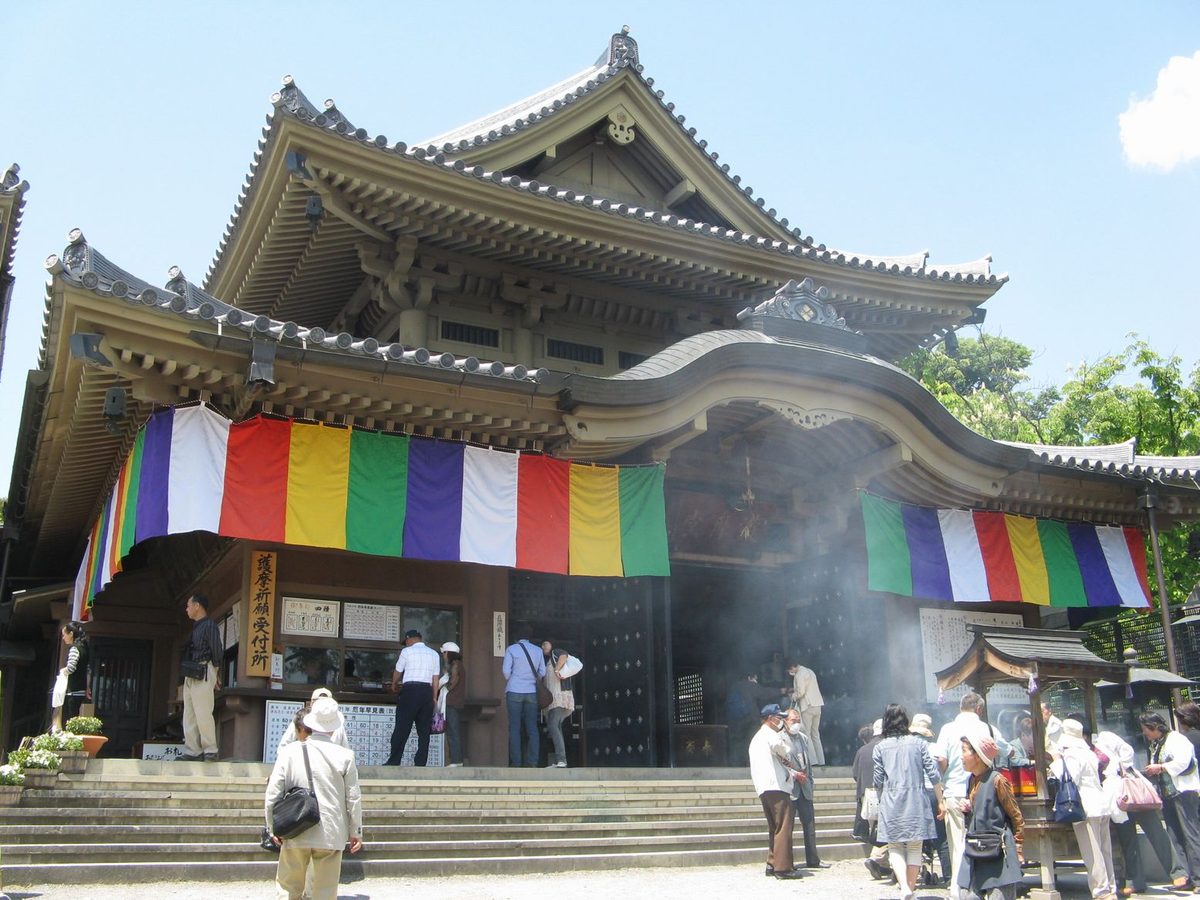
Photo: Bakkai / CC BY-SA 3.0 (Wikimedia Commons) Sights · Motozencho
Zenkoji Daikanjin
The Tendai head temple just west of Zenkoji’s Sanmon Gate. Its grounds hold the Hojo-ike pond, known as Turtle Pond, along with a Treasure Hall and historic imperial resting quarters.
The temple office reception is open 8:30–14:30.
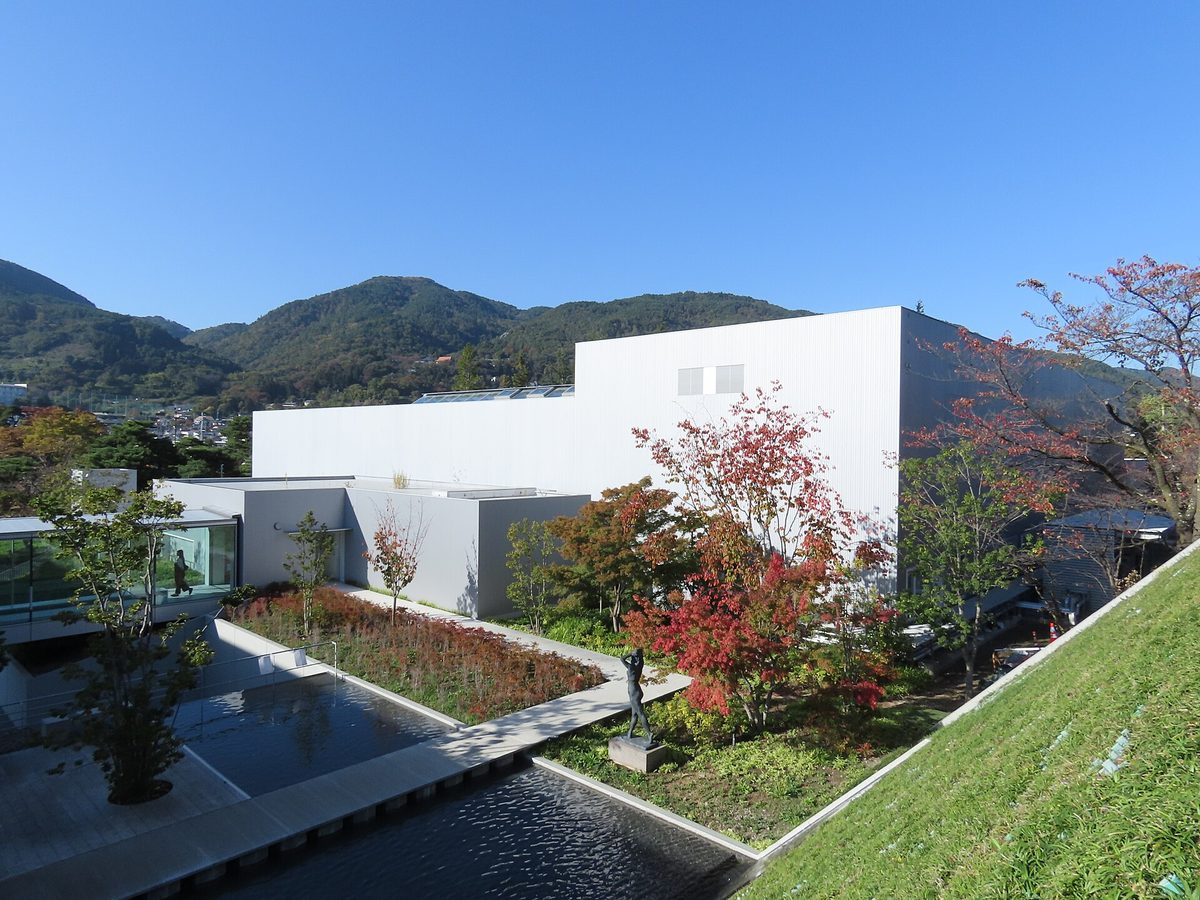
Photo: 快速踊り子 / CC BY-SA 4.0 (Wikimedia Commons) Art · Hakoshimizu
Nagano Prefectural Art Museum / Higashiyama Kaii Gallery
An art museum inside Joyama Park just east of Zenkoji, pairing exhibitions and a collection tied to Nagano with the adjacent Higashiyama Kaii Gallery, which holds over 980 works by the nihonga painter.
Open 9:00–17:00 (last gallery entry 16:30); closed Wednesdays (or the next weekday if a holiday) and Dec 28–Jan 3. The outdoor Fog Sculpture enters winter suspension from November 24.
These are landmarks, not Rin's picks. Each was checked to be open on its official site (checked 2026-11-15). Please confirm hours before you go.
Day trips from Nagano
Classics
- Zenko-ji Temple
Founded about 1,400 years ago in Nagano City, this temple attracts pilgrims regardless of sect, with its solemn main hall drawing many visitors. Spring and autumn are the best seasons for visiting, with pleasant weather.
- Jigokudani Monkey Parkabout 26 km
A rare park worldwide where you can observe wild Japanese macaques bathing in hot springs. Winter for snow-covered landscapes and bathing monkeys; go early morning.
- Kusatsu Onsen Yubatakeabout 37 km
The Yubatake, the symbol of Kusatsu Onsen, flows with over 4,000 liters of hot spring water per minute, which is cooled through wooden conduits before being delivered to each ryokan. Late May to early June; mid-October to early November. Best to go in the morning.
Distances are straight-line from the town centre. Each page has how to get there and a suggested day.