36.4° N
Kiryu
Gunma, Japan
A weaving town at the northern edge of the Kanto Plain, where sawtooth-roof mills still stand along the Watarase River. Kiryu-ori and embroidery workshops, wide himokawa udon, and coffee and sweets in old textile buildings and townhouses, as Rin's picks.
What to eat in Kiryu
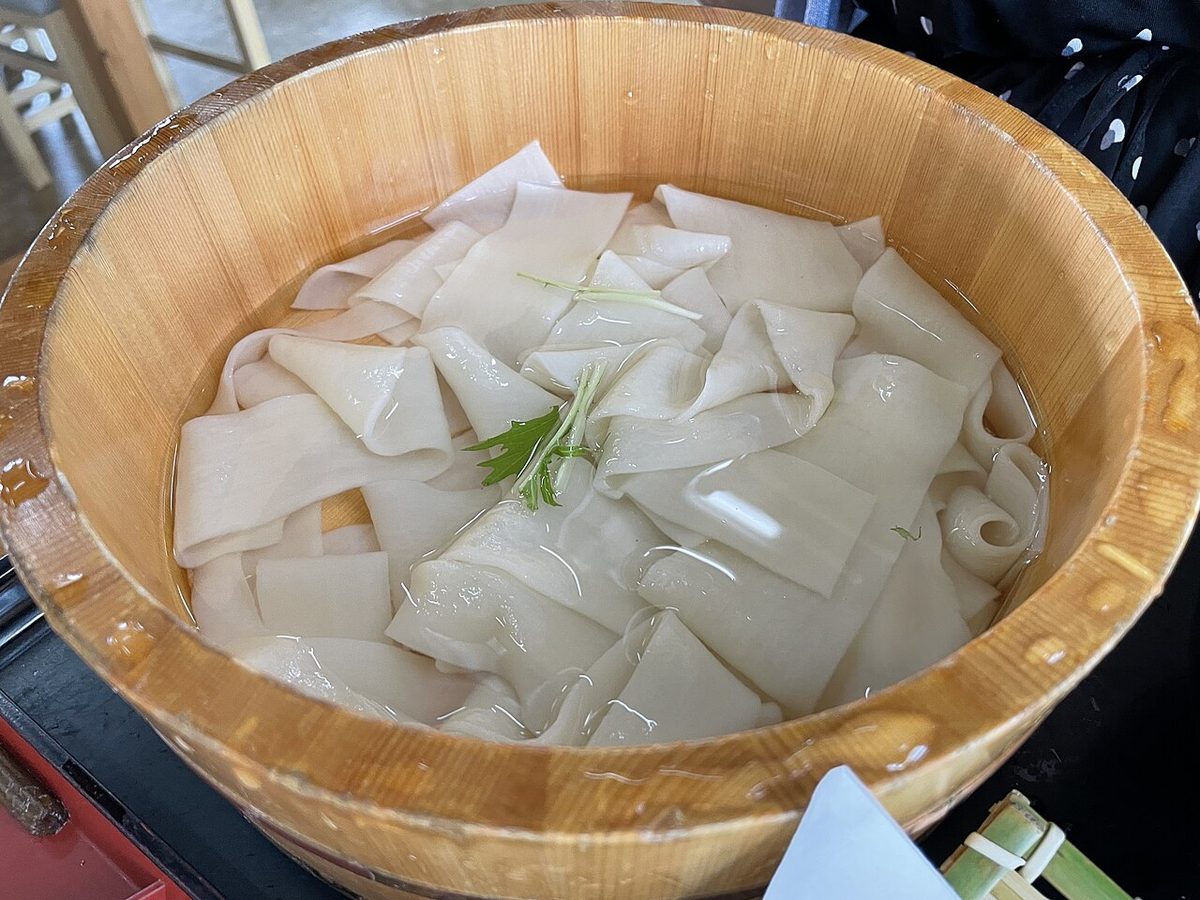
Photo: Nori Norisa / CC BY 2.0 (Wikimedia Commons) Himokawa udon (extra-wide flat udon)
ひもかわうどん
Extra-wide, thin-rolled wheat udon noodles ranging from several centimetres to over 15 cm across. Developed in silk-weaving Kiryu in wheat-growing Gunma, the thin sheets boiled quickly for busy textile workers and are said to derive from Aichi's imokawa udon.
Folded with chopsticks and dipped into chilled soy tsuyu or warm meat-and-eggplant or curry broth, often as a lunch set with sauce katsudon.
Where to eat it
- Fujiya Honten ↓
- Mendokoro Sakedokoro Furukawa Kuremutsu AioiWebsiteMap
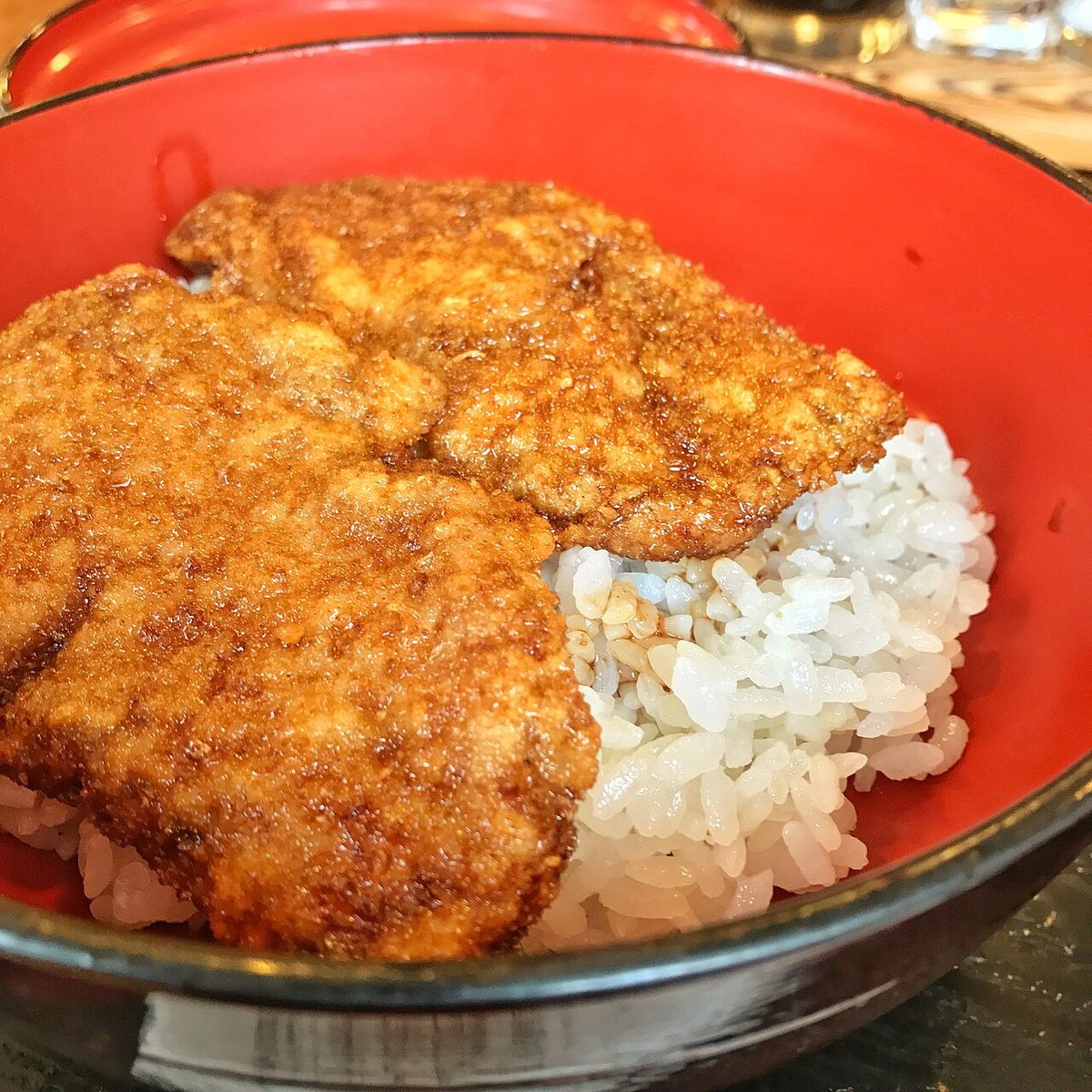
Photo: Tak H. from Chiba, Japan / CC BY-SA 2.0 (Wikimedia Commons) Kiryu sauce katsudon (pork cutlet rice bowl)
ソースカツ丼
Freshly fried pork cutlets—typically lean tenderloin—dipped in a sweet-savory Worcestershire-and-soy sauce and placed directly over steamed rice without egg or shredded cabbage. Originating in Kiryu's early Showa dining halls and eel shops, it stayed tasty cooled or delivered to busy textile workshops.
Eaten as a standalone lunch or dinner bowl with miso soup and pickles, or ordered in a half-and-half set with udon.
Where to eat it
- Fujiya Honten ↓
- Shitamiya HontenWebsiteMap
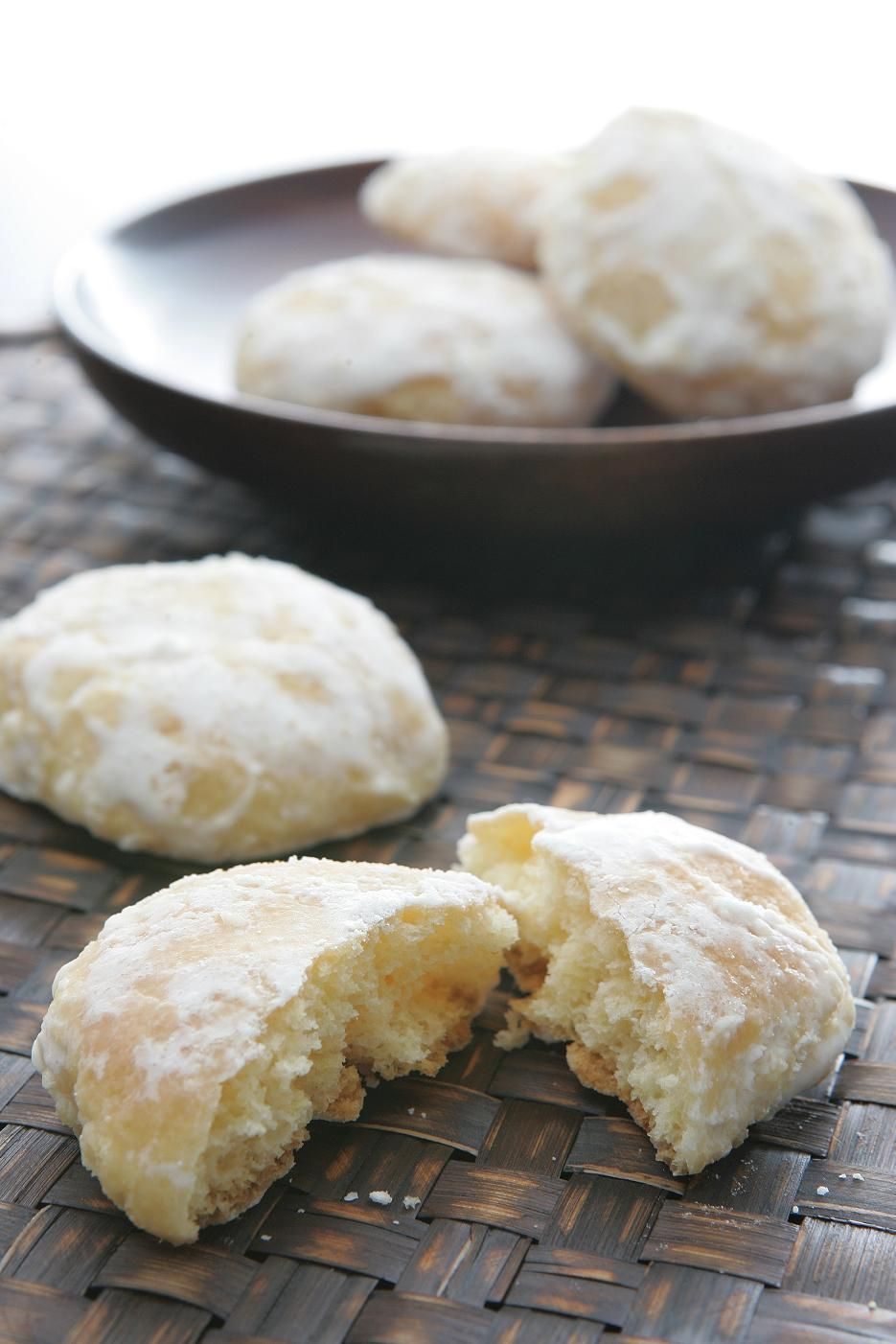
Photo: 小倉章弘 / CC BY-SA 4.0 (Wikimedia Commons) Hanapan (plum-blossom baked confection)
花ぱん
A palm-sized baked confection of wheat flour, eggs and sugar shaped like a five-petalled plum blossom and glazed with sugar syrup. Made in Kiryu since the late Edo period in the motif of Kiryu Tenmangu Shrine's crest, it has a crisp exterior and a crumbly, mildly sweet interior.
Eaten year-round as a light snack with green tea, coffee or milk, with chocolate-coated varieties sold in winter.
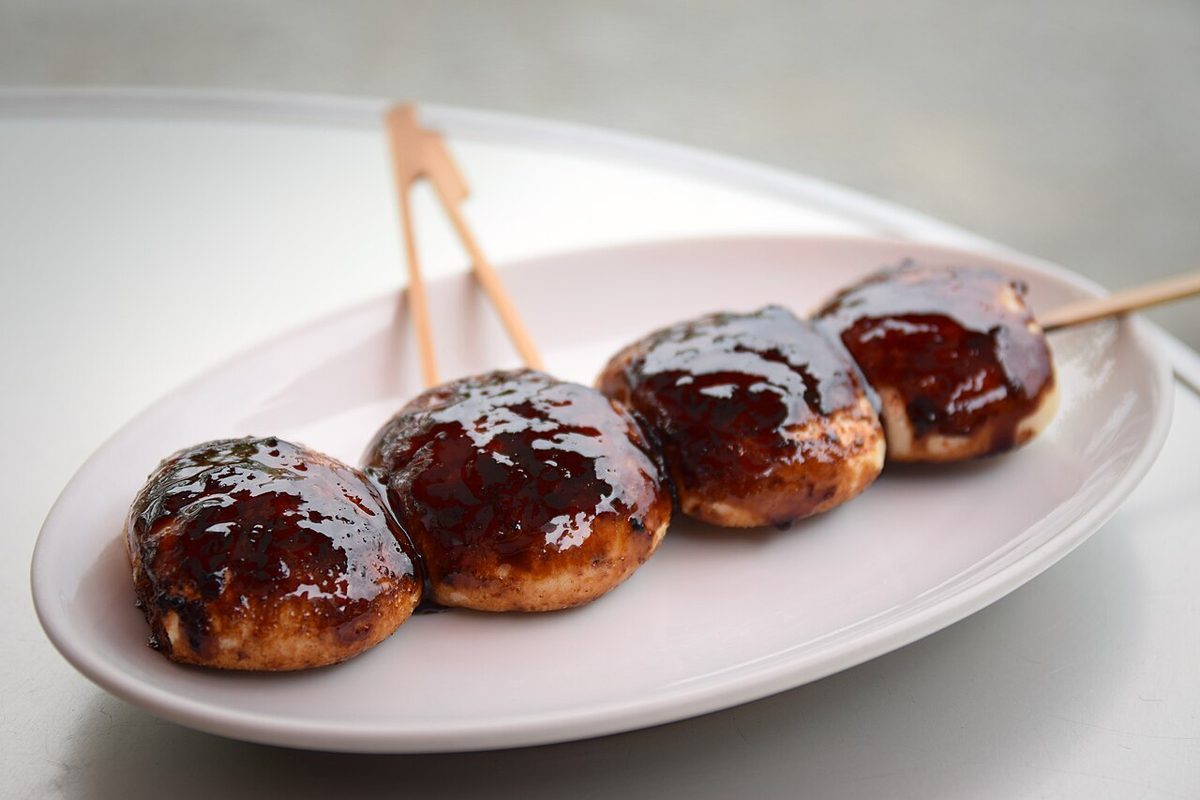
Photo: Raita Futo from Tokyo, Japan / CC BY 2.0 (Wikimedia Commons) Yakimanju (miso-glazed grilled buns)
焼きまんじゅう
Skewered steamed wheat buns fermented with rice-malt koji—usually unfilled—brushed repeatedly with a thick sweet-and-salty miso glaze and toasted over charcoal. One of Gunma Prefecture's signature snacks, it has been made in Kiryu for generations at specialist shops such as Maezawaya, founded in 1930.
Bought hot off the grill by the skewer as a daytime street snack or eaten in-store, plain or with sweet red-bean paste inside.
Where Rin would go, on the map — or build your own route
Tap a mark to see the place; squares are museums and sights (landmarks). Use “Build your own route” to make a walk of your own.
Loading the map
Map data © OpenStreetMap contributors
Where Rin would go
Made in Kiryu: Kiryu Textiles & Embroidery3
All kiryu textiles & embroidery →1 / 4
Made in Kiryu
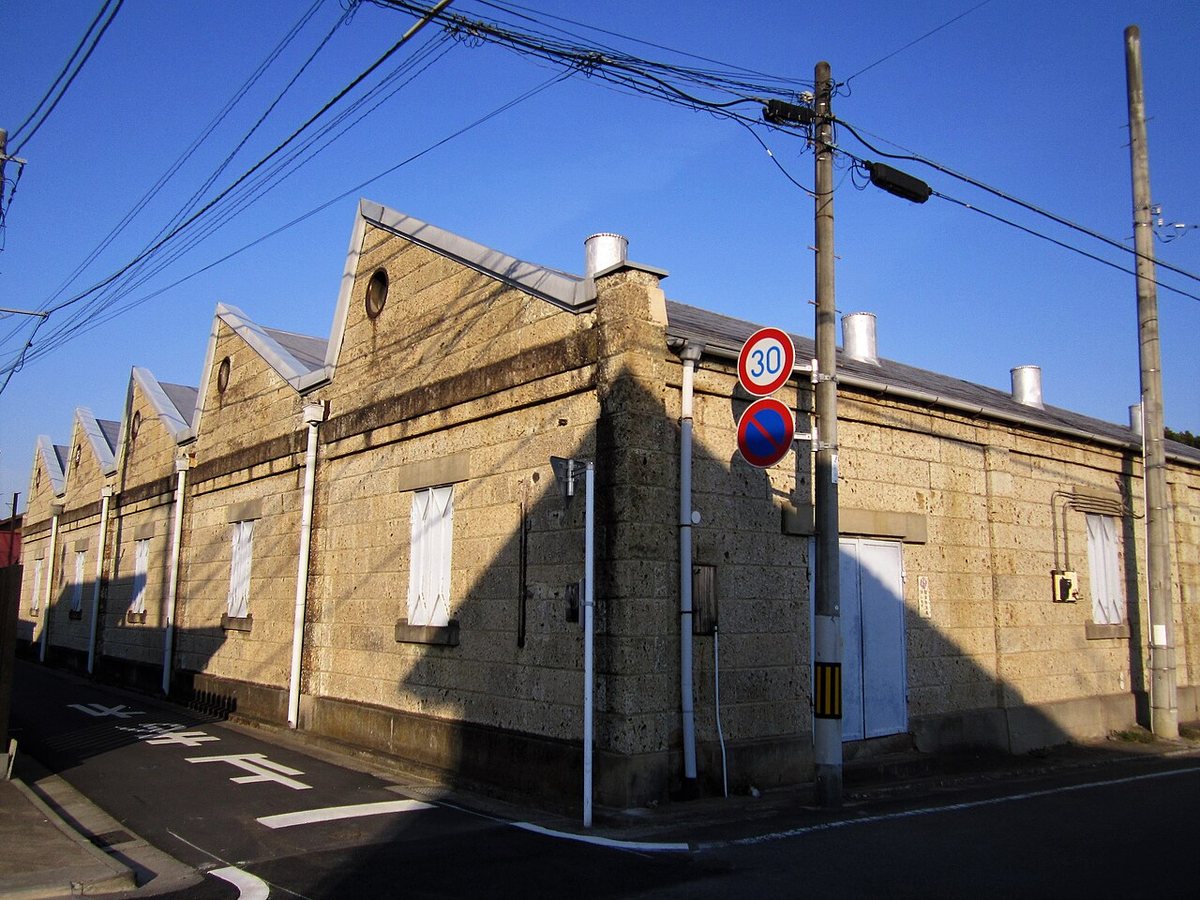
Weaving in Kiryu has a history of over a thousand years, with Kiryu-ori designated a national traditional craft. Today mills in the town still weave silk kimono and obi on jacquard looms, alongside contemporary stoles, household textiles and thread jewelry.
Historic sawtooth-roof Soga Textile Factory in Kiryu-shinmachi·Photo: Suikotei / CC BY-SA 4.0 (Wikimedia Commons)
Shinjuku, Sakaino & Hirosawa
Triple O Factory Shop (Kasamori)
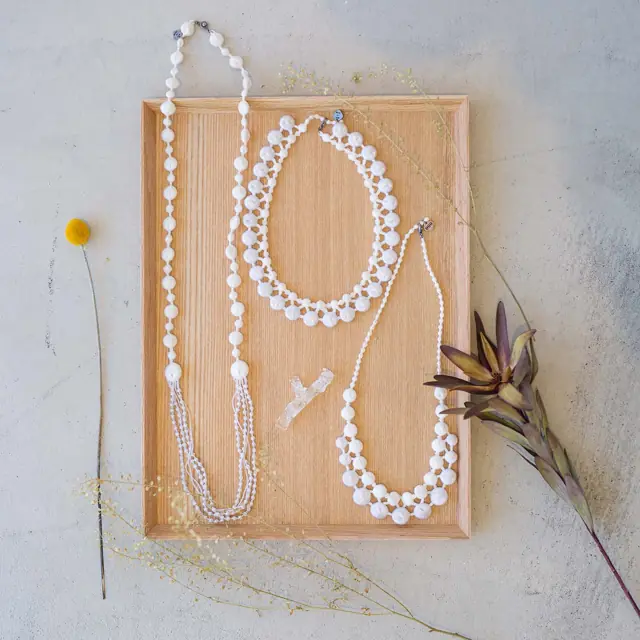
Photo: the shop’s official page 000 ファクトリーショップ(笠盛)
The factory shop of embroidery maker Kasamori (founded 1877), beside its sawtooth-roof workshop in Miyoshicho. Carries the full line of 000 thread jewelry; open first Saturdays and third Fri–Sat, weekdays by reservation.
1st Sat & 3rd Fri–Sat 10:00–18:00 (weekdays by reservation) · Closed: Sundays & public holidays (open 1st Sat & 3rd Fri–Sat; weekdays by reservation)
1-3-3 Miyoshicho, Kiryu
RinI held the thread-only embroidery in my palm. Lighter than expected, I bought a piece.
Shinjuku, Sakaino & Hirosawa
OLN shop (Ise Orimono)
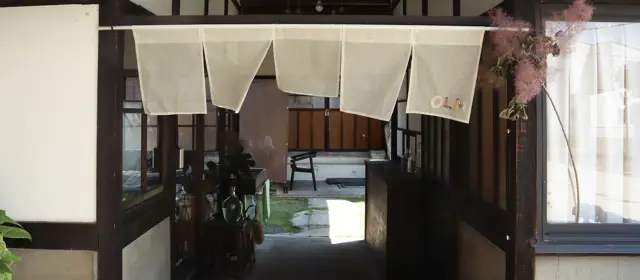
Photo: the shop’s official page OLN shop(井清織物)
The mill shop of obi weaver Ise Orimono in Sakainocho, selling natural-fibre obi, bags, stoles, neck warmers and linen cloths woven on jacquard shuttle looms. Open weekdays and first Saturdays, 13:00–17:00.
Weekdays, 1st & 3rd Sat 13:00–17:00
6-344 Sakainocho, Kiryu
RinI felt the linen cloths and bought one. The crisp tension of the woven thread felt great.
Nakamachi, Higashi & Hishi
Izumi Orimono
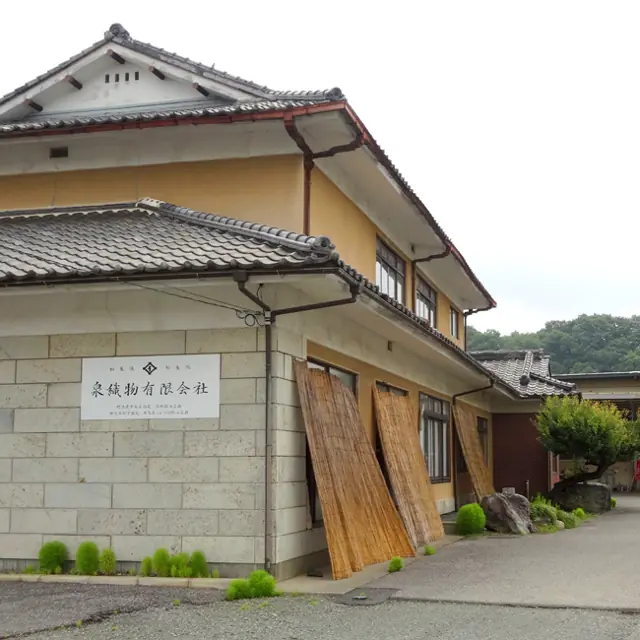
Photo: the shop’s official page 泉織物
A Kiryu-ori and Kiryu-shibori kimono workshop in Higashi founded in 1907, handling yarn dyeing, weaving and tie-dyeing under one roof. Not normally open for retail; visits and sales require checking ahead.
5-5-16 Higashi, Kiryu
RinI saw the Kiryu-shibori cloth up close. The fine, shadowed texture was lovely.
Craft2
All craft →1 / 2
Honcho
shop & gallery Katachi
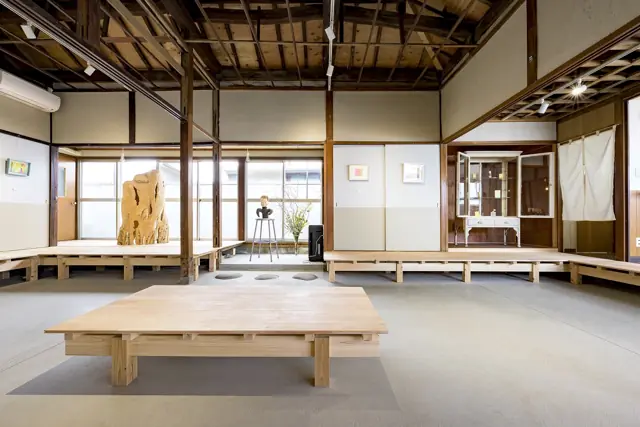
Photo: the shop’s official page shop & gallery 象
A gallery and tea space in a 130-year-old single-storey house in Honcho 1-chome. It holds solo and group shows by artists from Gunma and beyond.
Thu–Mon 11:00–18:00 · Closed: Tuesdays, Wednesdays
1-1-3 Honcho, Kiryu
RinAfter the show in the old single-storey house, I had tea. The aged wood scent was calming.
Higashihisakatacho & Miyamotocho
Jizaian
器のギャラリー&旬菜カフェ 自在庵
A pottery gallery and seasonal cafe inside the former Kanaya residence, a registered tangible cultural property in Higashihisakatacho. Meals and tea look onto the garden, alongside Bizen and Karatsu ceramics.
1-1-55 Higashihisakatacho, Kiryu
RinIn the garden tatami room, I viewed Bizen and Karatsu pots. Their rough clay stood out.
Sweets2
All sweets →1 / 2
Higashihisakatacho & Miyamotocho
Bakery Cafe Renga
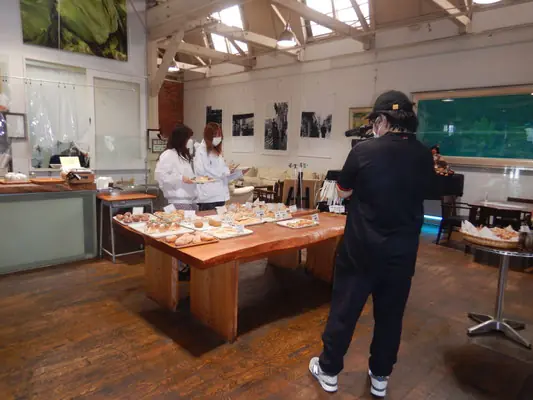
Photo: the shop’s official page ベーカリーカフェ レンガ
A bakery and cafe in Higashihisakatacho inside a 1920 English-bond red-brick sawtooth-roof mill, a registered tangible cultural property.
8:00–17:00 (last order 15:30) · Closed: Open every day (closed Dec 29–Jan 2)checked Nov 2026
1-1-55 Higashihisakatacho, Kiryu
RinI ate freshly baked bread in the red-brick mill. Crisp crust, chewy crumb inside.
Shinjuku, Sakaino & Hirosawa
Wabisabiya
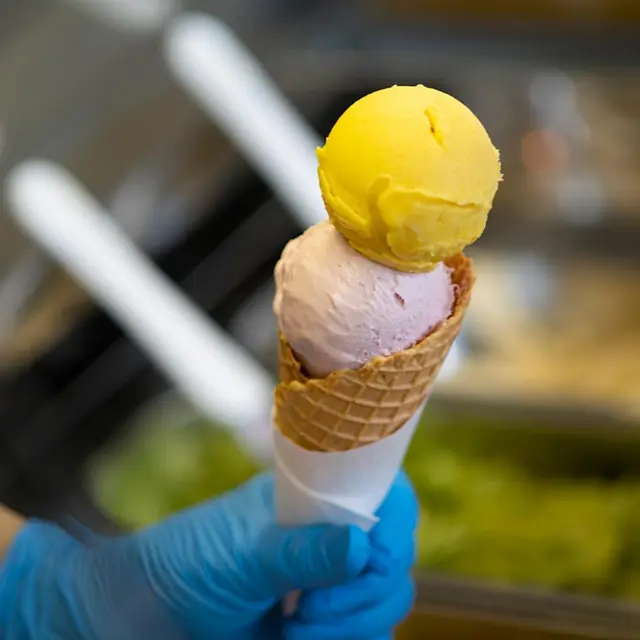
Photo: the shop’s official page わびさびや
A handmade gelateria in Shinjuku making egg-free gelato from fresh local Kiryu milk, Japanese botanicals and seasonal fruit. 11:00–17:00, closed Tuesdays and Wednesdays.
11:00–17:00 · Closed: Tuesdays & Wednesdayschecked Nov 2026
3-4-49 Shinjuku, Kiryu
RinI had the seasonal fruit gelato. Its bright, tart sweetness melted cleanly.
Food3
All food →1 / 3
Honcho
Fujiya Honten
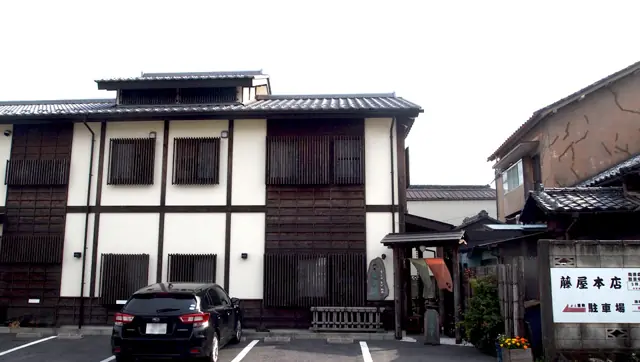
Photo: the shop’s official page 藤屋本店
An udon and soba house in Honcho 1-chome founded in 1887. Its wide-ribbon Kiryu himokawa udon is boiled to order. Closed Mondays and fourth Tuesdays.
Tue–Sun 11:30–14:30 (last order), Fri–Sun 17:30–20:30 (last order) · Closed: Mondays and 4th Tuesdays (open morning only on Monday public holidays, closed next Tuesday)
1-6-35 Honcho, Kiryu
RinI ate freshly boiled wide himokawa udon. The smooth slip of the ribbons pleased me.
Honcho
Ju the burger
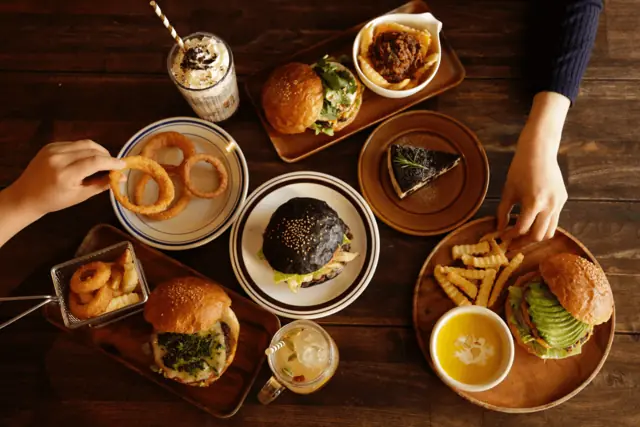
Photo: the shop’s official page A burger shop in Honcho 5-chome pairing 100% coarsely ground beef patties with no filler and crisp-toasted buns. 11:00–16:00, closed Tuesdays and Wednesdays.
11:00–16:00 (last order 15:30) · Closed: Tuesdays & Wednesdayschecked Nov 2026
5-62 Honcho, Kiryu
RinI bit into the coarse-ground beef burger. Crisp toasted bun met a strong, meaty flavour.
Kiryu Station Area
Trattoria Bourbon

Photo: the shop’s official page トラットリア バルボン
A standalone Italian trattoria on Itoya-dori in Eirakucho, serving antipasti, pasta, cheese fondue and homemade cakes at lunch. Closed Tuesdays.
11:00–15:00 (last order 14:00), 17:00–21:30 (last order 21:00)
7-7 Eirakucho, Kiryu
RinI had antipasti and pasta for lunch in the house. The sauce seasoning was spot on.
Cafés3
All cafés →1 / 3
Nakamachi, Higashi & Hishi
Itoya coffee factory
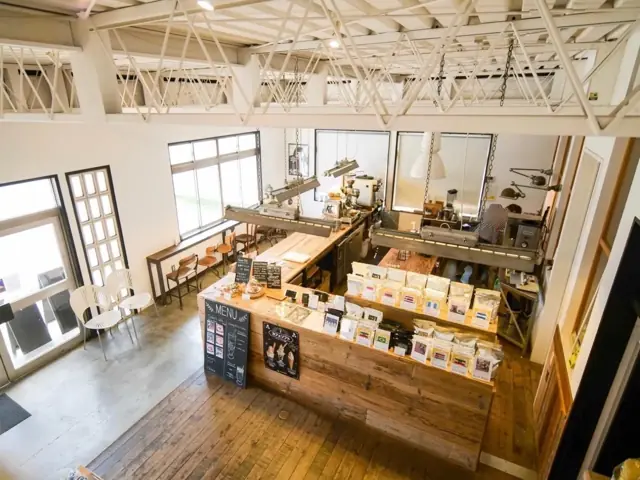
Photo: the shop’s official page A coffee roastery and cafe in a renovated former textile-testing building in Nakamachi, selling single-origin beans, brewing gear and house sweets. 10:00–19:00, closed Thursdays.
3-15-20 Nakamachi, Kiryu
RinI bought a bag of coffee beans in the old textile building. Roasted aroma filled the room.
Kiryu Station Area
NORRY'S COFFEE
A coffee stand and roastery in Miyamaecho near JR Kiryu Station, roasting Asian and other single-origin specialty beans for pour-over and whole-bean sales.
2-8-6 Miyamaecho, Kiryu
RinI had a hand-dripped Asian coffee near the station. Its clean acidity was refreshing.
Shinjuku, Sakaino & Hirosawa
Each of Life
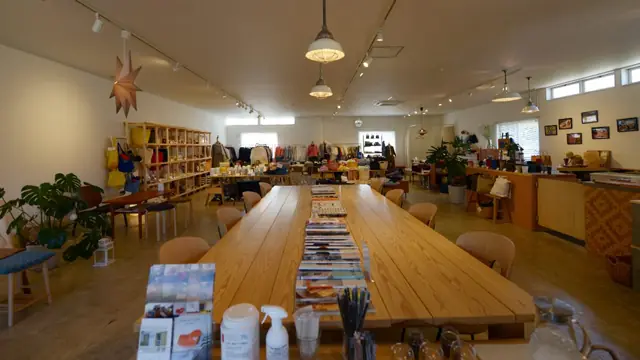
Photo: the shop’s official page A specialty coffee stand and craft shop in Hirosawacho. Hot coffee can be brewed by French press, metal filter or paper filter, alongside local maker goods. Closed Tuesdays.
11:30–19:30 (Sun 10:30–18:30) · Closed: Tuesdays
2-4106 Hirosawacho, Kiryu
RinI chose the metal filter for my coffee. Leaving the oils in made the mouthfeel round.
By area
Rin is a fictional traveller. Every place here was checked by the editors to exist and be open (checked 2026-11-12). Please confirm hours on the official site before you go. Paid listings are always marked. If you are the shop and would like a photo removed, write to editor@vual.jp and we will take it down at once.
To see — art and sights (landmarks)
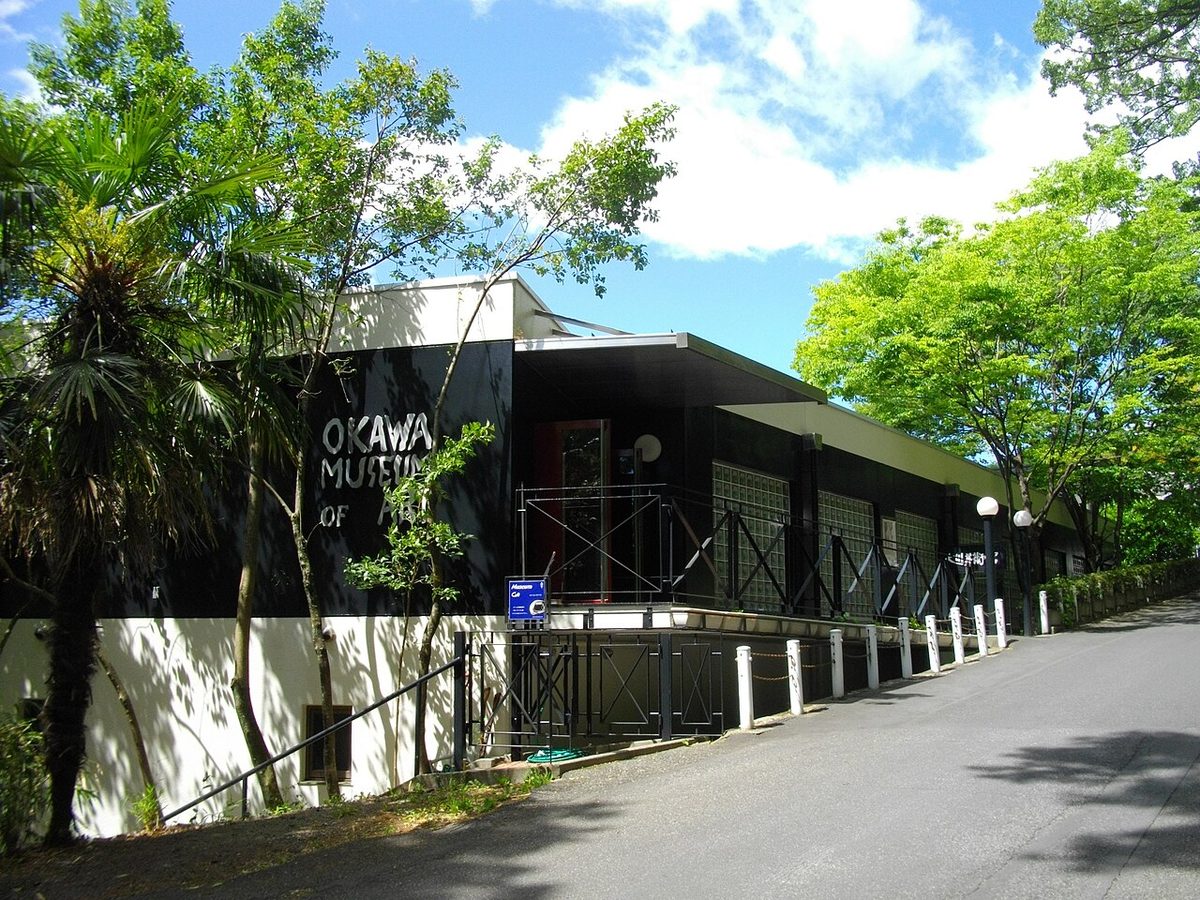
Photo: Abasaa / Public domain (Wikimedia Commons) Art · Ozonemachi
Okawa Museum of Art
Opened in 1989 on the slope of Mount Suido around the collection of Kiryu-born Okawa Eiji, focusing on modern Japanese Western-style painting including Matsumoto Shunsuke and Noda Hideo, with a cafe overlooking the town. 10:00–17:00, closed Mondays.
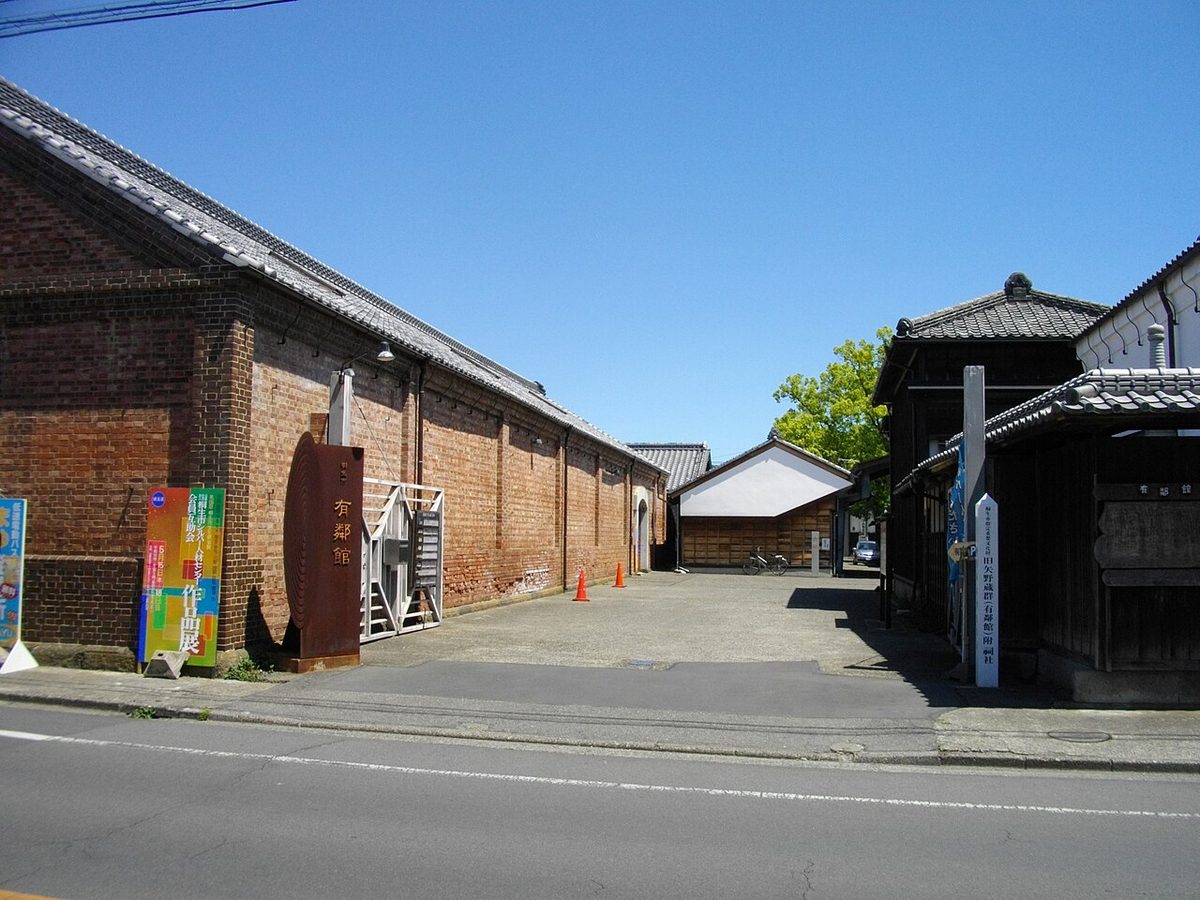
Photo: Abasaa / Public domain (Wikimedia Commons) Sights · Honcho
Kiryu City Yurinkan
A complex of eleven Edo-to-Showa storehouses once used for brewing and storing sake, miso and soy sauce, now open for exhibitions and performances. 9:00–17:00 (21:00 on event days), closed Mondays and days after holidays.
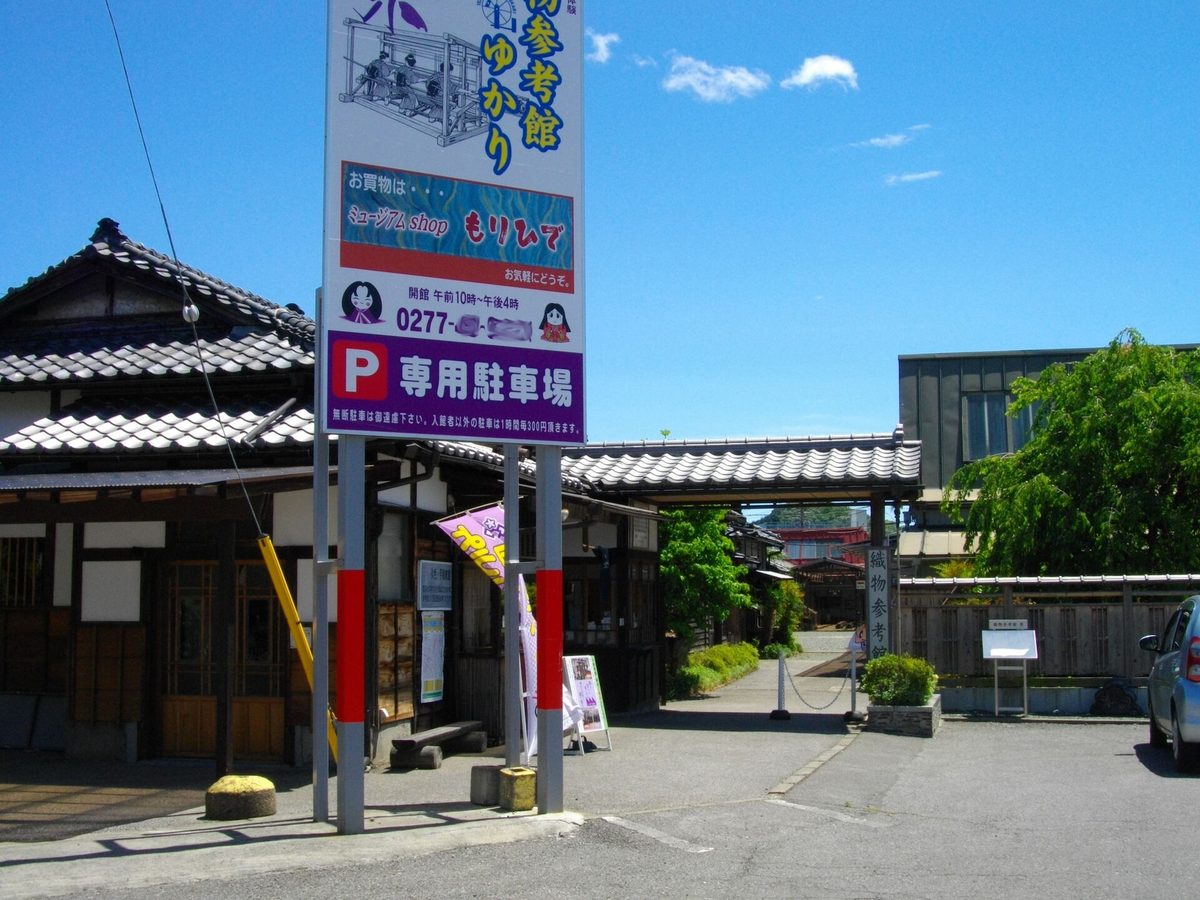
Photo: Abasaa / Public domain (Wikimedia Commons) Art · Nakamachi, Higashi & Hishi
Textile Reference Museum Yukari
A hands-on textile museum opened in 1981 by weaver Morihide Orimono (founded 1877), displaying around 1,200 historic looms and dyeing tools alongside an active weaving mill and indigo-dyeing workshops. 10:00–16:00, closed Mondays.
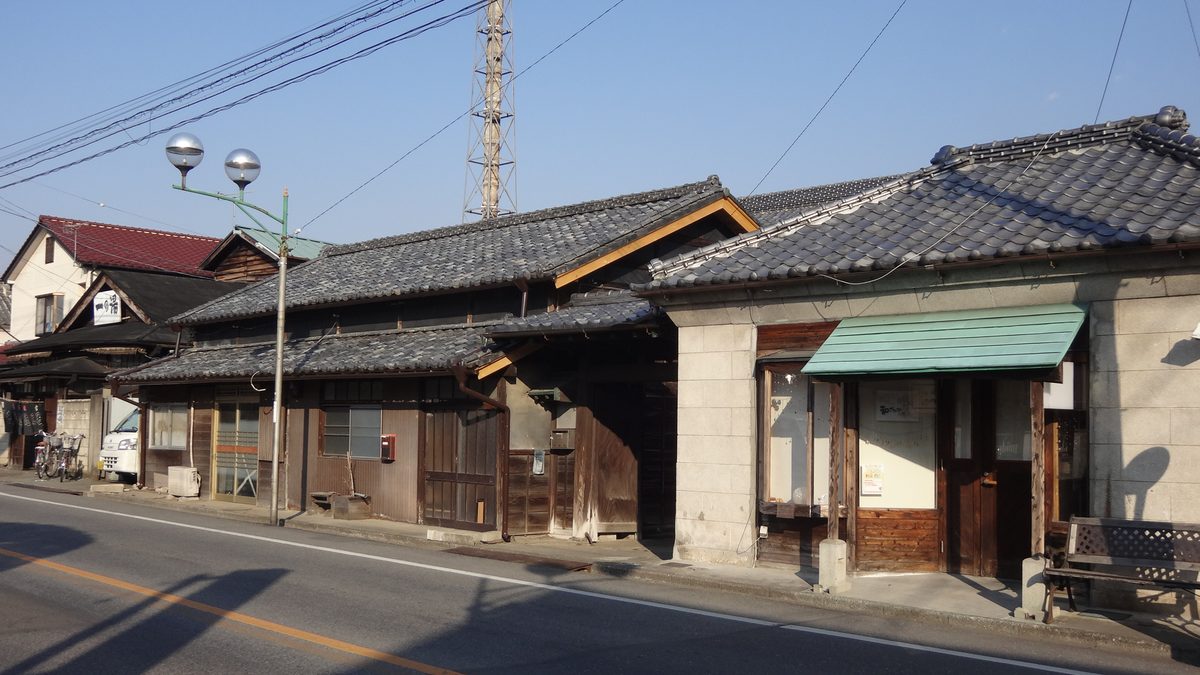
Photo: AKAIKET / CC BY-SA 3.0 (Wikimedia Commons) Sights · Honcho
Kiryu Shinmachi Preservation District
A historic weaving quarter laid out around 400 years ago from Tenmangu Shrine, preserving townhouses, storehouses and sawtooth-roof mills on their original plots along Honcho 1- and 2-chome. Free to walk.
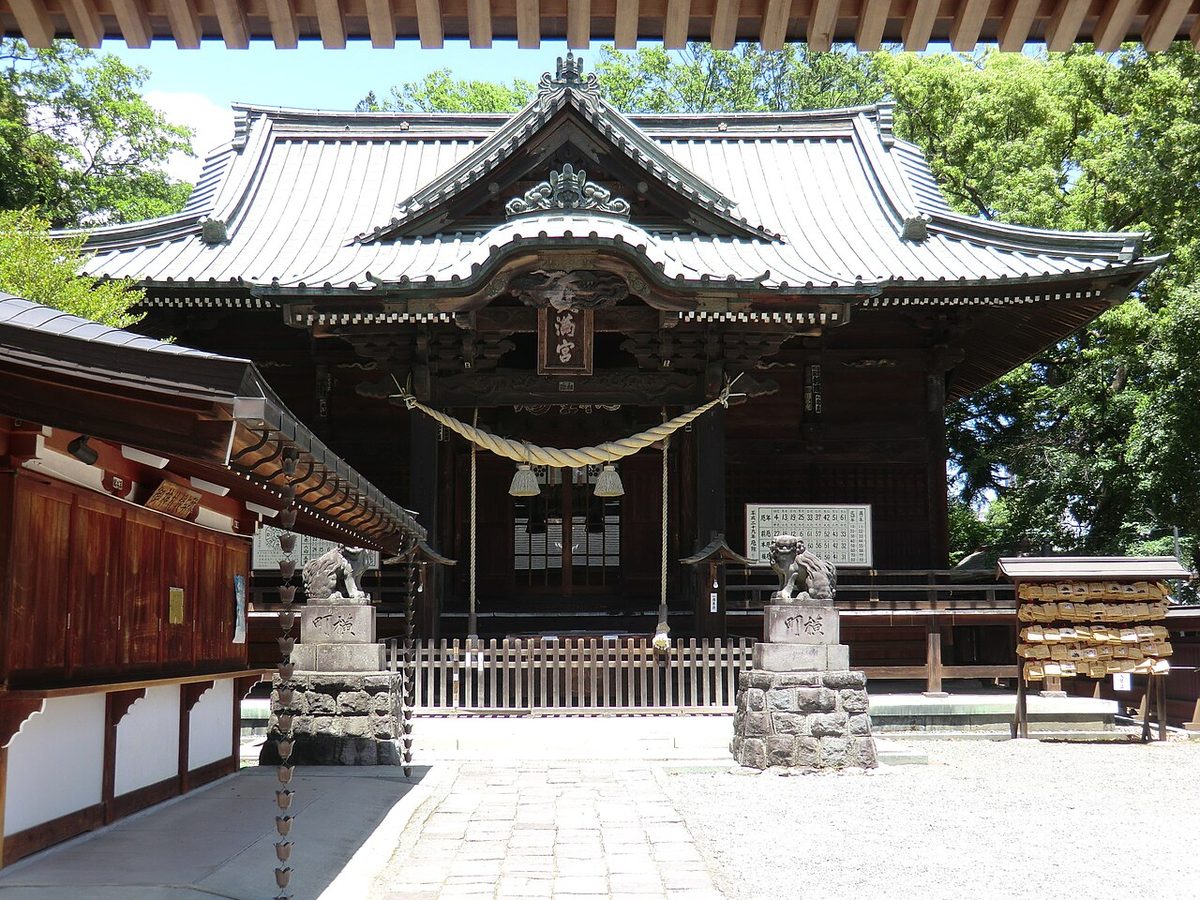
Photo: Ki-ak / CC BY-SA 4.0 (Wikimedia Commons) Sights · Tenjincho
Kiryu Tenmangu Shrine
The tutelary shrine at the northern head of Kiryu Shinmachi, dedicated to Ame-no-hohi-no-mikoto and Sugawara no Michizane; its main hall is a national important cultural property. Open roughly sunrise to sunset.
These are landmarks, not Rin's picks. Each was checked to be open on its official site (checked 2026-11-12). Please confirm hours before you go.
Day trips from Kiryu
Classics
- Ashikaga Flower Parkabout 19 km
A theme park known for its seasonal flowers, particularly famous for its wisteria in spring and illuminations in winter. Late April to mid-May for wisteria; go early for fewer crowds.
- Kegon Fallsabout 38 km
In Nikko, this waterfall features water from Lake Chuzenji plummeting 97 meters down a cliff, offering majestic views that change with the seasons. Mid-October to early November for autumn colors.
- Nikko Toshoguabout 44 km
Most of the current shrine buildings were rebuilt in 1636, 20 years after the shrine was founded. Late April or November for best foliage.
Hidden spots
- Hotokuji Temple (Floor Reflections)about 5 km
A Muromachi-era Zen temple in Kiryu famous for its mirror-polished hall floor reflecting green and crimson maples outside. Best in mid-November when over 100 maples peak, visited between 10:00 and 15:00 to avoid morning backlight or evening darkness.
- Fukiware Fallsabout 34 km
A 30-meter-wide horseshoe river gorge waterfall in Numata where the Katashina River plunges into a fractured rock fissure. Powerful snowmelt water peaks in April–May and autumn foliage peaks from late October to early November; arrive early morning to avoid crowds.
Distances are straight-line from the town centre. Each page has how to get there and a suggested day.