35.1° N
Kawanehoncho
Shizuoka, Japan
A mountain town along the upper Oigawa River, known for Kawane tea and the Oigawa Railway. Tea farms, bentwood lunchboxes and cedar tea chests, then hillside cafes and local dining rooms: Rin's picks.
Kawanehoncho, on film
4 sights and 10 places, each checked open in 2026, in 40 seconds.
Found somewhere you like? The map and the list below have the address, hours and official site.
Tap for sound
What to eat in Kawanehoncho
No photo yet
Kawanecha (Kawane green tea)
川根茶
Kawanecha is a mountain-grown green tea (mostly sencha, alongside local black tea) cultivated on steep slopes along the upper Oi River. River mist and sharp day-to-night temperature swings build its gentle aroma and umami, making tea the defining agricultural product of Kawanehoncho.
At local tea rooms, visitors steep leaves in a kyusu teapot at 60–70°C across multiple infusions, paired with tea yokan or seasonal sweets.
No photo yet
Daikon soba (buckwheat noodles with simmered daikon)
大根そば
Daikon soba is a local folk noodle dish of buckwheat noodles topped with a warm dashi broth simmered with finely shredded daikon radish, shiitake mushrooms, and chicken or carrots. Because steep mountain valleys left little flat land for rice paddies, households stretched precious homegrown soba flour with abundant daikon radish.
Served hot in bowls with plenty of simmered daikon in a mild broth meant to be drunk to the last drop, mostly on weekends by reservation.
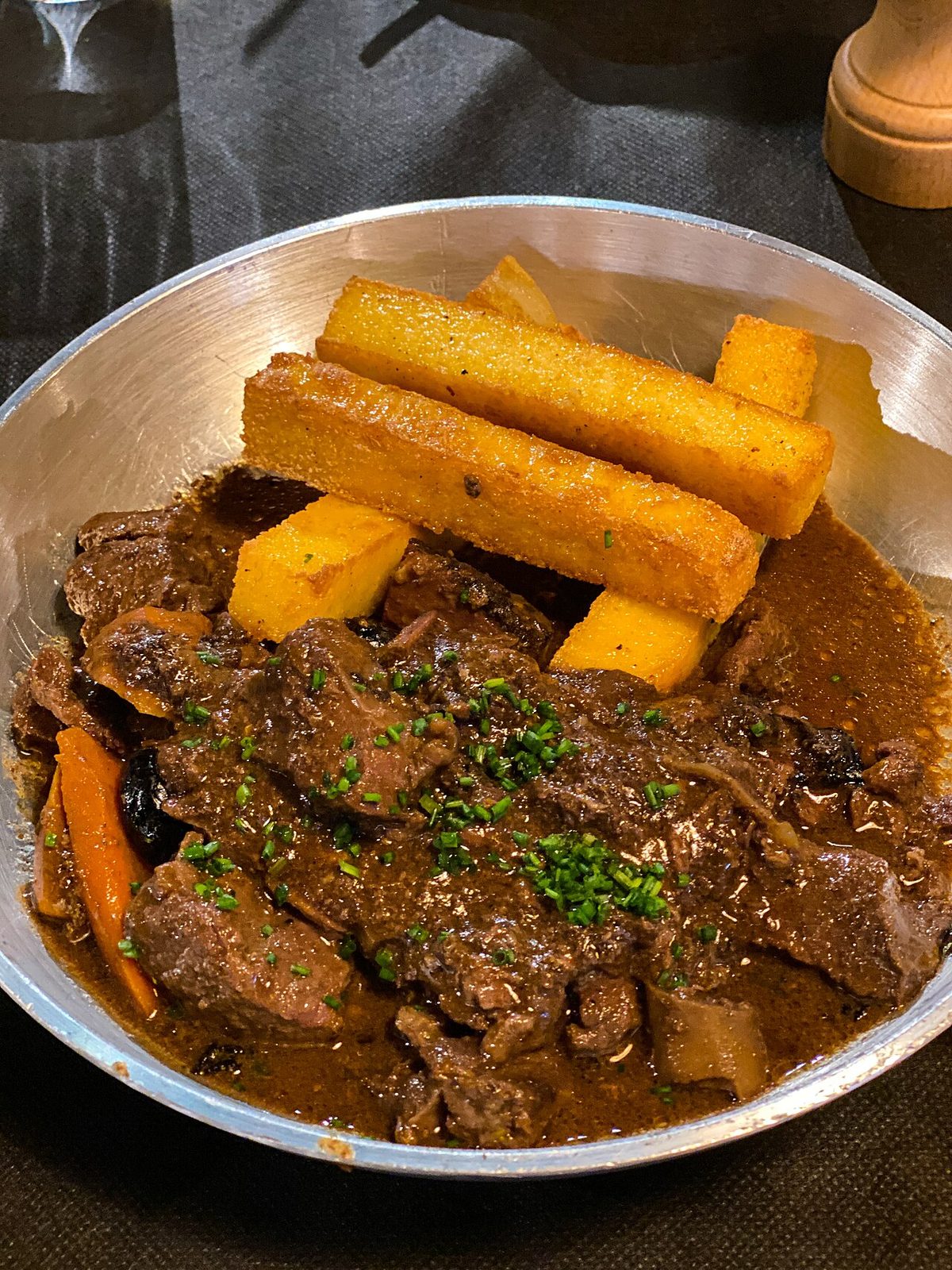
Photo: dronepicr / CC BY 2.0 (Wikimedia Commons) Kawane gibier (wild venison and boar)
川根ジビエ
Kawane gibier refers to local wild deer and boar hunted in the Southern Alps forests around Kawanehoncho and processed locally for lean, clean-tasting meat. Townsfolk and cafés turn the game into venison tempura over tea soba, deer char siu ramen, gibier gyoza, and slow-simmered curries.
Eaten year-round at lunch rooms and station-front cafés as deer tempura on tea soba, dumplings, or spiced game curry.
Where to eat it
No photo yet
Jinenjo tororo-jiru (grated wild mountain yam soup)
自然薯とろろ汁
Jinenjo tororo-jiru is a thick, earthy soup made by grating sticky local wild mountain yam and thinning it with dashi broth. Harvested in Kawanehoncho's mountain soil, it is a prized autumn-to-winter crop across the Oi River valley and served in traditional set meals.
Freshly grated to order and ladled generously over mugimeshi (barley rice) or tea soba as a lunch set meal.(Nov–Feb)
Where to eat it
- Wasai Shokudo Akebono ↓
- Nakazato no Sho Nagomi & Guesthouse KAZUWebsiteMap
Where Rin would go, on the map — or build your own route
Tap a mark to see the place; squares are museums and sights (landmarks). Use “Build your own route” to make a walk of your own.
Loading the map
Map data © OpenStreetMap contributors
Where Rin would go
Made in Kawanehoncho: Kawane Tea2
All kawane tea →1 / 3
Made in Kawanehoncho
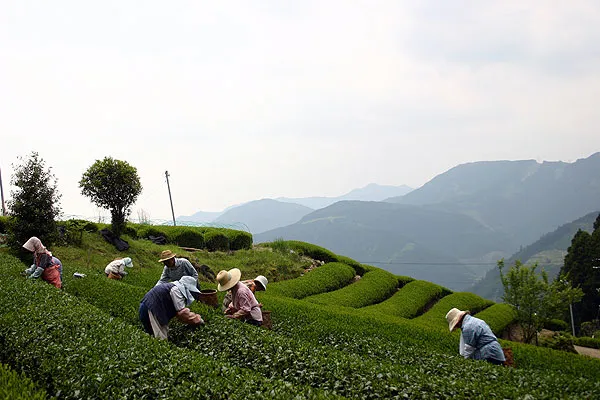
Grown on misty mountain slopes along the upper Oigawa River, Kawane tea has long been known for its aroma and clear flavour. Family-run estates still tend their own fields, steam and roll the leaves, and sell directly from the farm.
Hand-picking tea leaves on misty mountain slopes in Kawane·Photo: Tsuchiya Tea Farm (official site)
Motofujikawa
Yamakasho Tea Farm
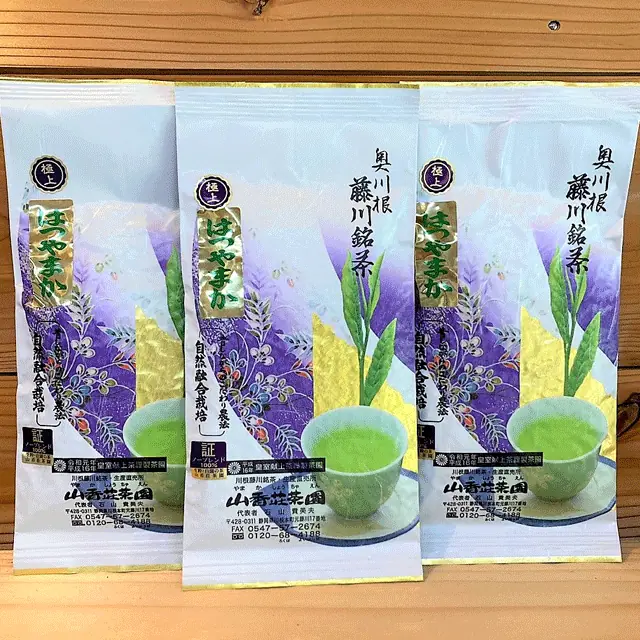
Photo: the shop’s official page 山香荘茶園
A family-run Kawane tea estate with a direct shop and an engawa café in the next-door old house, selling estate green and black teas and serving seasonal tea sets. Open 9:30–17:00.
9:30–17:00
榛原郡川根本町元藤川17
RinI had tea on the veranda and bought their black tea. Mild and sweetly fragrant.
Mizukawa
Tsuchiya Tea Farm
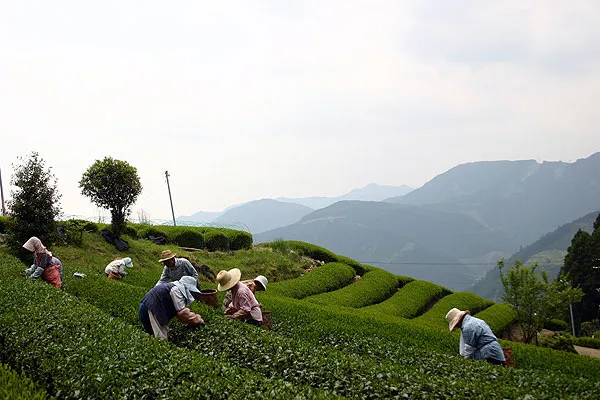
Photo: the shop’s official page つちや農園
A family-run Kawane tea farm at 600 meters in the Oroku-bo district, practicing traditional chagusaba farming and selling award-winning sencha and single-cultivar teas.
榛原郡川根本町水川972
RinI bought single-cultivar Okuhikari tea. Steeping it brought out a fresh, green leaf aroma.
Craft2
All craft →1 / 2
Kuwanoyama
Maeda Koubou
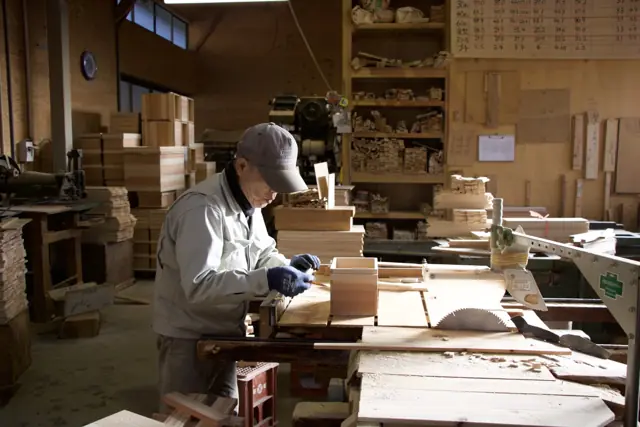
Photo: the shop’s official page 株式会社 前田工房
A tea-chest maker in Kawane for over a century, crafting unpainted cedar-and-tin chabako that keep out moisture and insects, alongside tabletop petit chabako and chabako stools.
Mon–Fri 10:00–17:00 · Closed: Saturdays, Sundays, and public holidays
榛原郡川根本町桑野山424-6
RinI picked up a tabletop petit chabako. The unpainted cedar had a clean, crisp scent.
Senzu
Oigawa Menpa Oiya
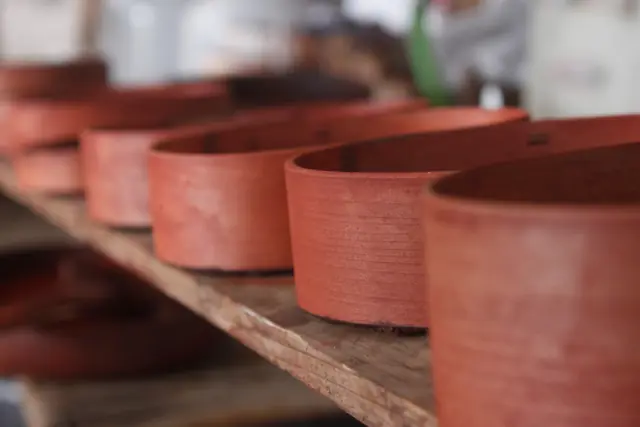
Photo: the shop’s official page 大井川めんぱ 大井屋
A workshop and shop in front of Senzu Station making Oigawa menpa bentwood lunchboxes stitched with cherry bark and finished with persimmon-tannin undercoat and urushi lacquer, also offering re-lacquering repairs. Closed Wednesdays and Thursdays.
Fri–Tue 9:00–17:00 · Closed: Wednesdays & Thursdays (closed even on public holidays)
榛原郡川根本町千頭1225-8
RinI compared the cherry-bark stitches and bought a menpa. Its lacquer shone softly.
Sweets2
All sweets →1 / 2
Sumatakyo Onsen
SHOP & CAFE Seikou-Udoku
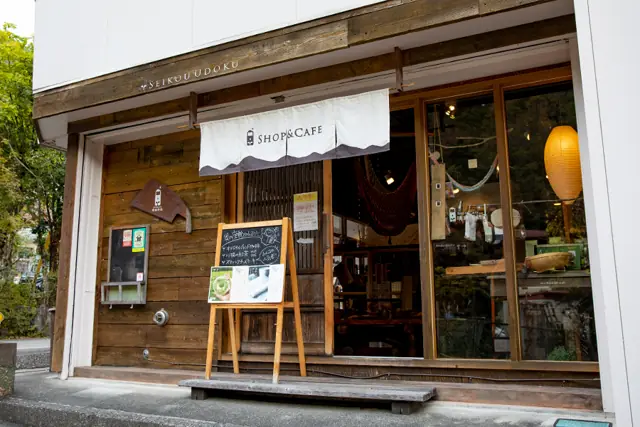
Photo: the shop’s official page SHOP & CAFE 晴耕雨読
A craft-goods shop and café in Sumatakyo Onsen selling hand-baked senbei and sundries, with a back café and upstairs tatami room serving organic Kawane matcha cheesecake, gateau chocolat, and coffee. Open 11:00 to dusk.
11:00–sunset
榛原郡川根本町寸又峡温泉
RinIn the upstairs tatami room, I had Kawane matcha cheesecake. Deeply bittersweet.
Mizukawa
Foret Nakakawane Chameikan
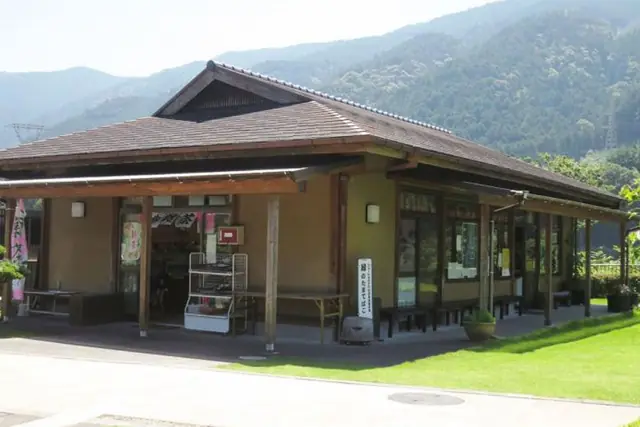
Photo: the shop’s official page フォーレなかかわね 茶茗舘
A Kawane tea cultural house and roadside station in Mizukawa, with a tatami tea room overlooking a Japanese garden for tea and local sweets, a souvenir shop, and a local history museum. Closed Wednesdays; open 10:00–16:30.
10:00–16:30 (last order 16:00) · Closed: Wednesdays, day after public holidays, Year-end/New Year
榛原郡川根本町水川71-1
RinIn the tea room, I had local sweets and Kawane tea. Their sweet and brisk notes matched.
Food3
All food →1 / 3
Senzu
Cafe Uemaru
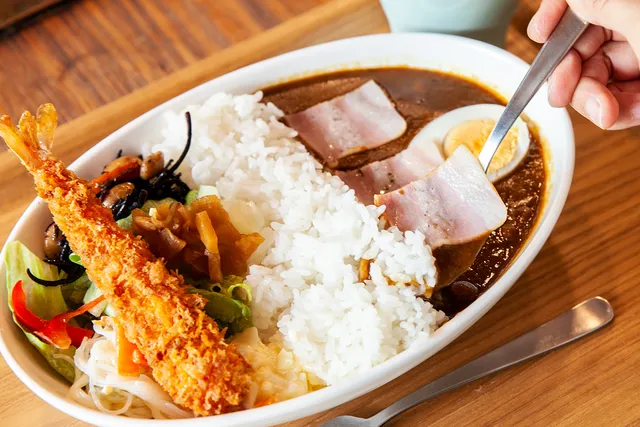
Photo: the shop’s official page cafe うえまる
A farmer-run café 20 seconds from Senzu Station, serving dam curries with local vegetables and gibier, plus blueberry and Kawane tea sweets, with allergy-friendly options. Closed Wednesdays; open 11:00–16:30.
11:00–16:30 (last order 16:00) · Closed: Wednesdayschecked Nov 2026
榛原郡川根本町千頭1215-12
RinI had the gibier dam curry and a blueberry sweet. Meat and tart fruit balanced.
Tokuyama
Shokudo Cafe amandon
食堂カフェ amandon
A Showa-retro dining room and café near Suruga-Tokuyama Station, cooking with organic ingredients and offering vegetarian and vegan options. Open Saturday to Tuesday, 11:00–20:00.
榛原郡川根本町徳山733
RinI ate an organic meal in the Showa-retro dining room. The flavour was gentle and warm.
Kaminagao
Wasai Shokudo Akebono
和彩食堂 あけぼの
A dining room in Kaminagao serving Kawane tororo yam soup, daikon ramen, local gibier gyoza, and tempura tea soba. Lunch 12:00–15:00; dinner by reservation; closed Tuesdays. One cook, so reservations have priority.
12:00–15:00 (last order 14:30), 17:30–20:00 (last order 19:00, dinner by reservation only) · Closed: Tuesdays (irregular closures apply)
榛原郡川根本町上長尾842-4
RinI had the local Kawane tororo yam soup. Thick over rice, its earthy taste was satisfying.
Cafés1
All cafés →Okuizumi
rest & coffee Kojo Station Cafe
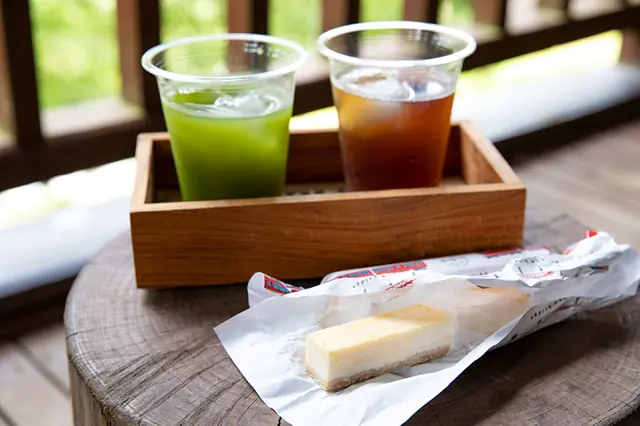
Photo: the shop’s official page rest & coffee 湖上駅カフェ
A café in the cottage above the platform at Okuoi Kojo Station, serving Nagashima Dam coffee, Kawane black tea, limited-portion Blue Lake curry, and Kawane matcha gateau chocolat. Open 11:00–16:00; closed in winter and bad weather.
11:00–16:00
榛原郡川根本町奥泉(奥大井湖上駅構内)
RinI had Nagashima Dam coffee and matcha gateau chocolat. Dense chocolate, crisp coffee.
By area
Rin is a fictional traveller. Every place here was checked by the editors to exist and be open (checked 2026-11-14). Please confirm hours on the official site before you go. Paid listings are always marked. If you are the shop and would like a photo removed, write to editor@vual.jp and we will take it down at once.
To see — art and sights (landmarks)
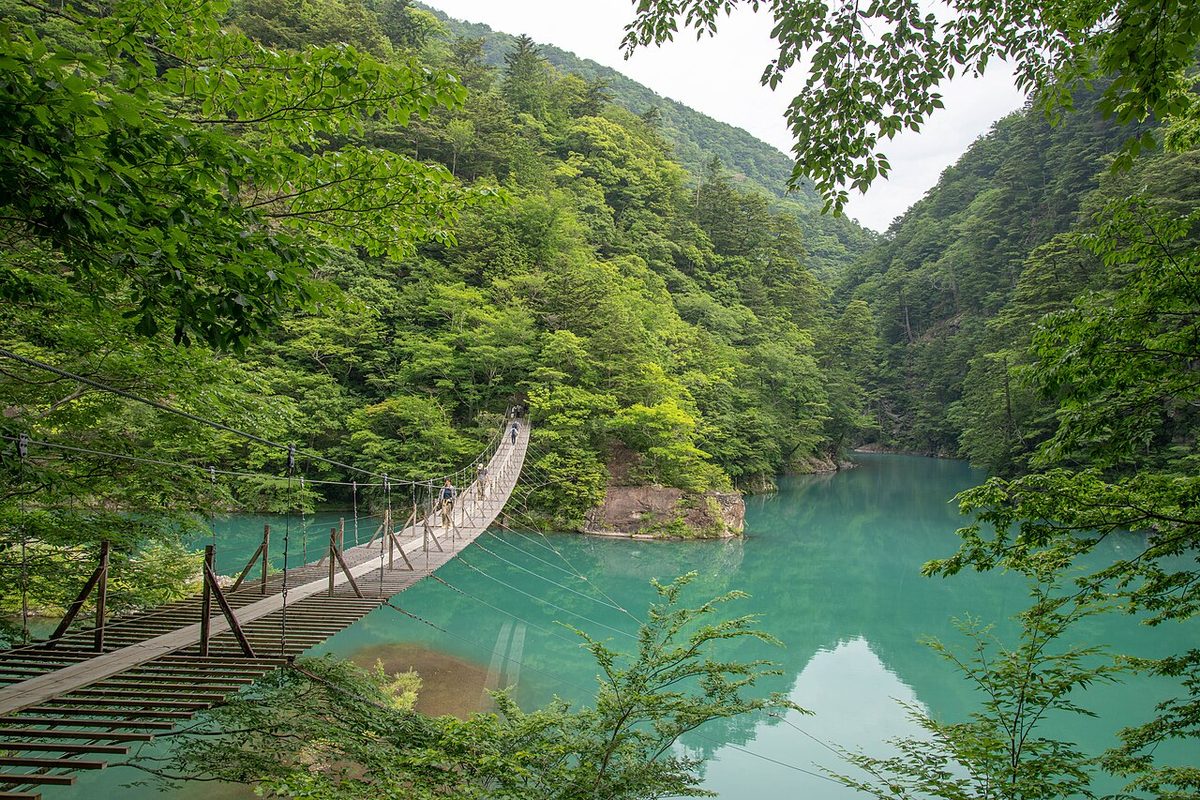
Photo: Tetsuji Sakakibara from Tokyo, Japan / CC BY-SA 2.0 (Wikimedia Commons) Sights · Sumatakyo Onsen
Yume no Tsuribashi
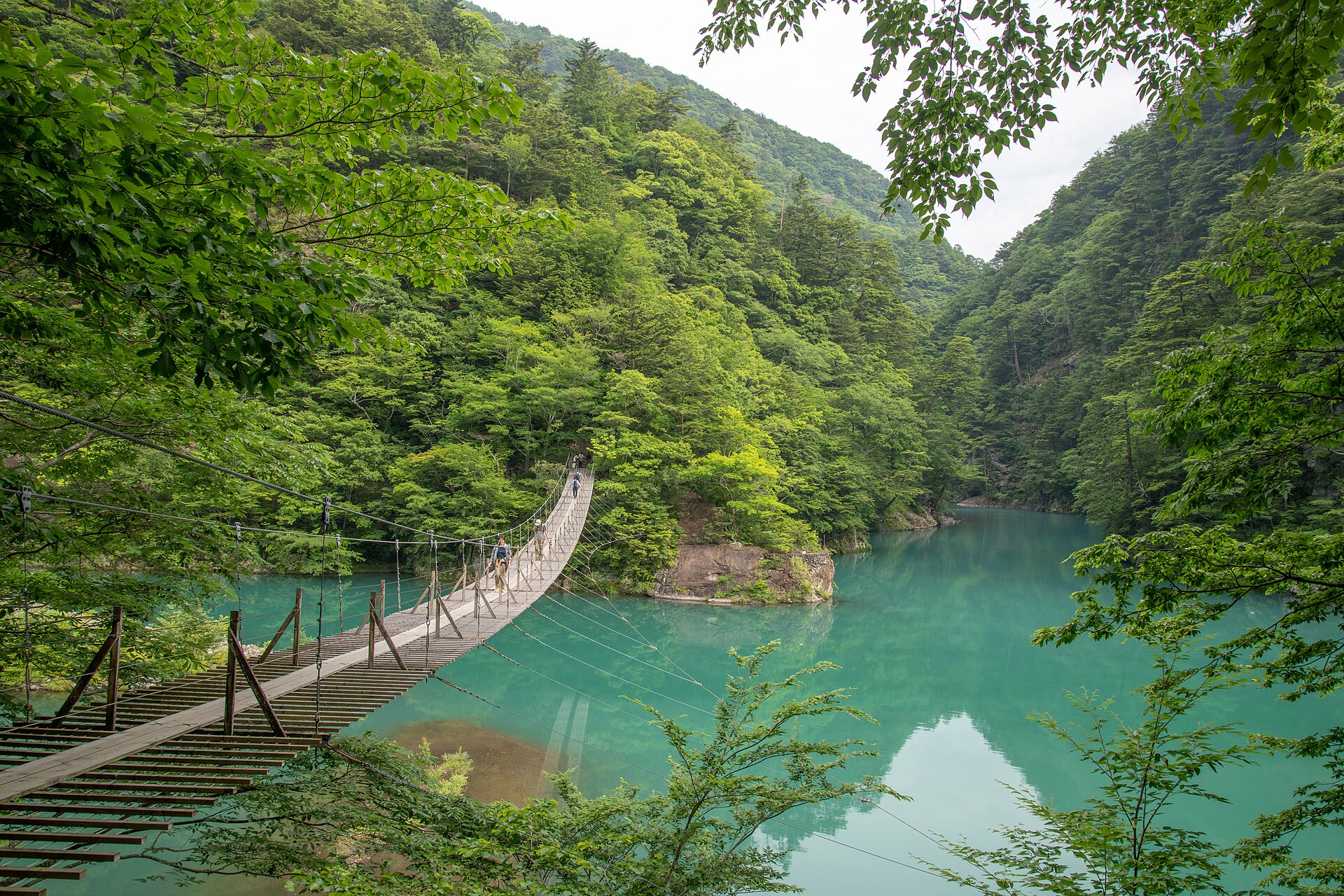
A suspension bridge over the Sumatakyo gorge, reached on foot along the promenade trail above the emerald-green reservoir.
Autumn promenade hours are 7:00–17:00 through Dec 6, with numbered tickets during peak hours on Nov 21–23.
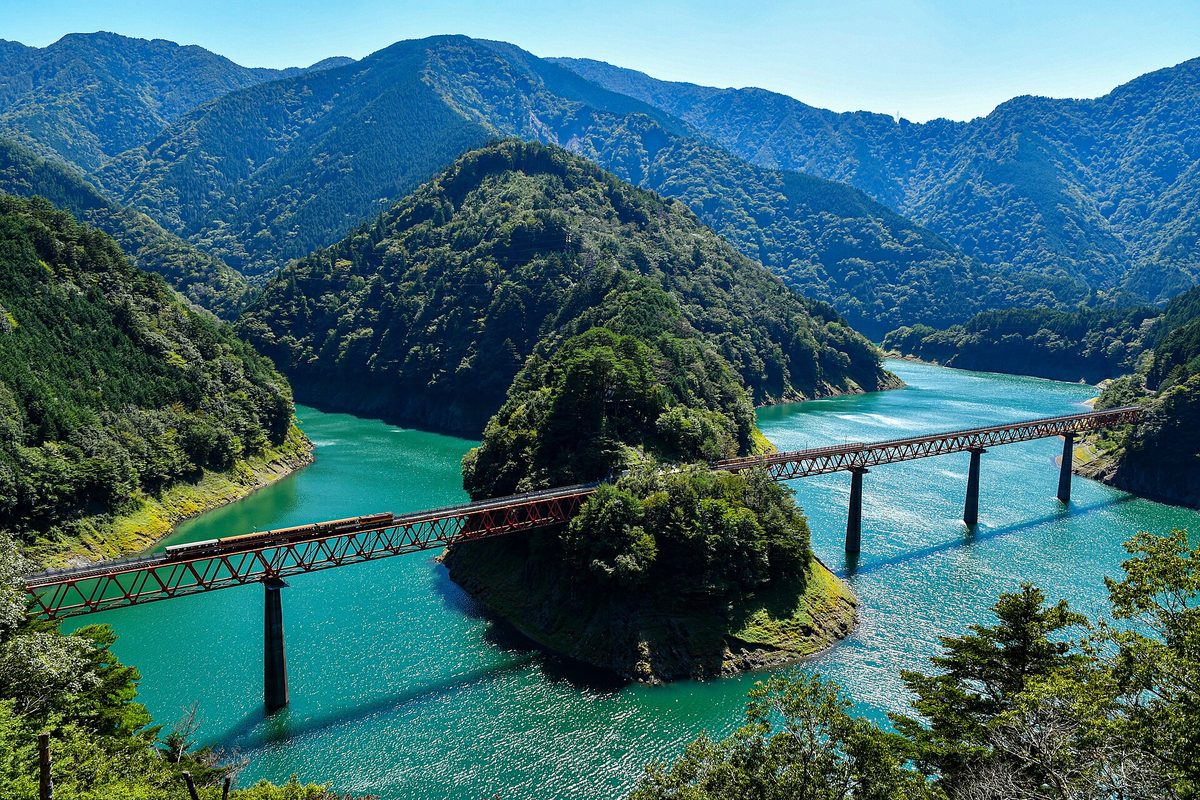
Photo: 9689tatsuya / CC BY 4.0 (Wikimedia Commons) Sights · Okuizumi
Okuoi Kojo Station
A station on the Oigawa Railway Ikawa Line perched on a peninsula in Lake Sesso, reached by a footpath beside the red Okuoi Rainbow Bridge.
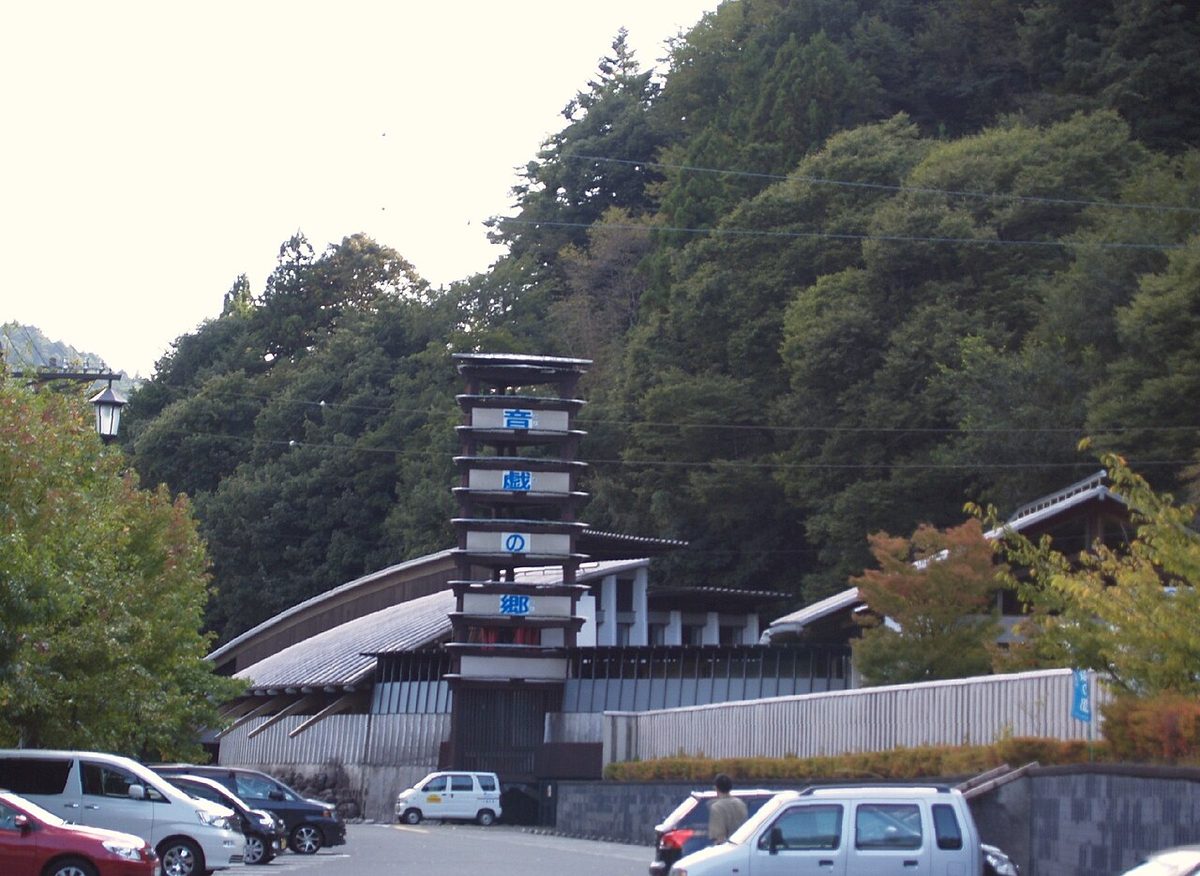
Photo: ja:user:Nyao148 / CC BY 3.0 (Wikimedia Commons) Art · Senzu
Okuoi Otogi no Sato
A sound-and-nature museum and roadside station beside Senzu Station, with stethoscope listening exhibits, a sound-instrument workshop, and a lounge overlooking the tracks. Closed Tuesdays.
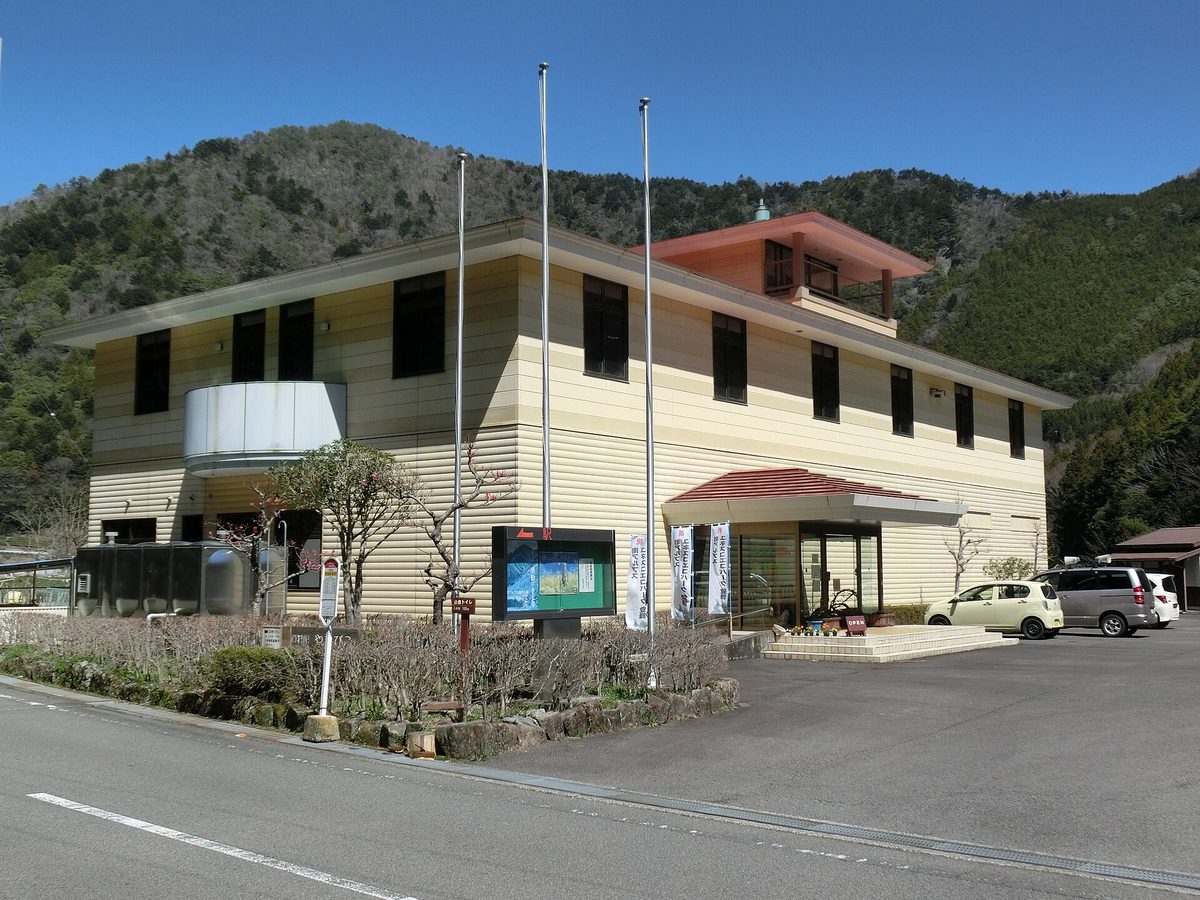
Photo: Abasaa / Public domain (Wikimedia Commons) Art · Okuizumi
Museum Yamabiko
A local museum on the nature of the Southern Alps and mountain life such as forestry, displaying plant and animal specimens collected before Nagashima Dam was built. Closed Tuesdays.
These are landmarks, not Rin's picks. Each was checked to be open on its official site (checked 2026-11-12). Please confirm hours before you go.
Day trips from Kawanehoncho
Classics
- Kunozan Toshogu Shrineabout 34 km
The first Toshogu shrine, dedicated to Tokugawa Ieyasu. A National Treasure with gorgeous decorations such as sculptures and architecture. 年中おすすめ。
- Miho no Matsubaraabout 37 km
Miho no Matsubara is a rare scenic spot where you can overlook the magnificent Mt. Fuji. Clear views of Mt. Fuji in winter.
Hidden spots
- Okuoi Kojo Stationabout 8 km
A remote Abt-rack railway station perched on a tiny peninsula jutting into emerald Lake Sesso, linked by bright red iron bridges. Visit in May for fresh greenery or late October–November for autumn foliage, ideally mid-morning to early afternoon when sunlight illuminates the emerald lake.
- Sumatakyo Yume no Tsuribashi (Dream Suspension Bridge)about 8 km
A 90-meter narrow wooden suspension bridge spanning milky emerald-green reservoir water deep in Sumatakyo Gorge. Visit early morning (before 10:00) in May or November to avoid up to 120-minute crossing queues and return before the 17:00 twilight gate closure.
- Nihondaira Yume Terraceabout 32 km
An octagonal timber observation pavilion designed by Kengo Kuma on Mt. Nihondaira offering 360-degree views of Mt. Fuji and Suruga Bay. Clear mornings from November to March offer the sharpest Mt. Fuji views.
Distances are straight-line from the town centre. Each page has how to get there and a suggested day.