33.2° N
Arita
Saga, Japan
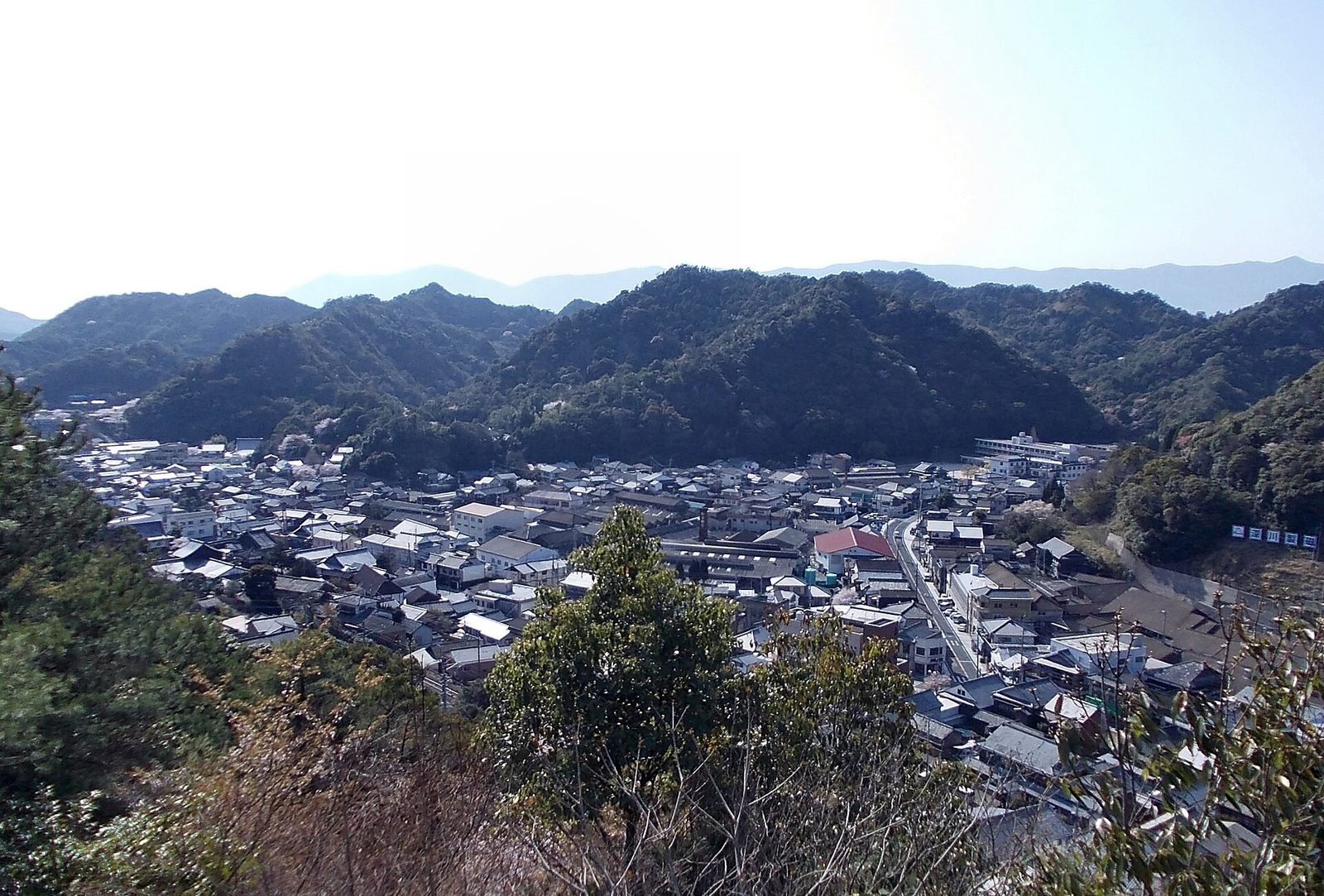
A porcelain town in the hills of western Saga, where Japanese porcelain began in the early seventeenth century. Family kilns and contemporary tableware shops along the Uchiyama valley and at Arita Sera, with coffee and local food between them: Rin's picks.
What to eat in Arita
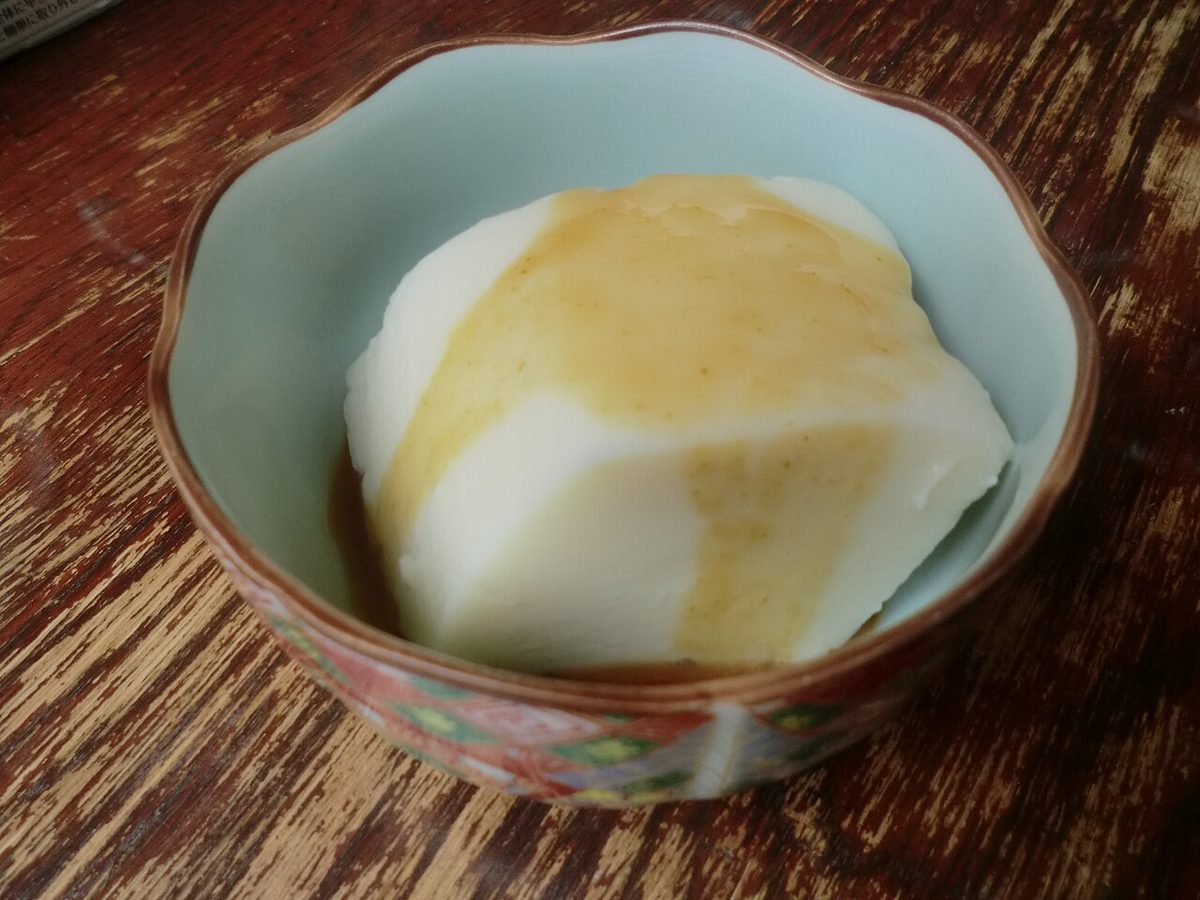
Photo: Nissy-KITAQ / CC BY-SA 3.0 (Wikimedia Commons) Godofu (soy-milk starch tofu)
ごどうふ
A tofu dish made by slowly kneading soy milk with kudzu or potato starch instead of bittern, giving it a smooth, springy texture. Local accounts trace its arrival in Arita to the early Showa era via Chinese residents in Nagasaki, and it has since become a staple of family meals and gatherings.
Eaten chilled with sweet-savory sesame soy sauce as a side or set meal, or topped with black sugar syrup and roasted soy flour as a dessert.
Where to eat it
- Gallery Arita ↓
- ARITA PORCELAIN LAB CafeWebsiteMap
No photo yet
Arita-yaki Curry (baked curry in Arita porcelain)
有田焼カレー
A baked curry made with 28 spices, Saga wagyu beef, Saga rice, and melted cheese inside a reusable Arita porcelain bowl. Created in Arita as a local station bento, it won first place in JR Kyushu's Kyushu Ekiben Ranking and is sold at JR Arita Station.
Eaten warm on site in the station shop's eat-in area or taken away as an ekiben, with the porcelain bowl kept afterward.
No photo yet
Arita-yaki Gozen (five-dish Aritadori chicken box)
有田焼五膳
A multi-dish set meal built around locally raised Aritadori chicken prepared five ways—grilled, vinegared, simmered, steamed, and fried—in a lidded Arita porcelain box. Launched in 2011 by Arita kilns and restaurants, each set also pairs local rice and godofu with regional vegetables.
Ordered at participating restaurants for lunch as a complete set with rice, godofu, soup, pickles, dessert, and a drink, with advance booking recommended.
Where to eat it
- Gallery Arita ↓
- KameizushiWebsiteMap
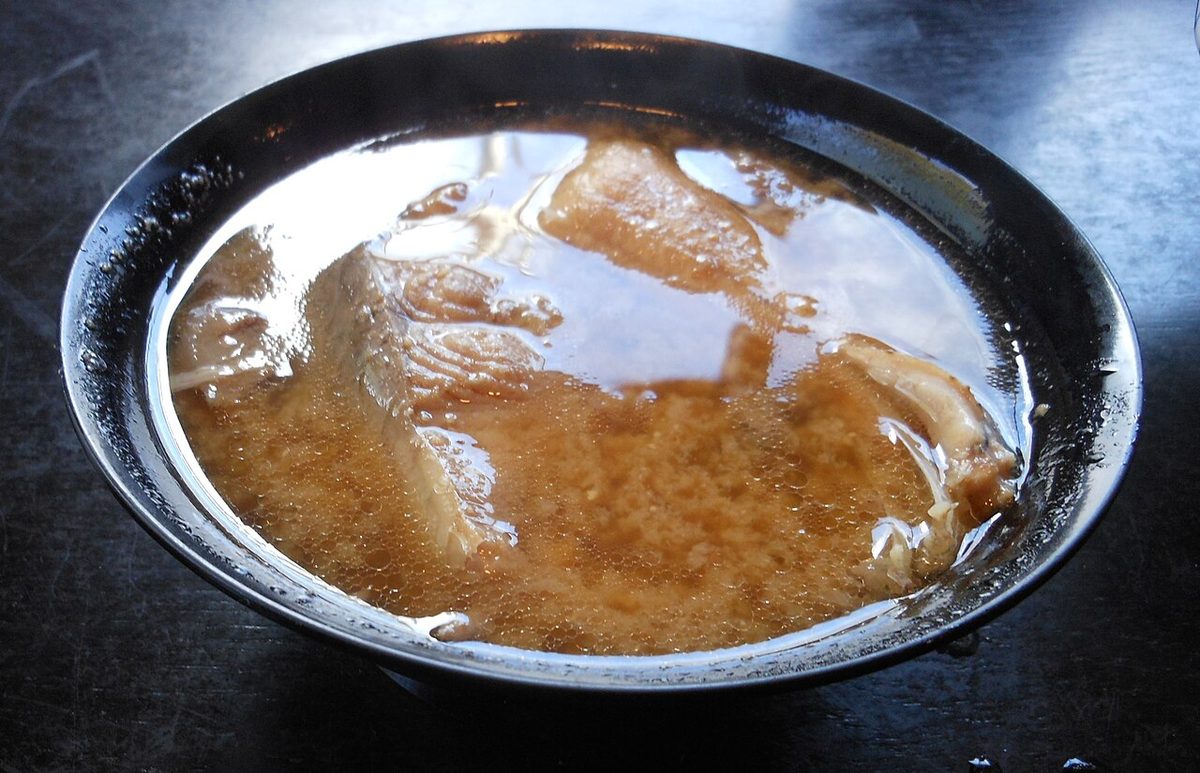
Photo: Miyuki Meinaka / CC BY-SA 4.0 (Wikimedia Commons) Koi-ryori (spring-water carp dishes)
鯉料理
River-fish cuisine centered on chilled carp sashimi (koi no arai) and carp miso stew (koikoku) served on Arita porcelain. In Arita's Ryumon Gorge, carp are purged in cold spring water from Ryumon-no-Shimizu, one of Japan's 100 Selected Waters, before preparation at longstanding hillside restaurants.
Served in private rooms as course meals or set lunches, with chilled carp sashimi dipped in vinegar-miso nuta alongside hot koikoku stew.
Where to eat it
- Ryusenso ↓
- RyusuiteiWebsiteMap
Where Rin would go, on the map — or build your own route
Tap a mark to see the place; squares are museums and sights (landmarks). Use “Build your own route” to make a walk of your own.
Loading the map
Map data © OpenStreetMap contributors
Where Rin would go
Made in Arita: Arita Porcelain (Arita-yaki)7
All arita porcelain (arita-yaki) →1 / 8
Made in Arita
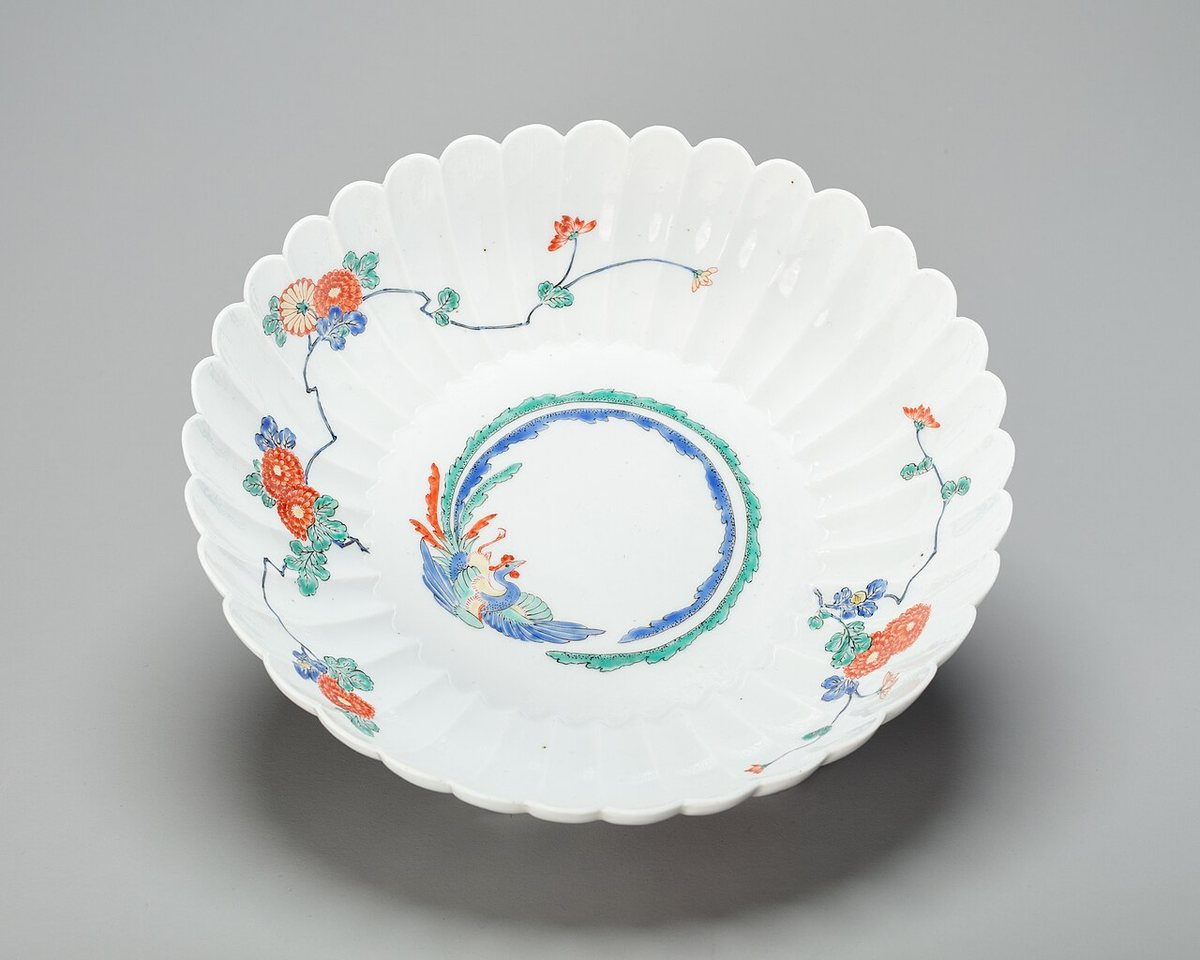
Porcelain production in Japan began in Arita in the early seventeenth century, after pottery stone was found at Izumiyama. Kilns still work along the valley, making everything from hand-painted sometsuke and overglaze enamels to thin everyday tableware.
Arita ware Kakiemon floral-shaped porcelain bowl·Photo: Unknown authorUnknown author / CC0 (Wikimedia Commons)
Uchiyama
Imamura Seito Machiya (JICON)
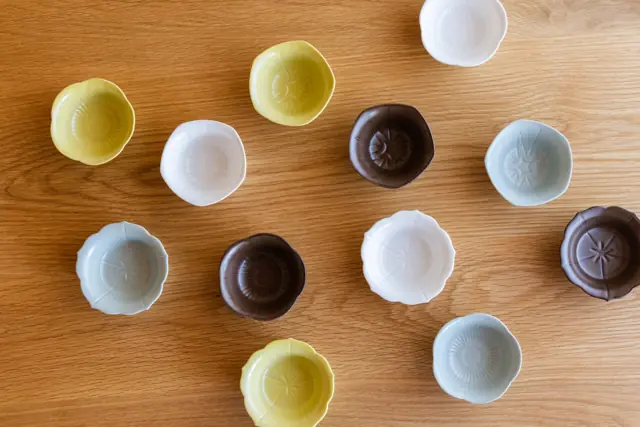
Photo: the shop’s official page 今村製陶 町屋
The direct shop of Imamura Seito, makers of the JICON porcelain line. Everyday vessels in unbleached off-white porcelain made from Amakusa pottery stone.
西松浦郡有田町岩谷川内2-4-13
RinI picked up an off-white piece. The warm white was easy on the eyes.
Akasaka & Arita Sera
Yamahei Kiln

Photo: the shop’s official page やま平窯
A porcelain kiln and direct shop in Kuwakoba. Known for its ultra-thin, translucent Egg Shell series alongside bubble-glazed and wood-grain vessels.
Mon–Fri 10:00–12:00, 13:00–17:00; Sat–Sun & holidays 10:00–17:00 · Closed: 1st & 3rd Sundays
西松浦郡有田町桑古場乙2267-1
RinI held an Egg Shell piece. The light passing through it was striking.
Akasaka & Arita Sera
Kouyougama
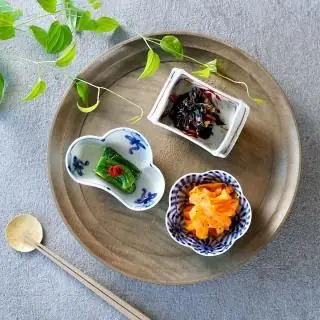
Photo: the shop’s official page 皓洋窯
A kiln and showroom in Kuwakoba for everyday hand-painted sometsuke dishes. The shop is open weekdays 10:00 to 16:00 (closed 12:00–13:00).
西松浦郡有田町桑古場乙2380-1
RinI compared the hand-painted sometsuke ware. Each brushstroke felt lively.
Uchiyama
Iro-Nabeshima Imaemon Kiln
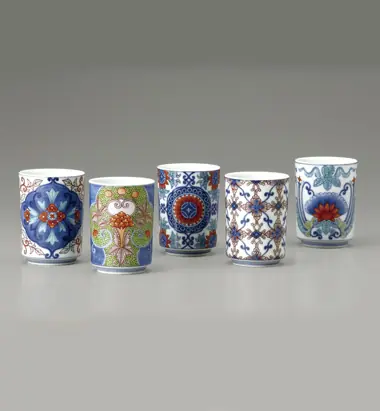
Photo: the shop’s official page 色鍋島 今右衛門窯
The Akaemachi kiln and showroom of the fourteenth-generation Imaizumi Imaemon, preserving Edo-period Iro-Nabeshima overglaze enamels and sumihajiki ink-resist work.
Daily 9:00–17:00 · Closed: 1st Sunday, Dec 29–Jan 6, Aug 15–16
西松浦郡有田町赤絵町2-1-15
RinI looked closely at the sumihajiki pieces. The white-resist lines popped.
Honmachi & Arita Station
Gen-emon Kiln
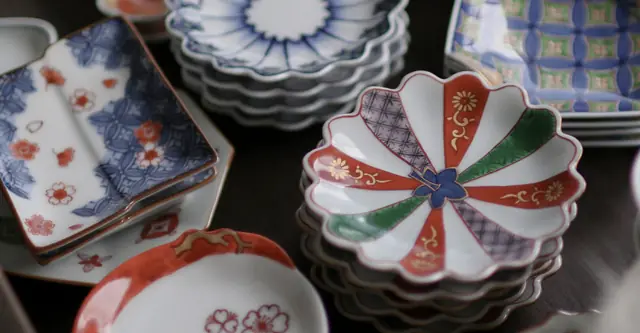
Photo: the shop’s official page 源右衛門窯
A porcelain kiln founded in 1753 with a showroom in Maruo. All pieces are painted by hand without transfer printing in the Ko-Imari tradition.
Weekdays 8:00–17:00, weekends & holidays 9:00–17:00 · Closed: Dec 31 & Jan 1checked Nov 2026
西松浦郡有田町丸尾丙2726
RinI compared the hand-painted Ko-Imari pieces. Every line felt warm.
Honmachi & Arita Station
Shingama Seika
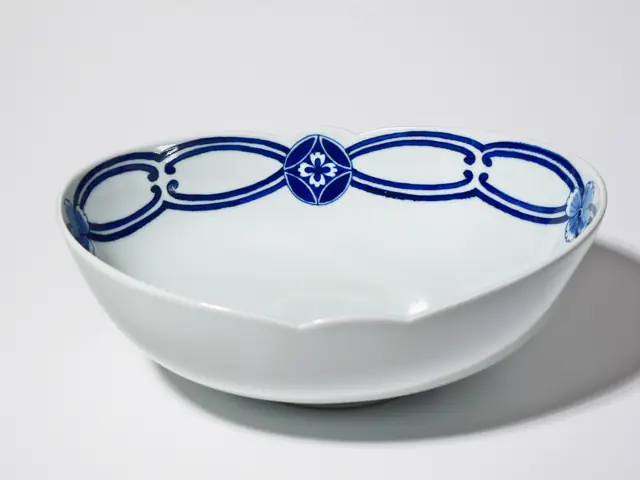
Photo: the shop’s official page しん窯 青花
A porcelain kiln founded in 1830 with an open workshop and showroom, known for its hand-painted cobalt sometsuke Seika tableware.
Sat–Sun & holidays 13:00–17:00
西松浦郡有田町黒牟田丙2788
RinI chose a cobalt Seika piece with the trader motif. The hand-drawn line was charming.
Honmachi & Arita Station
Kouraku Kiln
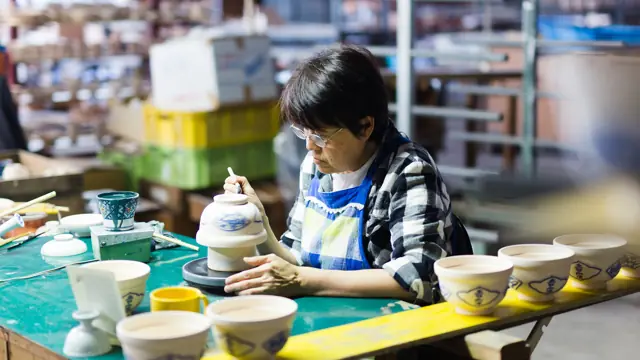
Photo: the shop’s official page 幸楽窯
An 1865 porcelain kiln in Maruo making auspicious sea-bream and crane-and-tortoise tableware, alongside factory tours and warehouse treasure hunting.
Daily 10:00–12:00, 13:00–16:00 · Closed: Dec 27–Jan 6 (New Year holiday)
西松浦郡有田町丸尾丙2512
RinI hunted through the warehouse and picked up a sea-bream dish.
Craft4
All craft →1 / 4
Akasaka & Arita Sera
KIHARA ARITA
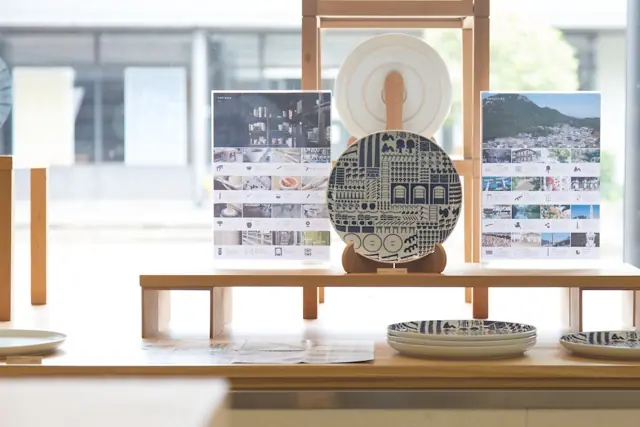
Photo: the shop’s official page KIHARA ARITA本店
Flagship store of Arita and Hasami porcelain producer KIHARA inside Arita Sera, with everyday tableware adapting traditional motifs.
Daily 9:30–17:00 · Closed: New Year’s Day (Jan 1)
西松浦郡有田町赤坂丙2351-169
RinI compared patterned dishes and bought one for its crisp motif.
Uchiyama
Tojiki Shop Rando
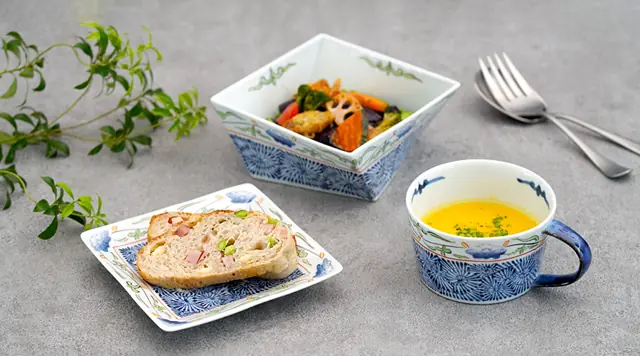
Photo: the shop’s official page 陶磁器ショップ 藍土
A tableware shop on Koba street near Tozan Shrine, curating everyday Arita and Hizen porcelain from local kilns.
10:00–18:00
西松浦郡有田町幸平1-2-10
RinI browsed the kiln shelves and had one smooth dish wrapped.
Uchiyama
Gallery Baek Pasun
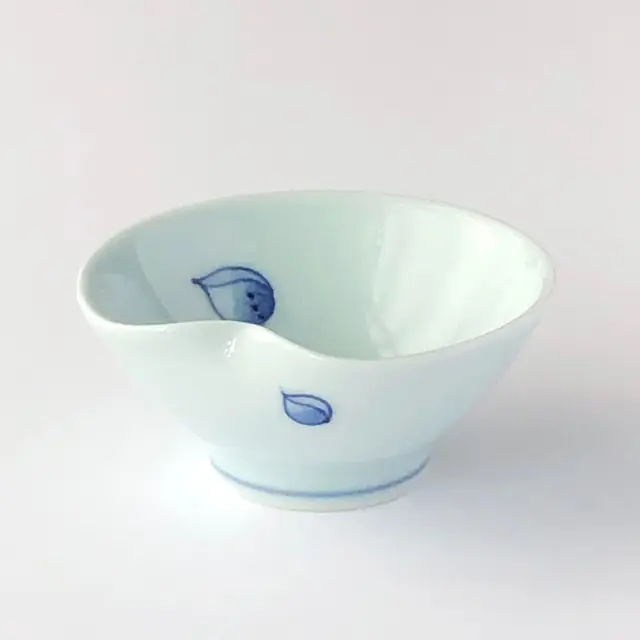
Photo: the shop’s official page ギャラリー ペクパソン
A ceramics gallery in Iwayagawachi opened in 2016 in honor of Baek Pasun, showing vessels by Japanese and Korean women potters.
西松浦郡有田町岩谷川内2-10-3
RinI viewed vessels by Japanese and Korean women potters. Their shapes stood out.
Akasaka & Arita Sera
Shobido Honten Arita Sera
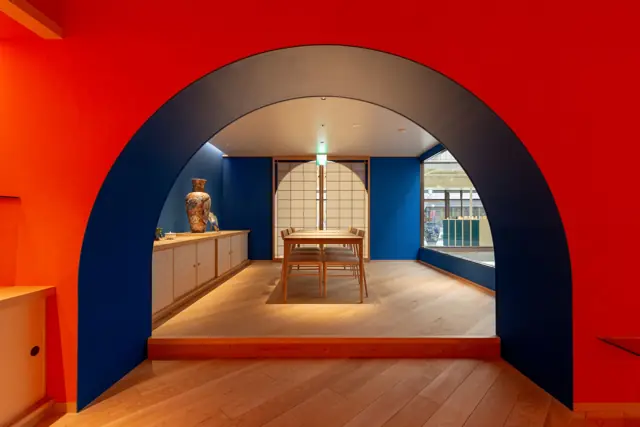
Photo: the shop’s official page 賞美堂本店 アリタセラ店
Direct shop of Arita porcelain house Shobido Honten inside Arita Sera, featuring its Kisen tableware line drawing on Ko-Imari motifs.
10:00–17:00 · Closed: Open every day (except New Year)checked Nov 2026
西松浦郡有田町赤坂丙2351-169
RinI held a Kisen piece. The traditional motif had vivid colour.
Food4
All food →1 / 4
Honmachi & Arita Station
Gallery Arita
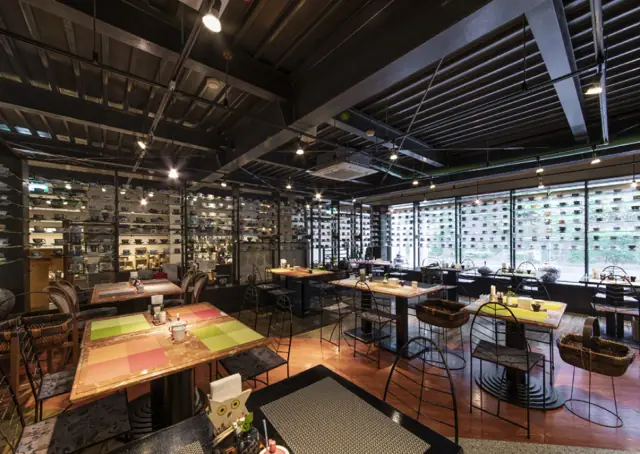
Photo: the shop’s official page ギャラリー有田
Irregular closing days
A dining room and porcelain shop in Honmachi lined with over 2,500 Arita coffee cups. Serves local set meals and godofu sweets. Open 11:00–17:00, irregular holidays.
11:00–17:00 · Closed: Irregularchecked Nov 2026
西松浦郡有田町本町乙3057
RinI chose one cup from the shelves. Its shape fit nicely in my palm.
Kurashuku & Hiroseyama
Ryusenso
龍泉荘
A longstanding restaurant at the foot of Ryumon Gorge serving spring-water carp dishes and eel on Arita porcelain, with an annex café for house-roasted coffee and natural-yeast bread.
11:00–15:30 (LO 14:30), 17:00–21:00 (LO 19:30) · Closed: Thursdays + 1–2 irregular days/month
西松浦郡有田町広瀬山甲2373-4
RinI had house-roasted coffee and yeast bread at the annex. The crumb was chewy.
Akasaka & Arita Sera
arita huis
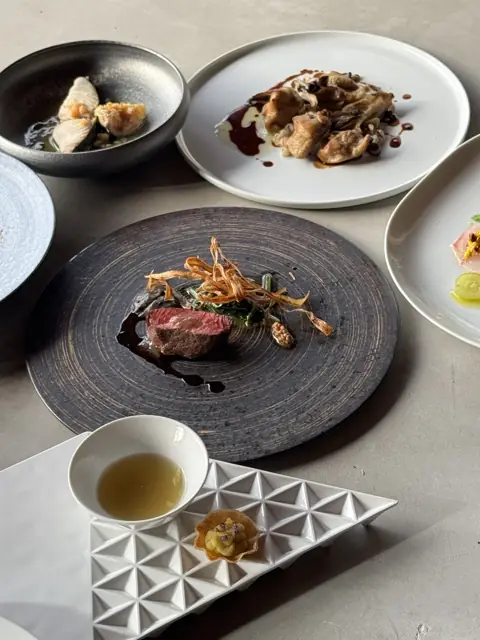
Photo: the shop’s official page A hotel and restaurant inside Arita Sera serving seasonal local dishes on Arita porcelain for lunch and dinner.
Thu–Mon Lunch 11:00–14:00 (LO), Dinner 17:30–21:00 (reservation req.) · Closed: Tuesdays & Wednesdays (open on holidays, closed next day)
西松浦郡有田町赤坂丙2351-169
RinI had lunch here. The seasonal dishes looked bright on Arita porcelain.
Kurashuku & Hiroseyama
Yamato Isshin-an Setsugetsuka
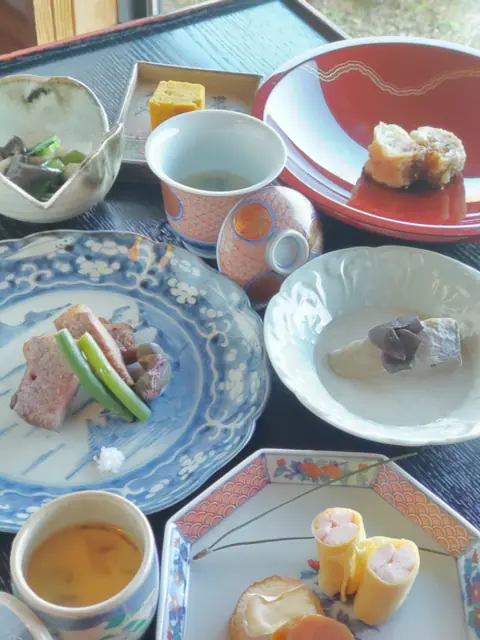
Photo: the shop’s official page 大和一心庵 雪月花
Irregular closing days
A hillside Japanese restaurant moved to western Arita in 2015, serving hand-cut 100% buckwheat soba made with well water, seasonal vegetables, and binchotan-grilled dishes.
12:00–14:30, 18:00–21:30 · Closed: Irregularchecked Nov 2026
西松浦郡有田町上本乙3390-6
RinI ordered the hand-cut 100% soba. The buckwheat aroma was rich and fresh.
Cafés1
All cafés →Uchiyama
Kissa Hama (Shujian)
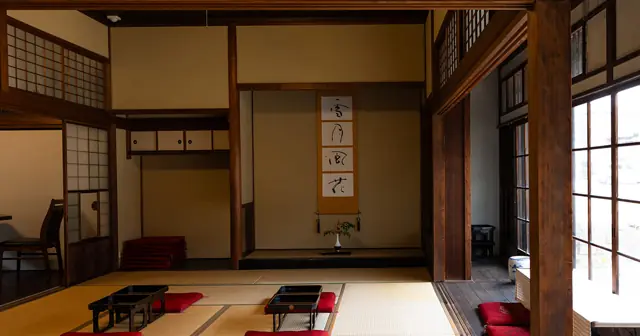
Photo: the shop’s official page 喫茶Hama 小路庵
A café inside a registered tangible cultural property along a kiln-brick tonbai alley. Serves coffee, sweets, and seasonal steamed lunches on Arita porcelain. Open 9:00–17:00.
11:00–16:00 (last order 15:30) · Closed: Sundays, Mondayschecked Nov 2026
西松浦郡有田町上幸平1-8-11
RinI sat down for coffee in an Arita cup. The rim felt smooth.
Rin is a fictional traveller. Every place here was checked by the editors to exist and be open (checked 2026-11-12). Please confirm hours on the official site before you go. Paid listings are always marked. If you are the shop and would like a photo removed, write to editor@vual.jp and we will take it down at once.
To see — art and sights (landmarks)
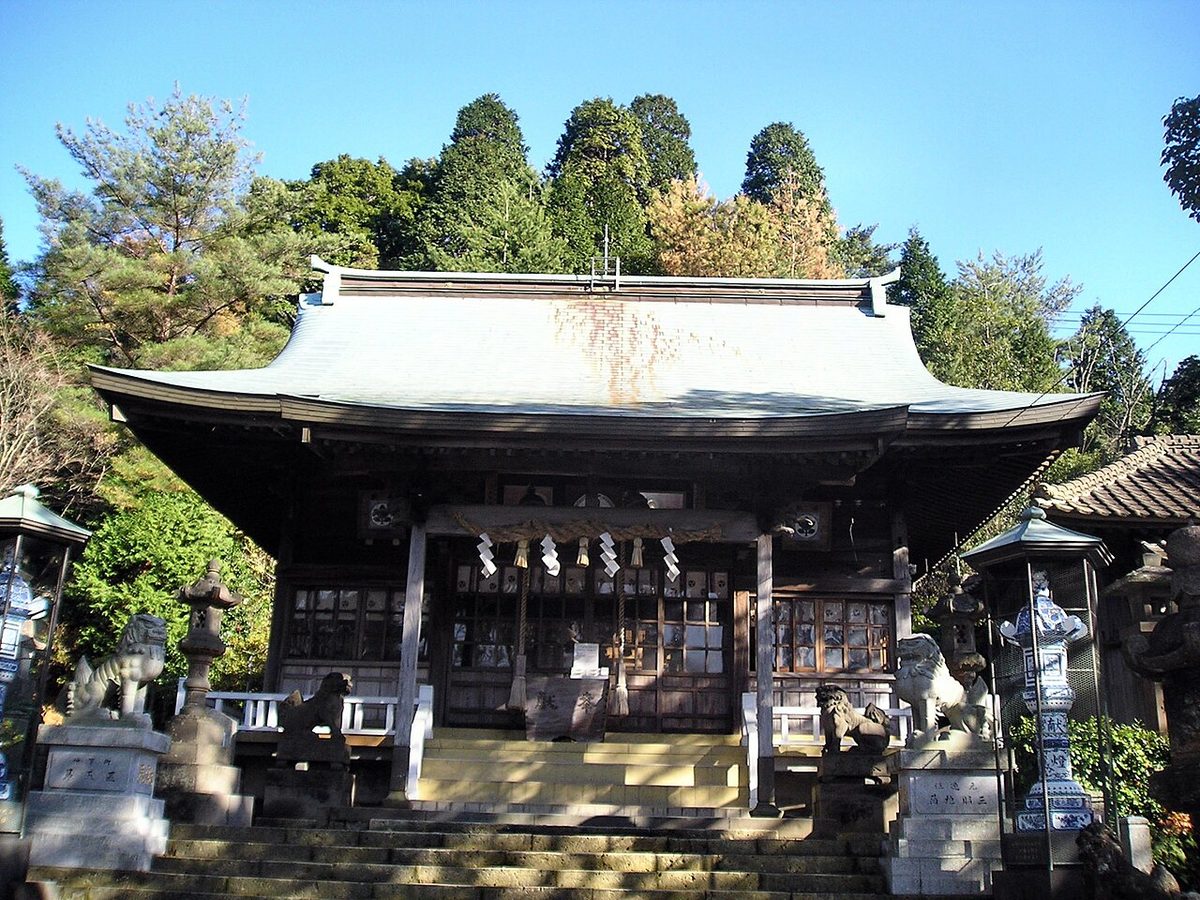
Photo: STA3816 / CC BY-SA 3.0 (Wikimedia Commons) Sights · Uchiyama
Tozan Shrine
A shrine to the deities of porcelain, said to date from around 1658, with a porcelain torii gate, porcelain guardian dogs, and a monument to Yi Sam-pyeong. The rail crossing at the entrance has no barrier.
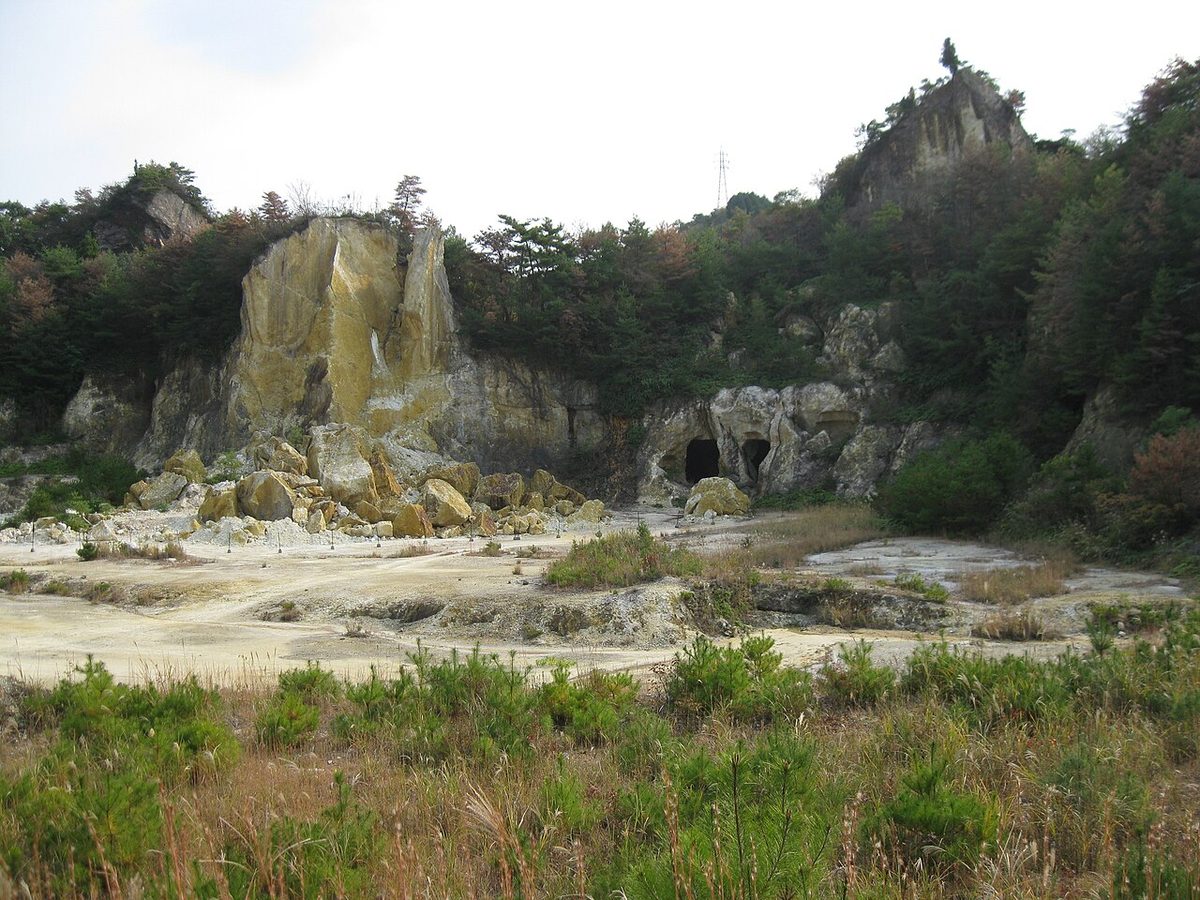
Photo: Bytemarks / CC BY 2.0 (Wikimedia Commons) Sights · Izumiyama
Izumiyama Quarry
The quarry where Yi Sam-pyeong and his companions found pottery stone in the early seventeenth century, beginning porcelain making in Japan. A national historic site, viewed from outside the pit.
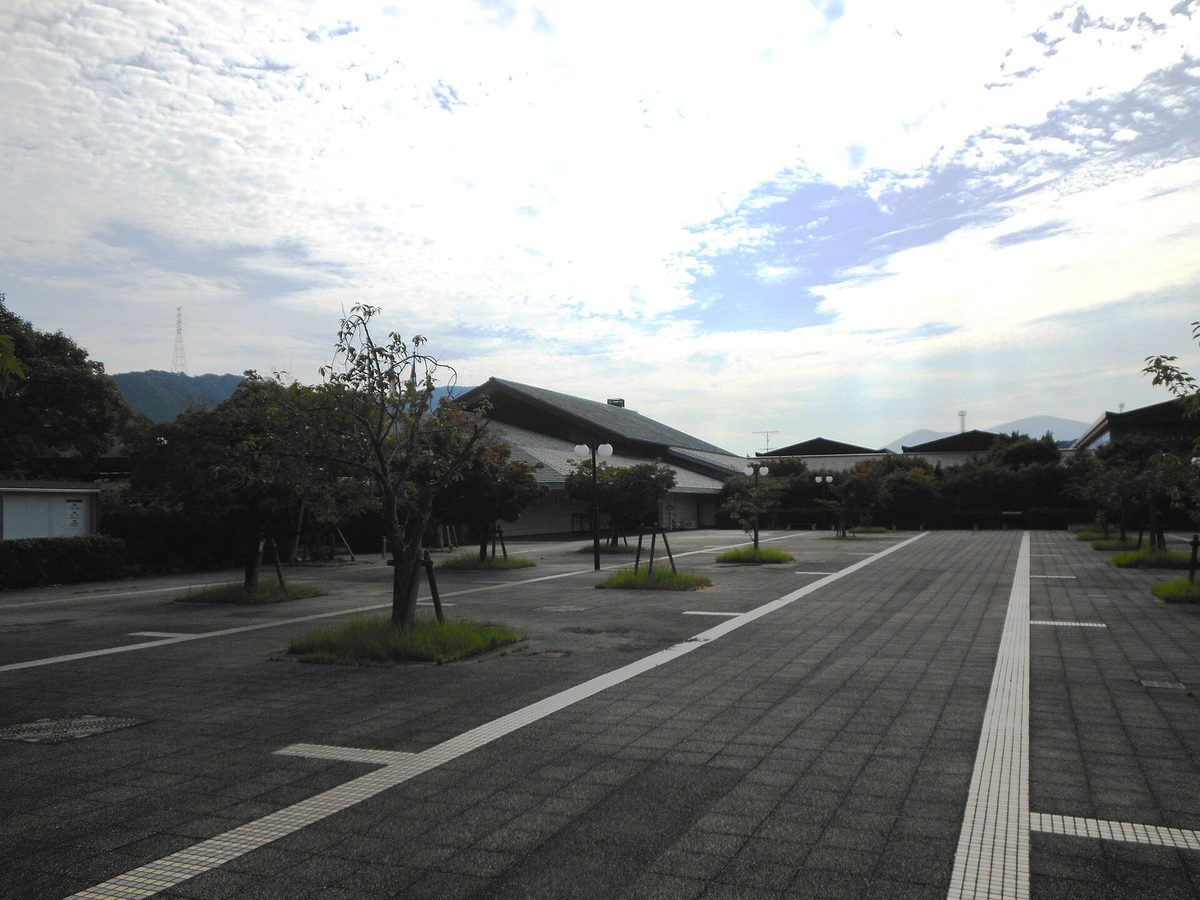
Photo: Pekachu / CC BY-SA 4.0 (Wikimedia Commons) Art · Toshaku
The Kyushu Ceramic Museum
A prefectural museum of Kyushu ceramics and historic Arita porcelain. Permanent collection admission is free. Open 9:00–17:00 (last entry 16:30), closed Mondays.
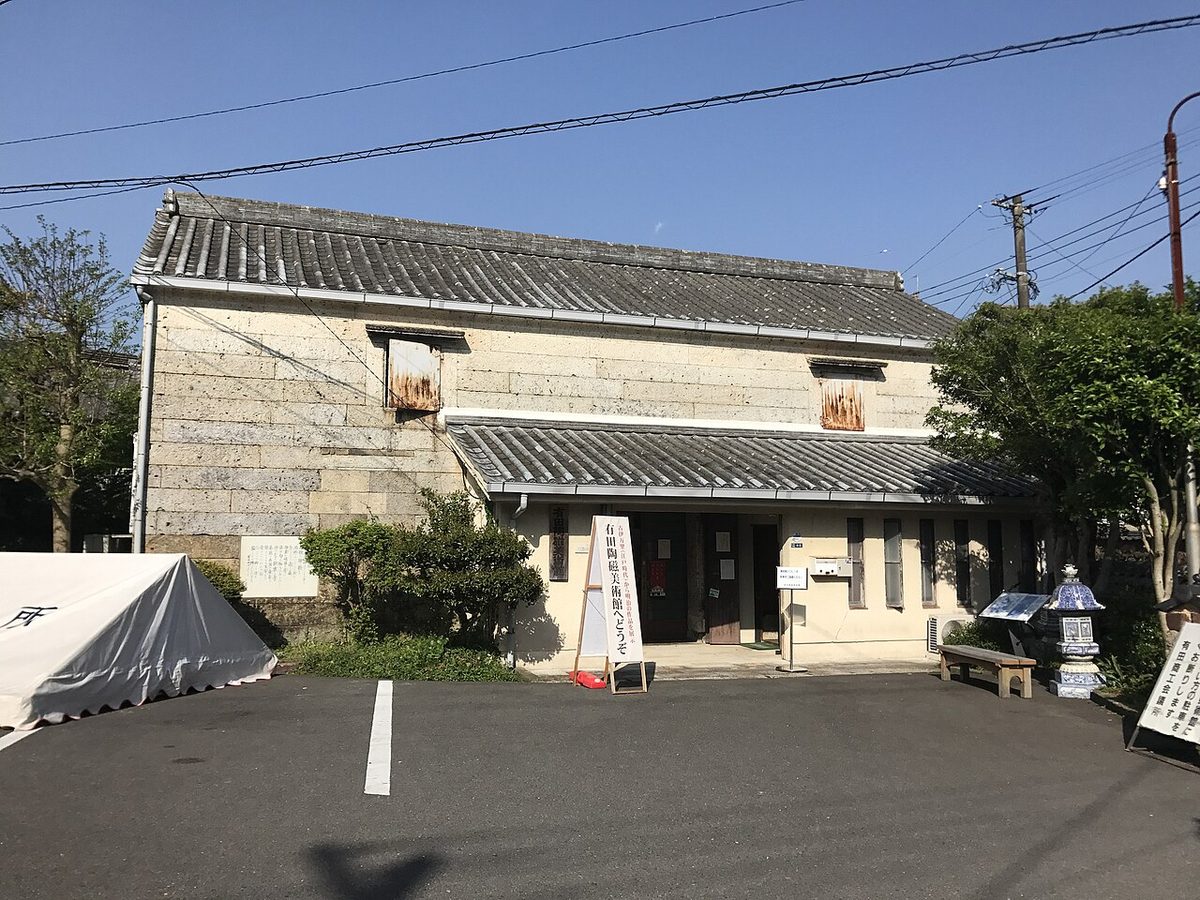
Photo: そらみみ / CC BY-SA 4.0 (Wikimedia Commons) Art · Uchiyama
Arita Ceramic Museum
A small ceramics museum housed in an 1874 porcelain warehouse, showing Meiji-era Arita ware and prefectural cultural properties. Open 9:00–16:30, closed Mondays.
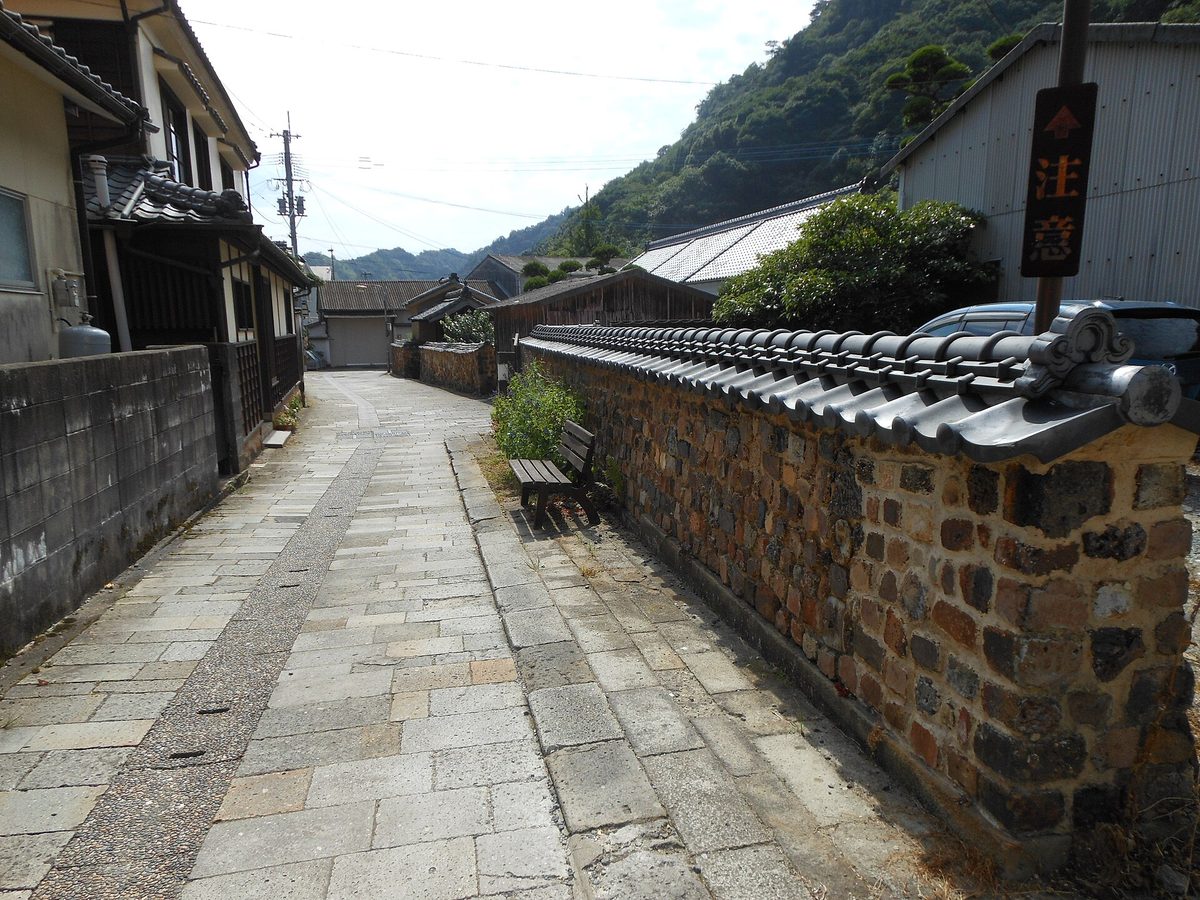
Photo: Pekachu / CC BY-SA 4.0 (Wikimedia Commons) Sights · Uchiyama
Tonbai Wall Alley
Backstreets lined with tonbai walls built from salvaged kiln bricks, kiln furniture, and red clay, running between the Izumiyama ginkgo and the Arita Ceramic Museum.
These are landmarks, not Rin's picks. Each was checked to be open on its official site (checked 2026-11-12). Please confirm hours before you go.
Day trips from Arita
Classics
- Yutoku Inari Shrineabout 24 km
One of Japan's three great Inari shrines, it is visited by about 3 million people annually, with constant prayers for business prosperity and family fortune. Best in April for cherry blossoms and azaleas.
- Yoshinogari Historical Parkabout 49 km
A national park preserving and displaying Yayoi period ruins, where you can experience reconstructed pit dwellings and elevated warehouses. Spring and autumn have mild weather for walking.
Hidden spots
- Ouo Shrine Floating Torii Gatesabout 32 km
Three vermilion torii gates standing in the Ariake Sea shallows, submerged up to their crossbeams at high tide and walkable along a submerged road at low tide due to a 6-meter tidal range. Check the tide table in advance: high tide makes the torii appear to float, while low tide lets you walk under them, especially at sunrise or under a full moon.
- Hamanoura Rice Terracesabout 34 km
283 terraced rice paddies spanning 11.5 hectares climbing straight up from a Genkai Sea cove, designated one of Japan's Top 100 Rice Terraces. Best from mid-April to early May around sunset, when the water-filled paddies reflect the orange sky.
Distances are straight-line from the town centre. Each page has how to get there and a suggested day.