Akita · from Nikaho
Mototaki Fukuryusui (Mototaki Spring Waterfall)
元滝伏流水
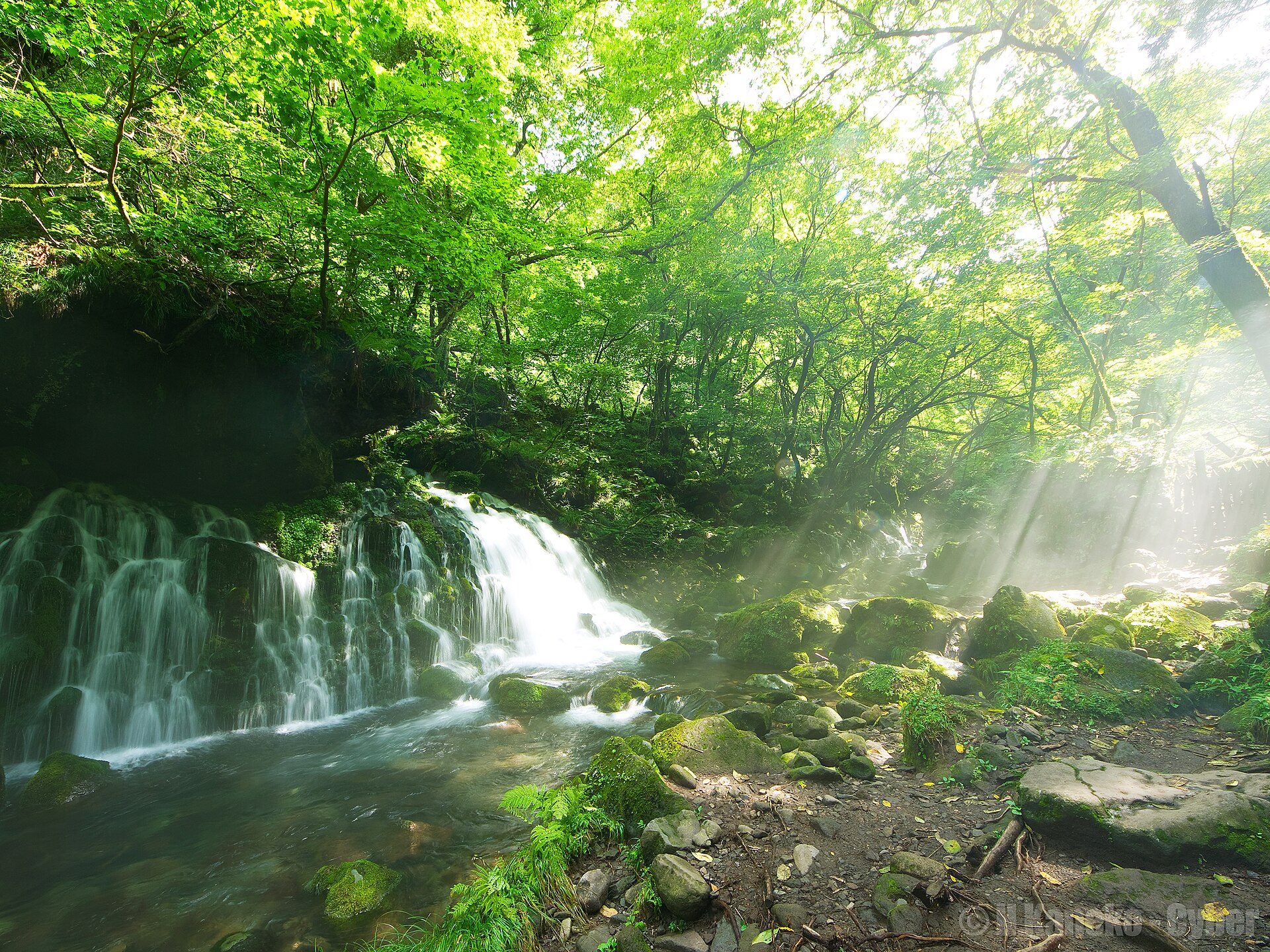
A 30-meter-wide moss-blanketed lava cliff at the foot of Mount Chokai where 50,000 tons of filtered mountain spring water ooze out daily in hundreds of silver threads.
When to go
June to September mornings offer lush emerald moss and cool mist rising off the 10°C spring water.
Bar height is how much we recommend each month (0–5), for a usual year; seasons can shift by a week or two. The dark bar is this month.
- JanuaryIcicle curtains form along the frozen rock face in midwinter.
- FebruaryGuided snow-trekking events are held in early February (Feb 1 & Feb 8 in 2026).
- MarchSnowmelt begins, though trails can still be slushy and cold.
- AprilSnowmelt increases spring water flow as moss awakens
- MayFresh spring greenery frames the steady spring-fed cascades.
- JunePeak moss season begins with abundant mist on warm mornings.
- JulyLush summer moss and cool 10°C water mist create dramatic sunbeams.
- AugustPeak summer escape with vivid green moss and morning river mist.
- SeptemberEarly autumn keeps moss vibrant as daytime temperatures soften.
- OctoberAutumn foliage accents the mossy rock face and clear streams.
- NovemberLate autumn foliage fades into quiet pre-winter forest
- DecemberEarly winter snowfall quiets the trail before full freeze-up.
TicketsFree entry year-round; guided winter snow-trekking tours in February require advance registration (20 people per session).
A day there — Morning Mist at Mototaki Spring Waterfall, Nikaho Local Eats & Sea-View Onsen
Morning in June–September offers the finest river mist and lush green moss. Ride a taxi (or pre-booked shared taxi) from JR Kisakata Station to Mototaki, then return to the coast for local food at Nikahotto and sea-view hot springs at Nemunooka. You can do it without a car.
Loading the map
- 09:15Arrive
 Photo: 掬茶 · CC BY-SA 4.0 · Wikimedia Commons
1JR Kisakata Station
Arrive at JR Kisakata Station on the JR Uetsu Main Line and transfer to a taxi or pre-booked shared taxi.
↓ taxi, about 15 min · Take a taxi (or pre-booked shared taxi) ~15 min to Mototaki free parking, then walk ~10 min along a flat 750m forest path.
- 09:40The spot
 Photo: official website
2Mototaki Fukuryusui (Mototaki Spring Waterfall)
Selected among Japan's Top 100 Waters, where Mt. Chokai spring water cascades down a 30m moss-covered rock face. Summer mornings create magical river mist and sunbeams.
↓ taxi, about 15 min · Take a taxi (or pre-booked shared taxi) ~15 min back to the Kisakata waterfront area.
- 11:30Eat
3Nikaho City Tourist Hub Nikahotto
Waterfront tourist hub near Kisakata Port offering local seafood, Nikaho regional dishes, and specialty foods for a relaxed lunch.
↓ walk, about 2 min · Walk ~2 min to the adjacent Michi-no-Eki Kisakata Nemunooka.
- 13:00Hot spring
4Michi-no-Eki Kisakata Nemunooka Observatory Onsen
Panoramic 4th-floor hot spring overlooking the Sea of Japan (09:00–21:00, ¥450 for 90 min / ¥600 day pass), with a free 6th-floor observatory deck.
↓ walk, about 20 min · Walk ~20 min (or ~5 min by taxi) to JR Kisakata Station to catch JR Uetsu Line / Limited Express Inaho trains.
- 15:00LeavePhoto: 掬茶 · CC BY-SA 4.0 · Wikimedia Commons
5JR Kisakata Station
Board the JR Uetsu Main Line toward Akita or Sakata.

Times are a guide. Check bus and train times and closing days on the official sites before you go. Map data © OpenStreetMap contributors (routes: FOSSGIS OSRM)
Nearby
Sweets
Tsuchida FarmHighland pasture raising Jersey cows, known for rich soft-serve ice cream and fresh milk.
Food
Nikaho Tourism Center NikahotTourism hub next to Michi-no-Eki Kisakata featuring local seafood eateries, farm stands, and craft markets.
Official: nikaho-kanko.jp/%E5%85%83%E6%BB%9D%E4%BC%8F%E6%B5%81%E6%B0%B4%E3%82%B9%E3%83%8E%E3%83%BC%E3%83%88%E3%83%AC%E3%83%83%E3%82%AF%E7%94%B3%E8%BE%BC%E9%96%8B%E5%A7%8B%EF%BC%8812-20%EF%BD%9E%EF%BC%89 · The editors checked on the official page that it is open in 2026 (2026-11-14).